
Night Guard
A custom-made night guard that protects your teeth, dental restorations, and jaw joint from the forces of teeth grinding and clenching (bruxism).
Medically reviewed. Last updated: May 18, 2026.What Is a Night Guard?
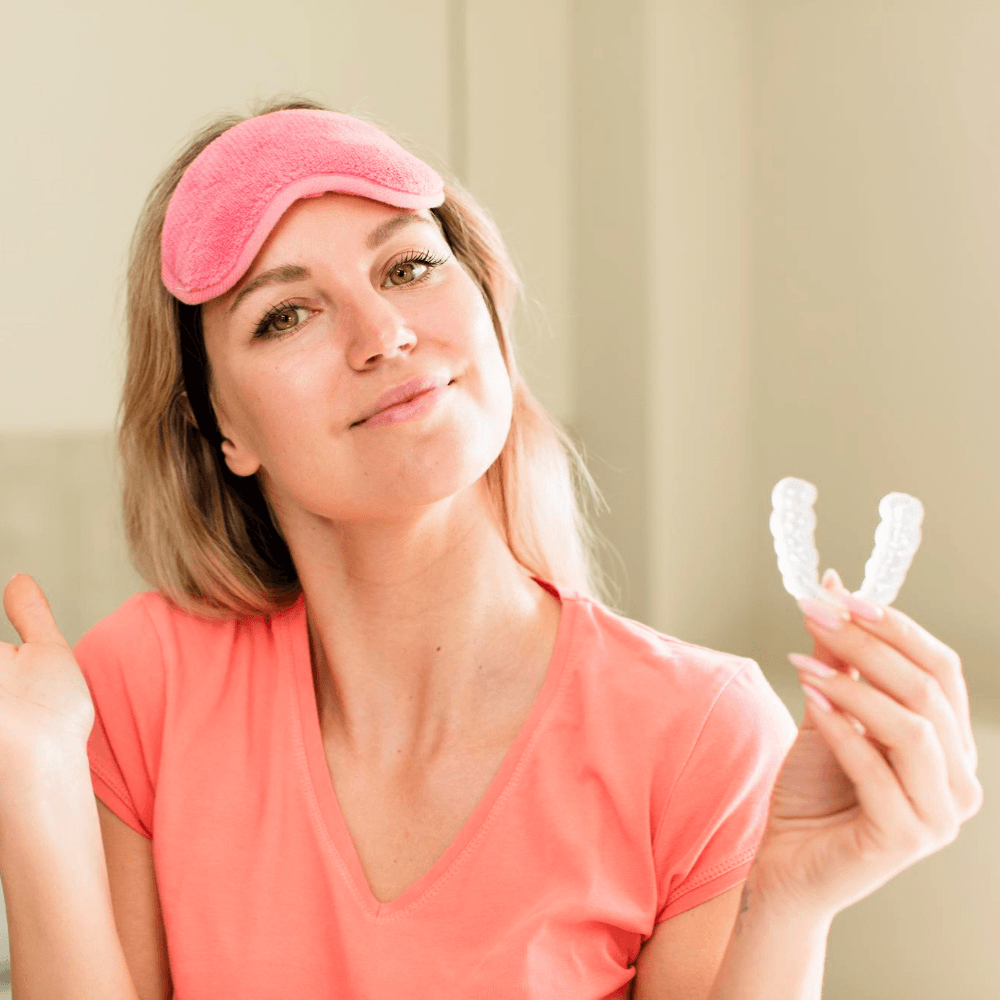
A night guard is a clear plastic appliance placed between your teeth during sleep to prevent damage caused by teeth grinding and clenching. It's also known as a "bruxism splint" or "teeth grinding guard." The night guard is typically fitted to your upper or lower jaw and eliminates direct tooth-to-tooth contact, preventing excessive force from damaging your teeth, jaw joint, and chewing muscles. This protects both your teeth and your jaw structure.
Night guards are most commonly used for patients with bruxism—teeth grinding or clenching. Bruxism typically occurs unconsciously, most often during sleep. Patients wake up with jaw stiffness, headaches, tooth sensitivity, and jaw pain. Over time, serious problems can develop including tooth wear, fractures, damage to crowns and fillings, jaw joint clicking, and TMJ disorders. A night guard prevents most of this damage.
Before the guard is made, you'll have an examination to evaluate your bite relationship and muscle tenderness. We take impressions using either the iTero intraoral scanner or traditional impression methods. Your night guard is custom-made in the lab and ready in about a week. At the fitting appointment, we check the fit and make minor adjustments if needed. You wear the guard only before bed and remove it when you wake up. You may need a few nights to adjust, but soon it will feel like a natural part of your mouth.
With proper care, a night guard can last 2-5 years. After removing it in the morning, brush it and clean it with a special solution. Don't expose it to hot water, as heat can deform the plastic. A night guard isn't just a protective appliance—it can also be therapeutic for patients with jaw joint problems. If joint symptoms are more severe, a TMJ splint may be recommended instead. For patients with enlarged chewing muscles, we may also suggest masseter botox treatment. For athletes who need protection during sports, a custom sports mouthguard is a separate category. For cost information, you can check the night guard cost calculator page.
Types of Night Guards
A night guard is not a one-size-fits-all appliance. Different types of night guards can be prescribed depending on the nature of your symptoms, the severity of bruxism, your jaw joint condition, and the level of protection needed. At Doredent, Uzm. Dt. Merve Özkan Akagündüz determines the most appropriate night guard type based on your clinical situation.- Clear and aesthetic — comfortable for nighttime wear.
- Thin design provides comfort during sleep.
- Combines orthodontic retention with bruxism protection.
- Effective in mild to moderate teeth-clenching cases.
- Provides strong protection against severe teeth clenching and grinding.
- Helps balance jaw joint load in cases of TMJ pain and sensitivity.
- Reorganizes bite relationship, contributing to muscle balance.
- More durable and longer-lasting than an Essix guard.
How Is the Right Night Guard Determined?
Which night guard type is appropriate for you is determined through a clinical evaluation at your first examination. This evaluation considers the following factors:- Severity of bruxism: Mild clenching and severe grinding require different levels of protection. Wear patterns on the teeth, enamel cracks, and pressure marks provide important clues about bruxism severity.
- Jaw joint condition: If you experience jaw joint pain, clicking sounds, limited movement, or morning jaw fatigue, a hard TMJ splint may be more suitable.
- Orthodontic retention needs: If the guard will be used for post-orthodontic retention, an Essix-type retainer is the standard choice. The same appliance can serve both retention and bruxism protection.
- Existing restorations: In patients with restorations such as zirconia, laminate veneers, or porcelain crowns, a night guard also helps protect the longevity of these restorations.
- Patient comfort: Some patients find the thin Essix guard more comfortable, while others prefer the secure feel of a hard splint.
Treatment Process
Alternative Treatments
Important Considerations
A night guard does not cause significant discomfort in daily life; however, you should pay attention to certain points for long-term protection and comfort.Usage Guidelines
- Wear it every night: A night guard only provides protection when worn. Irregular use reduces its protective effect. Bruxism patients should wear it every night, while orthodontic retention patients should follow the protocol determined by their dentist.
- Do not eat while wearing the guard: Never eat or consume sugary drinks while wearing your night guard. You may only drink water. Hot beverages can deform Essix-type guards.
- Storage: When not in your mouth, your guard must be stored in its case. Wrapping it in tissue or leaving it on a table is the most common cause of loss.
- Pets: Dogs and cats love to chew on night guards. Always keep your guard in a closed case.
- Do not force the guard: Do not force your guard when inserting or removing it. When inserting an Essix-type guard, apply equal pressure from both sides; when removing it, start from the back teeth and gently take it out.
Cleaning and Care
- Rinse after each removal: Rinse your guard with cold or lukewarm water each time you remove it. Hot water will deform an Essix-type guard.
- Weekly cleaning: Clean your guard gently with a soft toothbrush once a week. Brushing an Essix guard with toothpaste can scratch its surface; use plain soap or retainer cleaning tablets instead. Hard acrylic TMJ splints can be brushed with toothpaste.
- Odor and discoloration control: If your guard is not cleaned regularly, bacterial buildup can cause odor and discoloration. Cleaning tablets (such as Retainer Brite or Polident) prevent this.
- Tea and coffee: Do not consume tea or coffee while wearing your guard; this increases the risk of discoloration.
- Hard acrylic splint care: TMJ splints can be stored in water or in a moist environment. Do not leave them dry for extended periods; this can cause cracking.
Situations Requiring Attention
- Tight fit or poor adaptation: If your night guard feels unusually tight or does not fit properly, contact the clinic. Using an ill-fitting guard can disrupt your bite relationship.
- Changes to your teeth: After a new filling, crown, or tooth extraction, your night guard's fit may change. A check-up is recommended after such treatments; the guard may need to be replaced if necessary.
- Cracks or breakage: If your guard cracks or breaks, stop using it and contact the clinic to arrange a replacement.
- Wear monitoring: Essix-type guards wear down over time. They should be replaced when holes, significant thinning, or distortion appear.
- Oral hygiene: Brush your teeth before wearing your guard. Wearing a guard over unbrushed teeth can increase the risk of cavities.
Who Is It Suitable For?
A night guard is a protective appliance suitable for a wide range of patients. It is used not only for bruxism patients, but also for those who need retention after orthodontic treatment, those with jaw joint problems, and those who want to protect their existing restorations.- Jaw fatigue or pain upon waking in the morning.
- Noticeable wear marks or flattening on the teeth.
- Spouse or partner hearing grinding sounds at night.
- Teeth clenching habit that intensifies during stressful periods.
- Used in combination with a fixed retainer.
- Every night in the first year, a few nights per week in subsequent years.
- Included in the orthodontic treatment package at Doredent.
- Vivera can be chosen as a premium alternative.
- Pain and tenderness in the jaw joint.
- Clicking or popping sounds when opening the jaw.
- Tension in jaw muscles upon waking in the morning.
- Stands out in cases with both bruxism and TMJ problems.
- Pain in the temple or jaw area upon waking in the morning.
- Cases where bruxism association is identified after neurological evaluation.
- A night guard alone may not be the solution; a multidisciplinary approach may be needed.
- Can be planned in conjunction with stress management.
- Reduces the risk of crown fractures and cracks.
- Reduces the risk of debonding (separation) in laminates.
- Protects your treatment investment in the long term.
- Recommending a night guard after crown placement is a common practice.
- Reduces the risk of fracture in the implant superstructure.
- May reduce the risk of bone loss around the implant.
- Strongly recommended after implant treatment.
- Protects your implant investment in the long term.
Use and Care
When used correctly, a night guard protects your teeth from grinding and clenching forces for years. However, improper use shortens the lifespan of the appliance, reduces its effectiveness, and can lead to oral health problems. The following use and care guidelines help you get the most benefit from your night guard.
How to Insert and Remove the Night Guard
Always brush your teeth before inserting the night guard. If food particles get trapped between the guard and your teeth, it creates hygiene issues and increases the risk of decay. Place the guard symmetrically on your teeth using both hands, pressing gently with your fingertips to seat it properly. When the guard is fully seated, you can close your teeth comfortably. When removing it, do not pull from just one side. Lift it evenly from both sides with equal force. Balanced removal prevents the guard from becoming deformed.
When Should It Be Worn?
As the name suggests, a night guard is inserted right before sleep and removed when you wake up in the morning. In some patients, bruxism occurs not only at night but also during the day. If necessary, your dentist may recommend daytime use as well. It is important to use the guard consistently throughout your treatment period. When use is interrupted, the teeth grinding habit can resume and cause damage to your teeth.
Initial Adjustment Period
When you first wear the guard, it feels like a foreign object in your mouth. This is normal. During the first 2-3 nights, you may experience increased saliva, mild tooth sensitivity, or tension in the jaw muscles. Your body adjusts to the new situation within 1 week, and the guard begins to feel like a natural part of your mouth. If discomfort continues after 1 week, contact your dentist. A minor adjustment to the guard may be needed.
Cleaning
When you remove the guard in the morning, rinse it immediately with lukewarm water. Brush the inside and outside with a soft toothbrush and liquid soap. Do not use toothpaste, because the abrasive particles in toothpaste create scratches on the surface of the guard where bacteria can settle. Liquid soap is sufficient. Once or twice a week, you can perform a deep clean with cleaning tablets. Denture cleaning tablets sold in pharmacies are also suitable for night guards. After using the tablets, be sure to rinse the guard thoroughly with water.
Storage
When not in use, always store the guard in a ventilated storage case. The case allows air circulation, preventing the guard from staying moist and breeding bacteria. Never wrap the guard in a tissue, napkin, or plastic bag. The risk of accidentally throwing it away or forgetting it and causing deformation is very high. When traveling, carry it in its own case.
What to Avoid
Hot water is the night guard's biggest enemy. The guard is made from a thermoplastic material that conforms to your mouth, and contact with hot water distorts its shape and prevents it from fitting properly. Therefore, do not wash the guard with hot water, place it in the dishwasher, or leave it in the sun or on a radiator. Similarly, leaving it in a car on hot days can also deform the guard.
Do not eat food or drink tea or coffee while wearing the guard. This stains the guard and traps food particles between the guard and your teeth. You can only drink water while wearing the guard. Smoking yellows the guard and causes bad odor. It is best not to smoke.
Follow-Up Frequency
Come for your first follow-up appointment 1-3 months after you start using your night guard. During this visit, your dentist checks that the guard fits properly and evaluates whether there is any wear or sensitivity in your teeth. After that, the guard is examined during your routine dental check-ups every 6 months. Do not neglect regular dental scaling, because monitoring gum health is important for patients who use night guards.
When Should It Be Replaced?
With proper care, a night guard can be used for 2-5 years. This period varies depending on the severity of the patient's teeth grinding. In patients with severe bruxism, the guard wears out more quickly. Visible thinning, cracking, yellowing, or odor in the guard are signs that it is time for replacement. Similarly, if the guard no longer fits your teeth properly, it needs to be replaced. If the shape of your teeth has changed after dental treatment (filling, crown, orthodontic treatment), the guard also needs to be replaced.
Additional Treatment Needs
In cases of severe teeth grinding, the night guard alone may not be sufficient. Masseter botox may be recommended to relax the chewing muscles. If there are complaints related to the jaw joint, a more comprehensive TMJ splint may be preferred. To repair teeth that have worn down or fractured due to teeth grinding, zirconia crowns or bonding may be applied.
Frequently Asked Questions
What does a night guard do?
Is it difficult to sleep with a night guard?
Is a ready-made night guard or a custom one more appropriate?
How often should a night guard be replaced?
Does a night guard help with jaw joint problems?
How long should a night guard be used after orthodontic treatment?
Treatment Pricing
Night Guard Pricing
At Doredent, we offer transparent pricing for our international patients. As every case is different, the final treatment cost depends on your individual evaluation.
The cost of Night Guard varies based on factors such as the type of guard produced, the material used, and the number of arches treated. For an accurate quote, a personalized assessment is recommended.
For pricing details, reach out via WhatsApp or book your initial consultation.
Our Dentists
Meet our specialist team.


Content Information
This page was prepared by the Dore Medical Editorial Board and medically reviewed by Dr. Merve Özkan Akagündüz.
