
Orthodontic Problems Treatable with Invisalign
Invisalign clear aligners can treat many orthodontic problems comfortably, aesthetically, and without metal braces. Build your personalized treatment plan at Doredent with our Invisalign Diamond Provider orthodontist Dr. Merve Özkan Akagündüz.
Which Orthodontic Problems Can Invisalign Treat?
Many orthodontic problems — including tooth misalignment, bite issues, and gaps between teeth — can be effectively treated with Invisalign clear aligners. As an alternative, traditional braces treatment can also be considered.
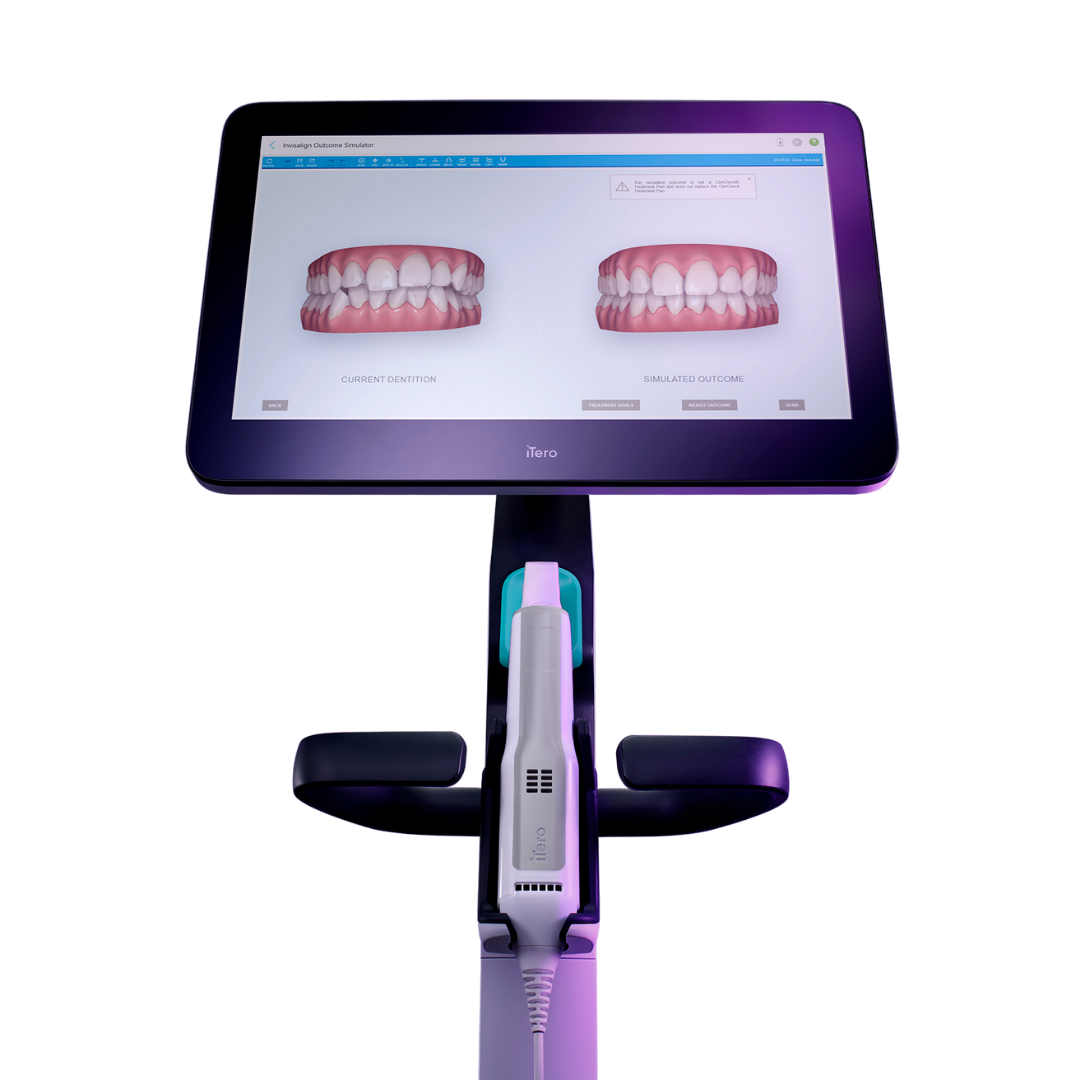
At Doredent, every treatment begins with an iTero digital scan. You see your treatment outcome as a 3D simulation before you even start — so you make an informed decision.
Below, you can explore the orthodontic problems we treat with Invisalign, their symptoms, and our treatment approaches in detail.
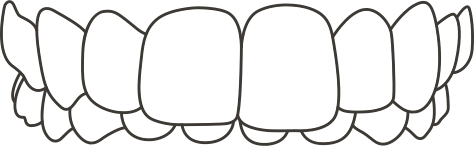 Deep bite
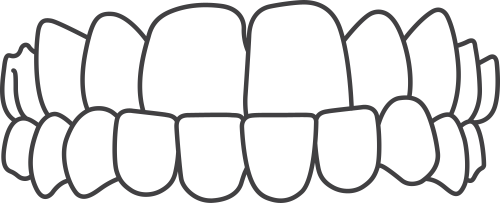 Underbite
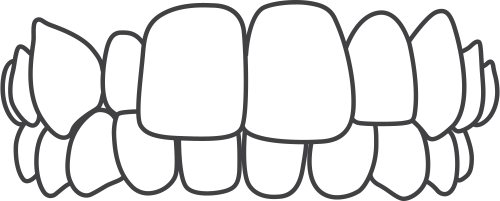 Crossbite
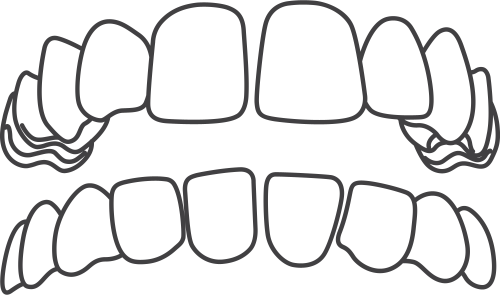 Diastema
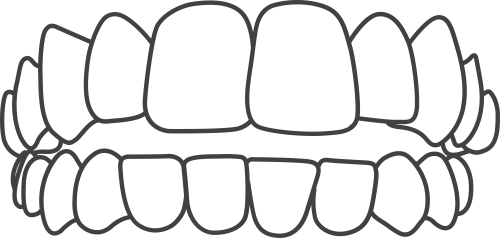 Open bite
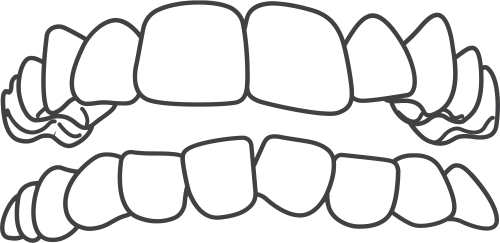 Crowding
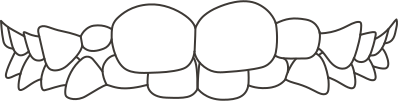 Mixed dentition
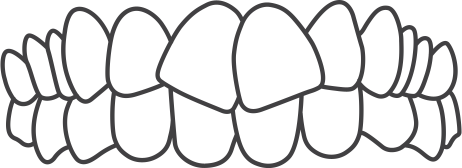 General misalignment
Orthodontic Problems and Treatment Approaches
Learn about each problem in detail — symptoms, and the Invisalign treatment process.
What Is Deep Bite?
Deep bite — Upper teeth excessively overlapping the lower teeth
Deep bite is a condition where the upper front teeth overlap the lower front teeth more than normal when the mouth is closed. It can cause chewing difficulties, jaw joint disorders, tooth wear, and gum trauma. In advanced cases, worn teeth may need restoration with zirconia crowns.
Deep bite is effectively treated with Invisalign. At Doredent, iTero digital scanning measures your bite level with precision, and we build a personalized treatment plan.
What Is Underbite?
Lower teeth positioned in front of the upper teeth
Underbite is a condition where the lower jaw or lower teeth sit in front of the upper jaw. Also known as reverse bite or mandibular prognathism, it can cause speech difficulties, chewing problems, and facial asymmetry.
At Doredent, your underbite is analyzed in detail with iTero digital scanning, and a personalized Invisalign treatment plan is built for you.
What Is Crossbite?
Crossbite — Upper teeth closing inside the lower teeth
Crossbite is when one or more upper teeth close inside the lower teeth instead of outside them. Without treatment, it can lead to asymmetric jaw development, gum recession, and bone loss.
At Doredent, both anterior and posterior crossbite cases are effectively treated with Invisalign through digital orthodontics.
What Is Diastema?
Wider-than-normal gaps between teeth
Diastema is a condition where there are gaps wider than normal between teeth. Genetic factors, a tooth-jaw size mismatch, a thick labial frenum, or tongue thrusting habits can lead to this condition.
At Doredent, Invisalign gradually closes the gaps for both aesthetic and functional improvement. Mild cases can show results in as little as 3–6 months. For some patients, orthodontic treatment is complemented with porcelain veneers for aesthetic finishing.
What Is Open Bite?
Open bite — Front teeth not making contact when closed
Open bite is when the upper and lower front teeth don't meet, leaving a visible gap. Thumb sucking, tongue thrusting, and mouth breathing are the most common causes. If these habits appear early in children, they can be evaluated within pediatric dentistry.
At Doredent, open bite treatment uses personalized digital planning. Functional contact between front teeth is restored, and speech difficulties are corrected.
What Is Crowding?
Crowding — Teeth overlapping, rotating, or shifting
Crowding happens when there isn't enough space in the jaw, causing teeth to overlap, rotate, or shift. Also known as crooked teeth or misaligned teeth, it's the most common orthodontic problem.
Untreated crowding makes oral hygiene difficult and increases the risk of cavities and gum disease. In advanced cases, root canal treatment or tooth extraction may be needed. At Doredent, Invisalign moves teeth gradually into their ideal positions.
Treatment for Children with Mixed Dentition
Invisalign First — Early orthodontics for ages 6–10
Invisalign First is a clear aligner system designed specifically for children in the mixed dentition phase. It's used for jaw expansion, tooth alignment, and preserving space for permanent teeth. We work in coordination with our pediatric dentistry specialist.
Early orthodontic treatment guides jaw development properly, significantly reducing future need for tooth extraction, surgical intervention, or lengthy braces treatment.
What Is General Misalignment?
From mild irregularities to comprehensive alignment
General misalignment refers to teeth that deviate from their ideal position. This spans a wide spectrum — from a single slightly rotated tooth to position issues affecting multiple teeth. It also includes patients with relapse — those who had previous braces treatment but didn't wear their retainers, causing their teeth to shift again.
At Doredent, we build digital Invisalign treatment plans for every need — from minor corrections to comprehensive alignment. After treatment, porcelain veneers or zirconia crowns may also be considered for aesthetic refinement.
See Your Treatment Outcome Before You Start
At Doredent, we use the iTero digital scanner to create a 3D model of your mouth in seconds. With Invisalign Outcome Simulator, we show you how your teeth will look after treatment — right at your very first appointment.
Book Your Appointment for Your Orthodontic Problem
Schedule your free digital scan with our Invisalign Diamond Provider orthodontist Dr. Merve Özkan Akagündüz.
Book Online