
Custom Sports Mouthguard
A protective mouthguard custom-made to fit the athlete's unique mouth structure. Unlike ready-made options, it provides a precise fit, comfortable breathing, and superior impact protection.
Medically reviewed. Last updated: May 18, 2026.What Is a Custom Sports Mouthguard?
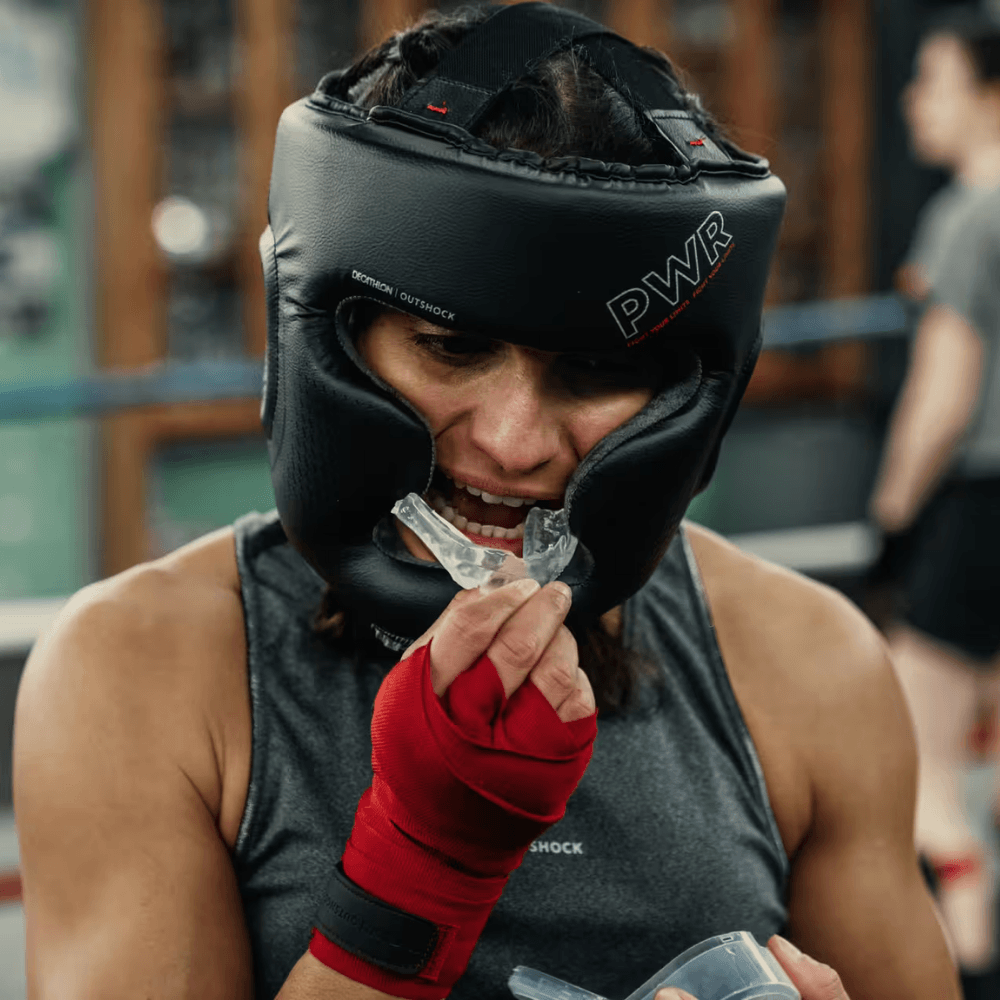
A custom sports mouthguard is an intraoral protective appliance designed to protect the teeth, lips, jaw joint, and surrounding soft tissues from impact during contact sports or activities with a high risk of injury. It is also known as a "mouthguard" or "athletic guard." Unlike ready-made mouthguards sold in pharmacies, a custom sports mouthguard is fabricated in a dental laboratory using impressions taken from the patient's own teeth. This ensures a precise fit, does not obstruct breathing, does not interfere with speech, and provides maximum protection.
A sports mouthguard is considered essential protective equipment in contact sports such as boxing, kickboxing, MMA, American football, rugby, basketball, hockey, judo, and karate. It is also recommended for activities with a high risk of falls, such as cycling, skateboarding, skiing, and snowboarding. Without a mouthguard, impact can result in broken teeth, cracked teeth, tooth avulsion (teeth knocked out), injuries to the lips and tongue, jaw fractures, and TMJ disorders. A sports mouthguard prevents the majority of these injuries or significantly reduces their severity.
Before the mouthguard is fabricated, an examination is performed to assess the type of sport and risk profile. A digital impression is taken using the iTero intraoral scanner. The mouthguard is custom-fabricated in the laboratory from high-durability thermoplastic material. Options include single-layer, dual-layer, or triple-layer designs, selected based on the intensity of the sport. During the fitting appointment, the mouthguard is placed in the mouth, its fit is checked, and fine adjustments are made as needed. You can also choose colors—multi-color combinations matching team colors can be produced.
With proper care, a sports mouthguard can be used for a long time. It should be brushed after training sessions and games, and stored dry in a dedicated protective case. It should not be exposed to hot water, as heat can cause the mouthguard to deform. During routine follow-ups, wear and tear are assessed, and a new mouthguard is fabricated when necessary. For young athletes, the mouthguard must be replaced more frequently as the mouth and teeth continue to develop. For emergency evaluation after oral injuries, you can refer to our broken tooth and toothache pages.
Treatment Process
Alternative Treatments
Important Considerations
Paying attention to certain points when using a custom sports mouthguard increases both its protective effectiveness and its lifespan.Usage Guidelines
- Wear it during every training session and competition: A sports mouthguard only provides protection when it's worn. The "I'll only wear it during competitions" approach is risky—there's also a risk of impact during training.
- Brush your teeth before sports: Brushing your teeth before inserting the mouthguard is important for hygiene. Placing the mouthguard over unbrushed teeth can increase bacterial buildup.
- Use the mouthguard only during sports: A sports mouthguard is not a night guard or retainer—it should only be worn during athletic activities.
- Don't bite or chew on the mouthguard: Some athletes bite or chew on their mouthguard due to stress or habit. This causes deformation and reduces its protective effectiveness.
- Storage: When not in use, the mouthguard should be stored in a ventilated storage case. Bacteria multiply faster in closed, airless environments.
Cleaning and Maintenance
- Rinse after each use: The mouthguard should be rinsed with cold or lukewarm water after each sports session. Hot water can deform it.
- Regular brushing: Brush it a few times a week with a soft toothbrush and plain soap or a denture cleaning tablet. Toothpaste can scratch the surface.
- Odor control: If not cleaned regularly, the mouthguard can develop odor. Use a weekly denture cleaning tablet (such as Polident or Retainer Brite).
- Drying: The mouthguard should be lightly dried before placing it in its storage case. Putting it in the case completely wet increases bacterial growth.
- Protect from heat: Never leave your sports mouthguard in a car glove compartment, on a sunny windowsill, or in hot environments. Heat will deform it.
Situations Requiring Attention
- If the fit is compromised: If the mouthguard doesn't fit properly on your teeth, feels loose, or causes discomfort, stop using it and contact the clinic. An ill-fitting mouthguard cannot provide adequate protection.
- After a new filling or crown: Dental treatments can alter the fit of your mouthguard. After getting a new filling or crown, we recommend having your mouthguard checked.
- During growth periods in children: Since children's oral structures change during growth, the fit of their sports mouthguard should be checked more frequently and renewed as needed.
- During orthodontic treatment: Because tooth positions change during braces or Invisalign treatment, the fit of your sports mouthguard should be checked regularly. A new mouthguard should be made after treatment is completed.
- If the mouthguard cracks or breaks: A cracked or broken sports mouthguard cannot provide adequate protection and may cause injury inside your mouth. Stop using it and have a new one made.
Who Is It Suitable For?
A custom sports mouthguard can be used by anyone who wants to protect their mouth and teeth during contact sports. It doesn't matter if you're a professional or amateur athlete — anyone at risk of impact needs protection. Below you'll find the most common patient profiles who benefit from sports mouthguards.- This group faces the highest risk of broken teeth and avulsion (tooth loss).
- Helps prevent lip and tongue injuries.
- Can reduce the impact of blows to the jaw joint.
- Many federations require mouthguard use during competition.
- There's a high risk of unexpected contact and collisions.
- Ball impacts can directly affect the mouth area.
- Professional athletes in the NBA and many international leagues use mouthguards.
- Use is strongly recommended even at amateur levels.
- There's a risk of falls and equipment collisions.
- Teeth clenching during heavy lifting can cause tooth wear.
- Cycling and skiing carry a risk of facial impact.
- A protective mouthguard reduces both trauma and bruxism effects.
- Newly erupted permanent teeth are vulnerable to trauma.
- A mouthguard customized to a child's mouth structure fits better.
- The mouthguard may need more frequent replacement during growth as mouth structure changes.
- Use is strongly recommended for school teams and clubs.
- Prevents brackets from cutting the inside of lips and cheeks.
- Reduces the risk of bracket detachment after impact.
- Specially designed for patients playing sports during orthodontic treatment.
- Invisalign patients can remove their aligners during sports and wear a sports mouthguard.
- Reduces the risk of crown and veneer fractures.
- Protects implant superstructure from impact.
- Safeguards your treatment investment during sports.
- Customized to fit your restorations.
Use and Care
Proper use and regular care of your sports mouthguard are essential to maintain its protective effectiveness and extend its lifespan.Usage Protocol
- During every training and competition: Your sports mouthguard should be worn during every sports activity that carries impact risk. It's recommended to use it consistently during both training sessions and competitions.
- Insertion and removal: When inserting the mouthguard, apply equal pressure from both sides to position it properly. When removing it, start from the back areas and remove gently. Don't pull forcefully from one side; this can deform the mouthguard.
- Not for use outside sports: Sports mouthguards are designed only for use during athletic activities. They're not intended for nighttime use, bruxism protection, or retention purposes; different appliances (night guard, retainer wire) are available for these purposes.
- During breaks and halftime: When you remove your mouthguard, always place it in its storage case. Wrapping it in a napkin, putting it in your pocket, or leaving it on a table are the most common causes of loss and damage.
Mouthguard Lifespan
- For adults: A custom sports mouthguard typically lasts 1-2 years, depending on usage frequency and the impact intensity of your sport. This period may be shorter for high-contact sports like combat sports.
- For children and adolescents: During growth periods, the oral structure changes, so the mouthguard needs to be replaced more frequently. A fit check is usually recommended every 6-12 months; if the fit has changed, a new mouthguard is made.
- Signs for replacement: Your mouthguard should be replaced when you notice significant wear, holes, cracks, edge deterioration, loss of fit, or deformation.
Mouthguard Fabrication Process
- Examination and assessment: During your initial examination, Uzm. Dt. Merve Özkan Akagündüz evaluates your oral structure, bite relationship, any existing orthodontic treatment or restorations, and the type of sport you practice.
- Impression taking: At Doredent, we take a traditional impression for your sports mouthguard. The impression process takes just a few minutes and is painless.
- Fabrication: Based on your impression, your custom sports mouthguard is prepared in the laboratory. It's designed to fit your upper jaw.
- Delivery and fit check: The mouthguard is tried in your mouth, the fit is verified, and adjustments are made if needed. Usage and care protocols are explained in detail.
Follow-Up and Monitoring
- Regular checkups: During your routine dental checkups every 6 months, your sports mouthguard's condition can also be evaluated. We check for wear, cracks, deformation, or fit issues.
- Frequent monitoring during growth: For young athletes in their growth phase, the mouthguard's fit should be checked more frequently as the oral structure changes.
- During orthodontic treatment: Since tooth positions change continuously during braces or Invisalign treatment, your sports mouthguard's fit should be monitored regularly, and a new mouthguard should be made after treatment completion.
- After new dental work: Following fillings, crowns, or tooth extractions, your mouthguard's fit may change; a checkup is recommended.
An Important Note for Athletes
Frequently Asked Questions
What is a custom sports mouthguard?
Should I choose a ready-made mouthguard or a custom mouthguard?
Does a sports mouthguard make speaking or breathing difficult?
How long does a sports mouthguard last?
In which sports should a sports mouthguard be used?
I am undergoing orthodontic treatment. Can I use a sports mouthguard?
Treatment Pricing
Custom Sports Mouthguard Pricing
At Doredent, we offer transparent pricing for our international patients. As every case is different, the final treatment cost depends on your individual evaluation.
The cost of Custom Sports Mouthguard varies based on factors such as the type of mouthguard (single or double arch), material used, and custom design requirements. For an accurate quote, a personalized assessment is recommended.
For pricing details, reach out via WhatsApp or book your initial consultation.
Our Dentists
Meet our specialist team.


Content Information
This page was prepared by the Dore Medical Editorial Board and medically reviewed by Dr. Merve Özkan Akagündüz.
