
Dental Implants
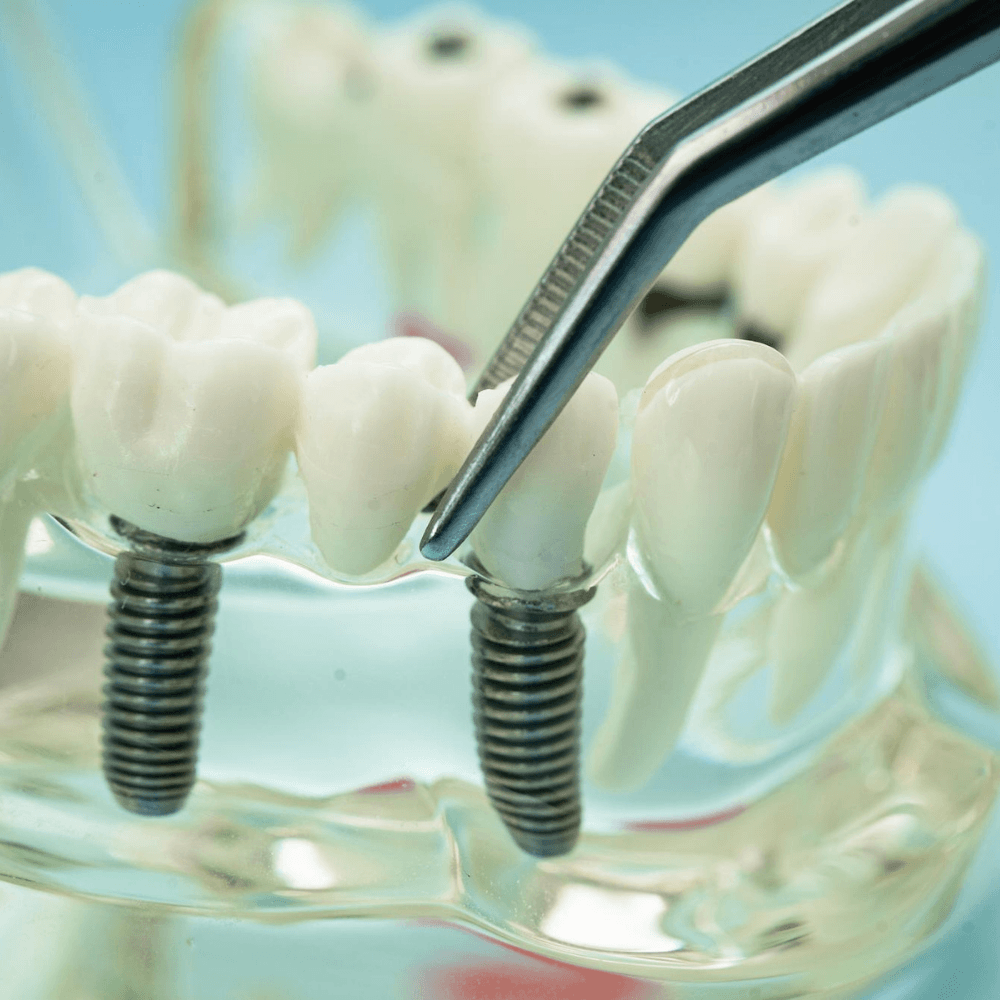
Permanent, natural-looking, and long-lasting artificial teeth placed on titanium roots anchored into your jawbone to replace missing teeth. Personalized planning from single tooth loss to full arch restoration.
Medically reviewed. Last updated: May 18, 2026.What Is Dental Implant Treatment?
Who is a candidate for dental implants?
Implant treatment may be suitable for many patients who have good overall health, adequate jawbone to support an implant, and are experiencing missing tooth problems. A definitive assessment is made after examination and imaging.
Can dental implants be used for all missing teeth?
They can be used in many cases. However, the treatment plan may vary depending on bone level, gum health, systemic conditions, and the location of the missing tooth. In some situations, additional procedures may be required.
Do dental implants look natural?
With proper planning and appropriate prosthetic design, implant-supported teeth can provide results very close to natural teeth in both aesthetics and function.
Treatment Process
Alternative Treatments
Dental implant treatment is considered the gold standard for replacing missing teeth. Without damaging adjacent teeth, it transmits force directly to the jawbone, preventing bone loss and providing the closest function to a natural tooth. However, implants may not be suitable in some cases, or the patient may prefer a different treatment. Below you can find the real alternatives to implants and in which situations each option can be considered.Dental Bridge (Fixed Partial Denture)
A dental bridge is a fixed solution created by reducing the healthy teeth on both sides of the missing tooth and placing connected crowns on top of them. The middle section that closes the gap rests on the crowns on both sides, providing chewing function. Bridge treatment continues to be used today and remains a valid option in certain cases. Advantages:- No surgical procedure required. There is no healing period like with implants.
- Usually completed in two sessions. Treatment time is short.
- Initial cost is more affordable compared to implants.
- Provides an alternative for patients whose bone structure is not suitable for implants.
- Adjacent teeth must be reduced (prepared). This intervention on healthy teeth is irreversible.
- Because no force is transmitted to the jawbone under the gap, bone loss continues over time.
- The teeth supporting the bridge can develop decay, root problems, or abutment failure over the years. In this case, both the bridge and the underlying teeth may be lost.
- The lifespan of a bridge depends on the health of the supporting teeth and the patient's hygiene. It is generally shorter than an implant.
Removable Denture (Removable Partial Denture)
Removable dentures are artificial tooth solutions with an acrylic or metal framework that can be inserted and removed by the patient. There are two main types: complete dentures (false teeth) used in cases of total tooth loss, and partial dentures used when some teeth are missing. Advantages:- No surgical procedure required.
- The most affordable treatment option.
- Can be applied in cases of insufficient bone, advanced systemic disease, or conditions unsuitable for surgery.
- Can replace multiple missing teeth at once with a single appliance.
- Because it is not fixed, it can shift while speaking or eating. Retention problems are especially common in the lower jaw.
- Chewing force is far below that of natural teeth. Hard and sticky foods are difficult to consume.
- Over the long term, loss develops in the gum tissue and bone underneath.
- The patient's adjustment period can be long. The feeling of a foreign object in the mouth is uncomfortable in the first weeks.
- Must be removed daily for cleaning, and a separate care routine must be followed.
Implant-Supported Removable Denture (Intermediate Solution)
This is an intermediate solution developed to solve the shifting problem of removable dentures in completely edentulous patients. A denture with special attachments is mounted on two or four implants placed in the jaw. This way, the denture does not shift, but the patient can remove it for cleaning when desired. This solution is much more comfortable than a classic removable denture, and more economical than fully fixed implant solutions like All-on-4 or All-on-6. It is an important option for patients seeking an intermediate solution in complete tooth loss situations.Not Treating the Gap
Some patients choose not to replace the missing tooth. This is especially a decision made in the case of a single missing tooth in the back area, with the thinking "it's not visible anyway, I can still chew." However, we need to share a clear fact here: not replacing a missing tooth causes serious long-term damage to oral health. Changes that occur over time include:- Adjacent teeth shift toward the gap. This leads to crowding and bite problems.
- The tooth in the opposing jaw grows longer (super-eruption). The tooth that grows toward the gap eventually loses its own root support.
- The jawbone erodes. The bone under the missing tooth decreases significantly over the years because it loses function.
- The chewing system is disrupted. The patient unconsciously starts using the other side more, which can lead to jaw joint problems.
- Treatment becomes more difficult in the future. When treatment is requested years later, orthodontic correction, bone grafting, and a more complex implant process may all be needed.
Which Treatment Is Right for You?
The choice between implants, bridges, and removable dentures is made according to the size of the edentulous area, the condition of the jawbone, the health of adjacent teeth, your general health status, and your expectations. Each method has its own advantages and limitations. At Doredent, during the initial examination, the condition of the edentulous area is examined with a panoramic X-ray and clinical evaluation. Appropriate treatment options are clearly presented, and the right plan for you is determined together.Risks and Complications
Dental implant treatment is one of the most reliable procedures in modern dentistry, with one of the highest success rates. Current systematic reviews show that properly planned implant treatments have a long-term success rate between 95% and 98%. However, as with any surgical procedure, there are some potential risks and side effects you should be aware of. The vast majority of these can be minimized through proper planning, appropriate patient selection, and following post-treatment instructions. Below you'll find the main risks and side effects that can occur with implant treatment.Risk-Increasing Factors
Certain conditions can increase the risk of complications in implant treatment. These factors don't mean treatment is impossible, but they may require additional evaluation and sometimes extra precautions.- Smoking: Smoking reduces osseointegration success and significantly increases the long-term risk of peri-implantitis. Quitting smoking before and after treatment, or at least significantly reducing it, is recommended.
- Uncontrolled diabetes: In patients with poorly controlled blood sugar, the healing process is prolonged and infection risk increases. In patients with controlled diabetes, implant treatment can be successfully performed.
- Poor oral hygiene: Not following post-surgical care instructions increases the risk of infection and peri-implantitis. Patient compliance is critically important throughout all stages of implant treatment.
- Bisphosphonate therapy: Bisphosphonate medications used for osteoporosis can negatively affect healing processes in the jawbone. Patients taking this medication require additional evaluation.
- History of head and neck radiotherapy: Bone healing can be compromised in areas that have received radiotherapy. These patients require special planning and additional precautions.
- Insufficient jawbone: In patients who lack adequate bone height or width for implants, additional procedures such as bone grafting or sinus lifting are performed first.
How Are These Risks Managed at Doredent?
The vast majority of potential risks in implant treatment can be minimized through proper planning, appropriate patient selection, and regular follow-up. The key elements of the approach applied at Doredent are:- Detailed clinical and radiological evaluation: Before treatment, we thoroughly examine the structure of your jawbone, the location of critical anatomical structures, and bone quality using panoramic X-rays and, when necessary, three-dimensional tomography.
- Internationally certified implant brands: All implant brands used at Doredent (Nucleoss, NTA Korea, NTA Switzerland) have CE, FDA, and ISO certifications. This provides important assurance in terms of both product quality and long-term reliability.
- Planning tailored to patient profile: We develop a personalized treatment plan by evaluating your general health status, systemic diseases, medications, and lifestyle habits. When necessary, treatment is postponed or additional preparatory procedures are planned.
- Regular post-treatment monitoring: We monitor healing through regular check-up appointments during the implant placement, osseointegration process, and prosthetic component attachment stages. Long-term annual check-ups are also recommended for early detection of conditions like peri-implantitis.
- Patient education and compliance: Before and after treatment, you receive detailed information about surgical care, oral hygiene, smoking, and nutrition. Patient compliance is just as critical to the success of implant treatment as the dentist's role.
Who Is a Good Candidate?
Dental implant treatment can be performed on a wide range of patients who have missing teeth and have adequate jawbone structure to support implant placement. There is no upper age limit. As long as your overall health allows, implants can be successfully placed even in patients in their 70s or 80s. However, determining suitability is not something you can assess on your own. The condition of your jawbone, your overall health, medications you take, and your oral hygiene habits are all evaluated during a clinical examination, and your treatment plan is designed accordingly. The following patient profiles represent the most common groups for implant treatment.- Adjacent healthy teeth remain completely untouched, no grinding required.
- Jawbone in the missing tooth area is preserved, preventing bone loss.
- The most functional replacement for a natural tooth.
- Topped with a zirconia crown for a natural appearance.
- Each gap can have a separate implant, or a bridge can be supported by several implants.
- No need for removable dentures.
- Chewing function restored as close to natural teeth as possible.
- Bone loss prevented in each individual area.
- Healthy teeth remain completely untouched, enamel preserved.
- A safer long-term option for neighboring teeth.
- Direct bone support prevents bone loss.
- While treatment time is longer, long-term durability is higher.
Immediate Loading: Suitable Cases
In some appropriate cases, a temporary prosthesis can be placed on the same day or within a few days after implant placement. This approach, known as immediate loading, minimizes the time you spend without teeth. However, immediate loading is not possible in every case. Certain clinical criteria must be met.- The implant must show sufficient primary stability in the bone (firm integration into the bone)
- Jawbone density must be adequate
- Your overall health status must be favorable
- No excessive chewing forces such as bruxism (nighttime teeth grinding)
- Appropriate aesthetic and functional planning must be achievable
Who Requires Additional Evaluation?
In some cases, additional evaluation, preparation, or modified planning may be needed before implant treatment. This does not mean treatment cannot be done. Often, it simply means an extra step must be added or certain conditions must be addressed first.- Individuals under age 18: Implant treatment is not recommended because jaw and facial bone development is not yet complete. Temporary solutions can be considered until bone development finishes.
- Patients with uncontrolled diabetes: Poor blood sugar control slows healing and increases complication risk. Treatment is planned after diabetes is brought under control.
- Active gum disease: If periodontal infection is present, dental scaling, curettage, and further periodontal treatments if needed are completed first, then implant treatment is planned.
- Heavy smokers: Smoking negatively affects osseointegration and increases long-term risk of peri-implantitis. Quitting or significantly reducing smoking before and after treatment is strongly recommended.
- Patients with insufficient jawbone: If bone height or width is inadequate, preparatory procedures such as bone grafting or sinus lifting are performed before implant placement. With these preparations, most patients can receive implants.
- Patients taking bisphosphonates: Patients using this group of medications for osteoporosis may experience impaired jawbone healing. Additional evaluation is needed based on the type, dose, and duration of the medication.
- Patients who have received radiotherapy to the head and neck: Bone healing may differ in areas with a history of radiotherapy. Special planning and extra precautions are taken for these patients.
- Pregnancy: Routine implant surgery is recommended to be postponed during pregnancy. Treatment can begin after delivery.
After Treatment
When implant treatment is completed, the surgical phase is managed not during the procedure but in the following weeks and months. The success of the implant depends as much on proper post-treatment care as it does on the quality of the surgery. Below, you can find what you need to do immediately after surgery, the healing process, and long-term care, step by step.First 24 Hours: Critical Post-Surgical Period
Implant surgery is performed under local anesthesia. After the procedure, the effect of the anesthesia continues for a while. The points to be careful about during this period are:- Do not eat until the anesthesia wears off. Since there is no sensation in your lips, inside your cheeks, and tongue, the risk of accidentally biting these tissues is high. Anesthesia usually wears off within two to three hours. During this time, drinking only water is safe.
- Bite down on the applied gauze for about 30 minutes. Do not use products like cotton or tissues instead of gauze, as these can stick to the wound and disrupt the clot.
- Avoid spitting and rinsing for the first 24 hours. The pressure created by spitting can dislodge the newly formed clot and lead to bleeding and infection.
- Apply cold compresses to reduce swelling. Applying cold compresses to the cheek, outside the surgical area, at 10-15 minute intervals significantly reduces swelling and bruising.
- Avoid very hot and very cold foods. Consuming warm, soft foods for the first few days supports healing.
- Do not use tobacco or alcohol. Smoking seriously impairs wound healing, and alcohol can prevent clot formation. They should definitely be avoided for the first 48-72 hours; ideally, they should be completely discontinued throughout the healing period.
- Do not touch the surgical area. Touching the area with your tongue, finger, or tools like toothpicks disrupts healing.
- Do not take hot showers or do strenuous exercise. Avoiding activities that increase blood pressure on the first day prevents bleeding.
- Use the medications recommended by your dentist regularly. If antibiotics and painkillers are prescribed, use them at the recommended dose and duration.
First Week: Healing and Follow-Up
Swelling, mild bruising, and biting sensitivity are normal during the first week after surgery. These symptoms usually decrease significantly within 3-5 days and largely resolve by the end of the first week. The points to be careful about during this period are:- Oral hygiene: Continue brushing your teeth normally, except for the surgical area. Clean the surgical area very carefully with gentle movements. Antiseptic mouthwash recommended by your dentist can be started after the first 24 hours.
- Diet: Continue eating soft foods. Soup, yogurt, mashed foods, and soft pasta are suitable. Avoid hard, very hot, or very cold foods.
- Suture removal: In cases where stitches are used, they are usually removed within 7-10 days. In some cases, self-dissolving sutures are used and do not need to be removed.
- Abnormal symptoms: If you experience severe and increasing pain, uncontrolled bleeding, high fever, or a noticeably bad odor, contact the clinic immediately without delay.
Osseointegration: The Bone Fusion Process
After the implant is placed, a biological fusion process begins between the jawbone and the implant. This process is called osseointegration and is the most critical phase of implant treatment. During this phase, the implant becomes fixed in the jawbone, bone tissue grows toward the implant surface, and long-term stability is established. The osseointegration process typically takes 1 to 4 months. The duration varies depending on the area where the implant is placed, bone quality, the patient's overall health, and the surgical protocol used. In the lower jaw, this process is generally shorter than in the upper jaw because the bone density in the lower jaw is higher. During this period:- Avoid biting hard foods in the implant area. Transfer chewing force to other teeth as much as possible.
- Maintain regular oral hygiene. Brushing your teeth twice a day and using dental floss is critical.
- Keep smoking to a minimum. Smoking negatively affects healing during the osseointegration process.
- Do not miss follow-up appointments. During interim checks, the stability of the implant is evaluated.
Placement of the Superstructure
After the osseointegration process is completed, an aesthetic and functional superstructure is placed on the implant. This stage consists of several appointments:- Impression taking: An appropriate abutment is placed on the implant and an intraoral impression is taken. With modern digital impression techniques, this stage has become faster and more comfortable.
- Laboratory production: The implant crown is produced in the laboratory based on the impression taken. At Doredent, the most commonly preferred superstructure material is zirconia; it provides the highest level of results in both durability and natural appearance. In aesthetic priority cases in the front region, porcelain crowns can also be considered.
- Try-in and fit check: The produced crown is tried in your mouth, and color, shape, and bite relationship are checked. Fine adjustments are made if necessary.
- Final cementation or screwing: The crown is fixed onto the implant either with dental cement or with a special screw.
Long-Term Care and Follow-Up
When properly cared for, an implant is a treatment that can be used without problems for many years. However, the most important factor determining the lifespan of an implant is regular oral care and routine dental check-ups, just as with natural teeth.- Brush twice a day: Brush with a soft-bristled toothbrush and fluoride toothpaste for at least two minutes. The health of the gums around the implant is more important than around natural teeth.
- Use dental floss and interdental brushes daily: Preventing plaque buildup around the implant is critical. In addition to standard dental floss, interdental brushes and, when necessary, implant care irrigators can be used.
- Be careful with hard foods: Zirconia crowns are quite durable, but avoid cracking foods like seeds, ice, or very hard-shelled nuts with your teeth. This habit puts both the implant superstructure and natural teeth at risk.
- Stay away from smoking: Smoking is the biggest long-term enemy of implant treatment. It significantly increases the risk of peri-implantitis and shortens implant lifespan.
- Use a night guard if you grind your teeth: In patients with bruxism (teeth grinding at night), a night guard is the most effective way to protect both the implant superstructure and natural teeth.
Follow-Up Schedule
Regular check-ups after implant treatment are critically important for the long-term success of the treatment. The schedule recommended at Doredent is as follows:- First year: Several check-up appointments are made during the first year after the superstructure is placed. During this period, the functional fit of the implant, the condition of the gums, and the stability of the crown are evaluated.
- Following years: Standard six-month routine dental examinations are sufficient to monitor the condition of the implant. During these examinations, both the gum health around the implant and the condition of the crown are checked.
- Professional cleaning: Professional dental scaling is recommended at least once a year. The area around the implant should be cleaned more carefully than natural teeth, but with special instruments.
- Annual X-ray evaluation: In the long term, X-ray evaluation is done periodically to check the bone support of the implant. This way, potential problems such as peri-implantitis are detected at an early stage.
Frequently Asked Questions
Is dental implant treatment painful?
How long do dental implants last?
Which is better: implant or bridge?
What happens if there is not enough bone for an implant?
Are teeth placed immediately after implant surgery?
Does smoking affect implant treatment?
Can implants be applied to completely edentulous patients?
What happens if inflammation (peri-implantitis) develops around an implant?
Can a tooth be saved instead of implant treatment?
Treatment Pricing
Dental Implant Treatment Pricing
At Doredent, we offer transparent pricing for our international patients. As every case is different, the final treatment cost depends on your individual evaluation.
The cost of Dental Implant Treatment varies based on factors such as the implant brand, bone condition, the need for sinus lifting or bone grafting, and the choice of superstructure (crown). For an accurate quote, a personalized assessment is recommended.
For pricing details, reach out via WhatsApp or book your initial consultation.
Our Dentists
Meet our specialist team.


Content Information
This page was prepared by the Dore Medical Editorial Board and medically reviewed by Dr. Merve Özkan Akagündüz.
