
Laminate Veneers
Thin porcelain shells bonded only to the front surface of teeth for minimal intervention, maximum aesthetics. Smile design that addresses color, shape, and minor irregularities without touching the natural tooth structure.
Medically reviewed. Last updated: May 20, 2026.What Are Laminate Veneers?
Laminate veneers are thin, leaf-like shells made of porcelain or composite material that are bonded to the front surface of your teeth. They are an aesthetic restoration designed to improve the appearance of your smile. Unlike full crowns, laminates cover only the visible surface of the tooth, which means they require much less tooth reduction. In some cases, no reduction is needed at all.
Laminate veneers are purely cosmetic and are typically used on front teeth. They are an effective solution for discolored teeth that do not respond to whitening, minor shape irregularities, small chips, gaps between teeth called diastema, and short teeth. They can also be an option for patients with mild crowding who prefer not to undergo orthodontic treatment. However, for more severe crowding or bite issues, braces or clear aligner treatment should be considered first.
Before the procedure, you will have a detailed examination and a digital smile design consultation to plan the outcome together. During the first appointment, a very thin layer of enamel (0.3-0.7 mm) is removed from the tooth surface. In some cases, no reduction is necessary. Impressions are taken and temporary veneers are placed. The laboratory phase takes about one week. At the second appointment, the veneers are tried on and checked for color and fit, then bonded to your teeth with a special adhesive. The treatment is usually applied to multiple teeth at once to create a cohesive, natural appearance across the front of your smile.
With proper care, laminate veneers can last 10-15 years or more. Porcelain surfaces resist staining and are minimally affected by coffee, tea, and smoking. However, biting into very hard foods can cause them to chip or crack. If you have bruxism (teeth grinding), a night guard is recommended. If you need a more comprehensive restoration, zirconia or porcelain crowns may be better options. Regular brushing and professional dental cleanings will help extend the life of your veneers.
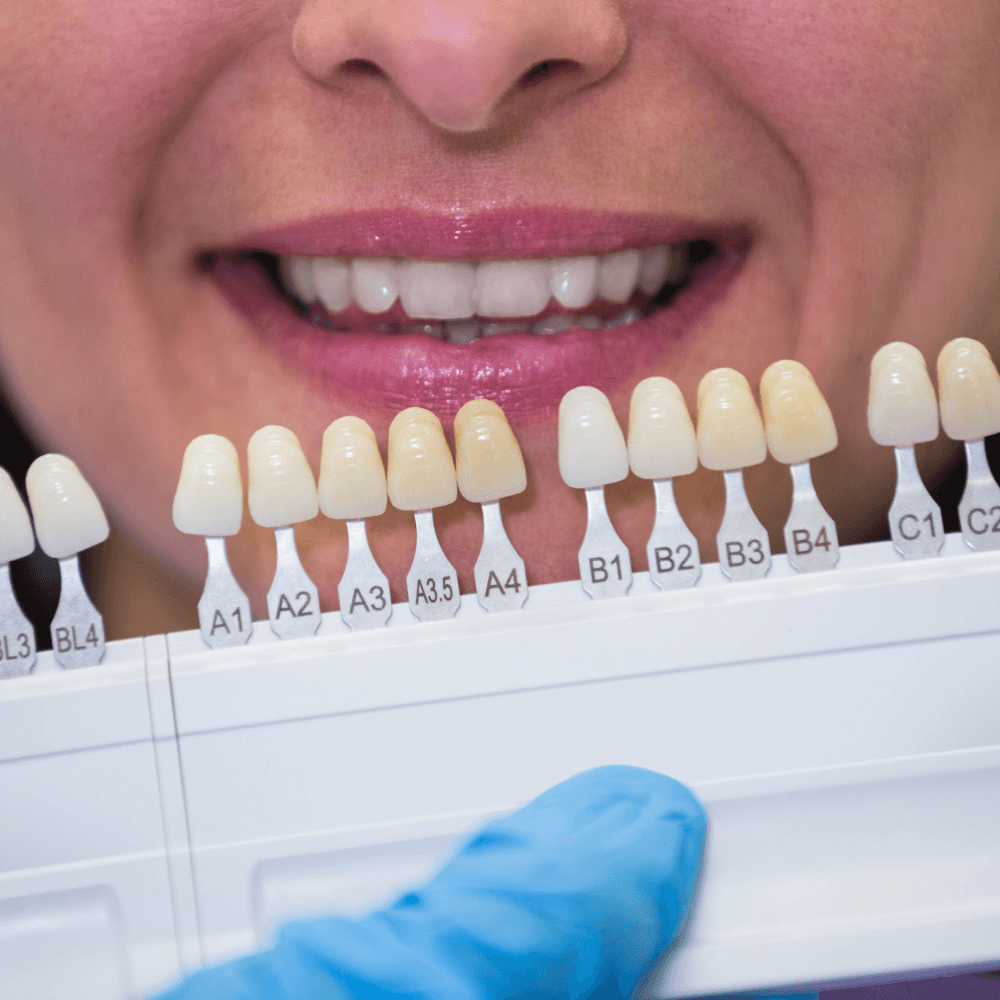
Types of Veneers
Laminate veneers are classified into different types based on material and fabrication technique. Each type has its own advantages and ideal application areas. The most commonly used veneer type at Doredent is the e.max (lithium disilicate) veneer, which delivers high-quality aesthetic results. However, understanding other veneer types as general knowledge helps you see which solution might be appropriate for different cases.- Provides translucency and color depth very close to natural teeth.
- Much more durable than traditional feldspathic porcelain.
- Its thin structure requires minimal tooth reduction.
- High color stability maintains natural appearance over the years.
- Can provide very high aesthetic detail through handcrafting.
- Allows for color transitions very close to natural teeth.
- Durability is lower compared to e.max veneers.
- More susceptible to cracking and breakage.
- Almost no tooth preparation is required.
- Offers a fully reversible aesthetic solution.
- Only suitable if teeth are naturally small or recessed.
- May look bulky and artificial when applied to normal-sized teeth.
- Completed in a single session with no lab process.
- More cost-effective than porcelain veneers.
- Does not offer the aesthetic depth of porcelain.
- Durability and color stability are much lower than porcelain veneers.
Why E.max Veneers at Doredent?
In modern dentistry, e.max veneers are considered the gold standard for veneer treatment. The high durability-to-aesthetics balance offered by lithium disilicate glass ceramic material has made it the preferred choice for professional cosmetic applications. At Doredent, all patients undergoing veneer treatment receive e.max veneers, because this material delivers the most reliable results in both durability and aesthetics. Compared to traditional porcelain veneers, e.max veneers are more resistant to breakage, offer translucency very close to natural teeth, and do not undergo color changes over the years. For you, this means not only post-treatment satisfaction but also long-term visual stability.Treatment Process
Alternative Treatments
Laminate veneers offer a highly effective solution for front tooth aesthetics. However, laminates are not the only option for every aesthetic concern. In some cases, a less invasive method may be sufficient. In others, a different treatment must be completed before laminates can be applied. Below you will find the real alternatives to laminates and how Doredent approaches each one.Orthodontic Treatment (Often Not an Alternative, But a Preparation Step)
One of the most common misunderstandings about laminate veneers is their relationship with orthodontics. As we clearly state on our zirconia and porcelain crown pages, at Doredent we do not recommend grinding down healthy teeth for a problem that can be solved with orthodontics. However, laminate veneers are somewhat different from this rule. Laminates are a much less invasive treatment and require minimal removal of tooth structure. For this reason, the relationship between laminates and orthodontics is approached differently at Doredent:- For mild to moderate crowding: If teeth are severely crowded, laminate veneers are not clinically feasible. Laminates are applied to the front surface of the tooth and require an appropriate form. In such cases, Invisalign or braces treatment is applied first. Once the teeth are properly aligned after orthodontic treatment, laminate veneers can be planned as a second stage if the patient still desires aesthetic improvement. This combination is called the "orthodontic-aesthetic approach" in modern dentistry and provides the best long-term results.
- For very mild irregularities and small diastemae: If the patient's teeth are largely straight with only very minor form irregularities or a slight gap, laminates can be applied directly. Orthodontic treatment is not mandatory in these cases.
- For well-aligned teeth with form defects or color issues: For patients whose teeth are already in the correct position but have issues with shape, color, or size, laminates alone are sufficient. Orthodontic treatment is not recommended in these cases.
Teeth Whitening
If your only concern is tooth color—meaning there are no issues with form, size, or alignment—teeth whitening may be sufficient. This is a much less invasive option than laminate veneers. Whitening lightens the natural tooth color to provide a brighter appearance and requires no grinding or cutting of the tooth. Advantages:- No cutting or permanent alteration of the tooth is required.
- It is a reversible and completely non-invasive treatment.
- It is much more affordable than laminates.
- It can be completed in a single session or a short at-home treatment.
- It does not correct form, size, or alignment issues.
- Intrinsic staining (such as tetracycline stains or fluorosis) may not be fully removed.
- Teeth tend to discolor again over time, and the treatment may need to be repeated.
Composite Bonding (Direct Composite Application)
For minor aesthetic corrections, dental bonding is a good alternative to laminates. In this method, composite resin is applied directly to the tooth surface and shaped by the dentist. It is completed in a single session with no laboratory process required. Advantages:- Completed in a single session.
- Very little or no tooth structure is removed.
- It is much more affordable than porcelain laminates.
- It is effective for small chips, mild diastemae, and minimal form defects.
- Composite material does not offer the translucency and aesthetic depth of porcelain.
- It discolors over time, especially in tea, coffee, and tobacco users.
- It has a shorter lifespan than porcelain laminates.
- It is not sufficient for major aesthetic transformations.
Zirconia or Porcelain Crowns
If not only the front surface but also the structural integrity of the tooth needs to be reinforced, zirconia crowns or porcelain crowns are considered instead of laminates. These crowns cover the tooth 360 degrees and support the structural integrity of the tooth. Advantages:- They strengthen the entire tooth in cases of significant tooth loss.
- They protect root canal-treated teeth from fracture.
- They can be applied to both front and back teeth.
- They better mask very dark teeth compared to laminates.
- Much more tooth structure is removed compared to laminates.
- They are harder to reverse.
- They are not recommended for healthy teeth for purely aesthetic purposes.
Which Treatment Is Right for You?
The right treatment choice is made based on the current condition of your teeth, your aesthetic expectations, and the actual needs of your tooth structure. It is correct to think from the least invasive method to the most comprehensive: If you only have a color issue, whitening is appropriate. For minor form corrections, bonding. For a significant aesthetic transformation, laminates. If structural reinforcement is also needed, crowns. At Doredent, your teeth are thoroughly evaluated during your initial examination, and the most appropriate approach is determined together with you. It is important to emphasize: At Doredent, the least invasive and most conservative treatment option is always presented first. We do not recommend laminates for a tooth that can be solved with whitening, or crowns for a tooth that can be solved with laminates. The fundamental reason for this approach is to protect the long-term health of your teeth.Risks and Complications
E.max laminate veneers are among the most advanced and clinically well-understood restorations in modern aesthetic dentistry. With proper indication and appropriate planning, this treatment shows high success rates and provides trouble-free service for many years in most patients. However, the thin structure of laminates and their application to only the front surface of teeth bring certain inherent risks and complications. These risks are directly tied to your usage habits and regular follow-up. Below you will find the main risks and complications that can occur with laminate veneer treatment.Risk-Increasing Factors
Certain conditions can significantly increase the risk of complications and early failure of laminate veneers. These factors do not mean treatment cannot be performed, but they require additional evaluation and sometimes extra precautions.- Uncontrolled bruxism (nighttime teeth grinding): Excessive chewing forces seriously increase the risk of fracture in thin laminates. A night guard is mandatory for these patients before laminate placement.
- Bite misalignment: When laminates are placed with existing bite problems such as deep bite or crossbite, they experience unbalanced forces and sustain damage earlier than expected. Orthodontic treatment is recommended first.
- Nail biting and pen chewing habits: These habits are among the most common causes of laminate fractures. These habits must be discontinued before treatment.
- Insufficient enamel structure: Laminates achieve long-term durability by bonding to the tooth's enamel layer. In teeth with insufficient enamel surface due to excessive wear, large old fillings, or genetic enamel deficiency, laminates may not bond properly.
- Poor oral hygiene: Plaque buildup at laminate margins increases the risk of secondary decay and gum disease.
- Smoking: Smoking negatively affects gum health and causes discoloration of natural tooth structure at laminate margins.
- Excessive force with hard foods: The habit of biting hard foods such as ice, hard-shelled nuts, or seeds with your front teeth significantly shortens the lifespan of laminates.
- Not using mouth guards in sports: In patients who play contact sports or engage in activities with impact risk, the risk of laminate fracture is high. A mouth guard should be used.
How Are These Risks Managed at Doredent?
The vast majority of potential risks in laminate veneer treatment can be minimized with proper indication, appropriate planning, and patient follow-up. The key elements of the approach applied at Doredent are:- Proper indication: Laminate veneers are recommended only when clinically truly appropriate. In cases that can be resolved with a less invasive option, that option is honestly presented to the patient. Laminates are not recommended for a problem that can be solved with teeth whitening alone, or for an issue that can be resolved with a small composite filling.
- E.max material: At Doredent, e.max (lithium disilicate) laminates, the gold standard of modern dentistry, are used in laminate treatment. This material is more resistant to fracture than traditional feldspathic porcelain.
- Detailed clinical evaluation: Before treatment, enamel condition, bite relationship, presence of bruxism, and gum health are examined in detail.
- Preparatory treatments: If there is active decay, gum disease, or bite misalignment, these issues are resolved before laminate placement. In cases of severe crowding, teeth are first aligned with Invisalign or braces treatment.
- Bruxism management: For patients with nighttime teeth grinding, a night guard becomes part of the treatment plan before or immediately after laminate placement.
- Patient education: Before treatment, the advantages, limitations, alternatives, and risks of laminates are clearly explained to you. Managing expectations realistically is the foundation of satisfaction. Post-laminate usage guidelines and points requiring attention are shared in detail.
- Regular follow-up: Routine check-ups every 6 months evaluate laminate fit, margin adaptation, gum health, and bite relationship. Small issues detected early are resolved with minor interventions.
Who Is a Good Candidate?
Laminate veneers offer an effective solution for patients seeking noticeable improvement in front tooth aesthetics. However, veneers are not suitable for every patient. The decision is made by evaluating the tooth's existing structure, enamel quality, bite relationship, and your expectations together. The following patient profiles represent the groups where laminate veneers are most commonly applied.- Suitable for medication-related discoloration such as tetracycline staining.
- Effective in cases of fluorosis (white-brown stains due to excessive fluoride intake).
- Provides good results for genetically-based color issues.
- Offers a long-term solution for dark teeth that do not respond to whitening.
- Suitable for undersized peg-shaped (conical) teeth.
- Restores natural length to worn and shortened front teeth.
- Achieves natural symmetry in teeth with proportion issues.
- Can correct imbalances in the smile line.
- Provides suitable results for minor to moderate diastemas.
- Tooth proportion and shape can be adjusted simultaneously.
- Offers a longer-lasting solution compared to bonding.
- Very wide gaps require orthodontic evaluation first.
- Provides durable aesthetic results for chipped front teeth.
- Repairs wear related to eating and drinking habits.
- Offers a longer-lasting solution compared to bonding.
- Preserves the tooth's natural translucency.
- Represents the final stage of an orthodontic-aesthetic approach.
- Requires minimal intervention since teeth are already in the correct position.
- Provides natural and long-lasting aesthetic results.
- One of the most recommended combinations in modern dentistry.
- Typically applied to 6-10 front teeth in the upper jaw.
- Provides a symmetrical, natural, and harmonious smile.
- Color and shape planning coordinated with facial aesthetics.
- The modern standard for comprehensive smile transformation.
Who Requires Additional Evaluation?
In certain cases, additional evaluation, preparation, or alternative planning is needed before veneer treatment. This does not mean the treatment cannot be done. It typically means an extra step must be added to the treatment or a different approach must be considered.- Patients with severe tooth crowding: If the level of crowding is high, veneers cannot be clinically applied. In this case, the teeth are first moved into the correct position with Invisalign or braces treatment, and then veneers are planned if needed.
- Patients with bite disorders: Bite problems such as deep bite or crossbite expose veneers to unexpected forces and increase fracture risk. Orthodontic treatment is recommended first.
- Patients with severe bruxism (nighttime teeth grinding): Veneers are sensitive to nighttime teeth grinding due to their thin structure. In these patients, wearing a night guard becomes mandatory before veneers are placed. Without a night guard, veneers may fracture prematurely.
- Patients with active gum disease: Before veneers, dental scaling and, if necessary, curettage or advanced periodontal treatments must be completed. Veneers placed over unhealthy gums do not last long.
- Patients with insufficient enamel: Veneers are bonded to the enamel layer of the tooth to provide long-term durability. In teeth where the enamel surface is insufficient due to excessive wear or large old fillings, veneers may not adhere properly. In these cases, porcelain or zirconia crowns may be more suitable.
- Patients with untreated cavities: If there are active cavities in the mouth, these must be treated first. Aesthetic treatments performed in an unhealthy oral environment do not provide lasting results.
- Patients with habits such as nail biting or chewing on pens: These habits pose a serious fracture risk for veneers. You must discontinue these habits.
After Treatment
Once your laminate veneer treatment is complete, your front teeth will have a new form, both aesthetically and functionally. However, the longevity of your laminates depends on certain precautions you need to take in the following days and your long-term oral care habits. The thin structure of laminates makes them more sensitive to usage habits compared to zirconia or porcelain crowns. For this reason, post-laminate care requires a bit more attention.The First Hours: Anesthesia and Temporary Veneer Period
Laminate treatment is usually spread over two sessions. In the first session, the teeth are prepared very thinly, impressions are taken, and in necessary cases, the patient receives temporary veneers. While the permanent e.max laminates are being produced in the laboratory, the patient uses this temporary solution. However, since the amount of preparation in laminate treatment is very low, in some cases it is possible to wait without using temporary veneers. Points to consider after the first session:- Do not eat until the anesthesia wears off. Since there is no sensation in the lips, cheeks, and tongue, there is a high risk of accidentally biting these tissues. Anesthesia usually wears off within two to three hours. During this time, it is only safe to drink water.
- Be careful if you have temporary veneers. Temporary veneers are much less durable. Avoid hard, sticky, or difficult-to-chew foods (chewing gum, caramel, hard nuts) and try not to bite with your front teeth.
- Use dental floss carefully. During the temporary veneer period, it is safer to pass the floss horizontally rather than pulling it out vertically.
- Do not panic if a temporary veneer comes off. In such a case, contact the clinic; if the tooth is left exposed, you may experience brief sensitivity.
The First Days: Sensitivity and Adjustment
When permanent veneers are placed, some patients may experience brief sensitivity or an adjustment period:- Hot-cold sensitivity: The natural tooth tissue under the veneer may show brief sensitivity after thin preparation. Since the preparation in laminate treatment is minimal, this sensitivity is usually mild and passes within a few days.
- Bite sensation: For the first few days after permanent veneers are placed, your teeth may feel different in your mouth. This adjustment period passes quickly. However, if you feel a clear high point or discomfort in your bite, contact the clinic for a check-up; a minor adjustment on the veneer may be needed.
- Aesthetic adjustment period: It may take a few days to get used to your appearance in the mirror after veneers. This process is natural, especially in cases where comprehensive smile transformation has been performed.
About the Lifespan of Veneers
E.max veneers are among the most aesthetic and durable anterior restorations in modern dentistry. When properly applied in the right cases and supported by the patient's usage habits, they function without problems for many years. However, it is necessary to share a clear truth here: no crown lasts a lifetime, and how long veneers last depends largely on the patient's usage habits. Due to their thin structure, veneers are more prone to fracture than zirconia or porcelain crowns. Habits such as cracking seeds, chewing ice, biting hard-shelled nuts, chewing pens, nail-biting, and opening bottle caps can cause cracks or breakage in veneers. In clinical practice, we often see that patients are more careless about this than expected. Additionally, in patients with nighttime teeth grinding habits, the lifespan of veneers is significantly shortened; therefore, if bruxism is present, the use of a night guard is absolutely essential. For this reason, Doredent provides no warranty regarding the durability of laminate veneers. The lifespan of veneers depends on the patient's oral care, chewing habits, nighttime teeth grinding, and regular clinical check-ups. Properly maintained veneers can be used without problems for many years; improperly used veneers can cause problems much earlier than expected.Special Dietary Recommendations for Veneers
Due to their thin structure, veneers require slightly more careful eating habits compared to zirconia and porcelain crowns. Following the recommendations below will significantly extend the life of your veneers:- Avoid biting with your front teeth: Instead of biting hard foods like apples, carrots, and corn with your front teeth, first cut them into small pieces with a knife and chew with your back teeth.
- Do not crack hard-shelled nuts with your teeth: Never put nuts like hazelnuts, pistachios, and walnuts in your mouth with their shells. Choose the pre-cracked version.
- Avoid ice-chewing habits: Ice is one of the most common causes of veneer fractures. Drinking cold beverages with a straw is an easy way to prevent this habit.
- Consume fruits with pits carefully: In fruits with pits like olives, cherries, and peaches, you may unexpectedly encounter a hard pit.
- Avoid very sticky foods: Sticky foods like chewing gum, caramel, and Turkish delight can strain the edges of veneers.
- Be careful with tea, coffee, and red wine consumption: Veneers do not discolor, but natural teeth and the area around veneers can stain over time. This color difference can affect the aesthetic appearance.
Long-Term Care
After getting veneers, you do not need to switch to a special care routine. However, the best way to protect your teeth is to pay a little more attention to your oral hygiene and correct some habits:- Brush twice a day: Brush for at least two minutes with a soft-bristled toothbrush and fluoride toothpaste, covering the edges of the veneers as well. Avoid abrasive whitening toothpastes.
- Use dental floss every day: Plaque buildup at the line where veneers meet the gums is of critical importance. Floss is the most effective way to clean this area. The natural tooth under the veneer can still decay.
- Use a night guard: In patients with bruxism (nighttime teeth grinding), a night guard is absolutely essential. Without a night guard, veneers can fracture quickly. Even in patients without bruxism, especially those who have undergone comprehensive smile transformation, a night guard for protective purposes may be considered.
- Do not use your teeth as tools: Habits like opening bottles, tearing packages, cutting labels, and untying knots are serious risks for veneers. They react to such actions much more sensitively than natural teeth.
- Stop nail-biting and pen-chewing habits: These habits are among the most common causes of veneer fractures.
- Protection during sports: We recommend using a sports mouthguard during contact sports or activities with a risk of impact.
Routine Check-Up Every 6 Months
After getting veneers, you do not need to enter a special check-up schedule. The standard routine dental examination every 6 months is sufficient to monitor the condition of the veneers and surrounding tissues. During these examinations, the fit of the veneers, the integrity of the edges, gum health, and the occlusal relationship with the opposing teeth are evaluated. Routine check-ups are also an appropriate time for professional dental scaling. During dental scaling in veneer patients, the instruments and techniques used require special attention; the necessary care is taken at Doredent in this regard. In patients who are regularly monitored, possible problems (such as small edge fractures, color changes, gum recession) are noticed early and resolved with minor interventions. In neglected veneers, problems can grow and require complete replacement of the veneer. The most important way to preserve your veneers for many years is this regular follow-up.Frequently Asked Questions
Do laminate veneers look natural?
Are laminate veneers durable?
Do laminate veneers stain or turn yellow?
Is the laminate procedure painful?
Can laminates be applied to all front teeth?
How long does laminate veneer treatment take?
What should I do if my laminates break or come off?
What is the difference between laminates and porcelain crowns?
Can I whiten my teeth after getting laminates?
Treatment Pricing
Laminate Veneers Pricing
At Doredent, we offer transparent pricing for our international patients. As every case is different, the final treatment cost depends on your individual evaluation.
The cost of Laminate Veneers varies based on factors such as the number of veneers, the porcelain quality selected, the production laboratory, and the scope of the smile design. For an accurate quote, a personalized assessment is recommended.
For pricing details, reach out via WhatsApp or book your initial consultation.
Our Dentists
Meet our specialist team.


Content Information
This page was prepared by the Dore Medical Editorial Board and medically reviewed by Dr. Merve Özkan Akagündüz.
