TMJ Splint
A custom-designed treatment appliance that reduces pain, relieves the joint, and restores muscle balance in jaw joint disorders.
Medically reviewed. Last updated: May 13, 2026.What Is a TMJ Splint?
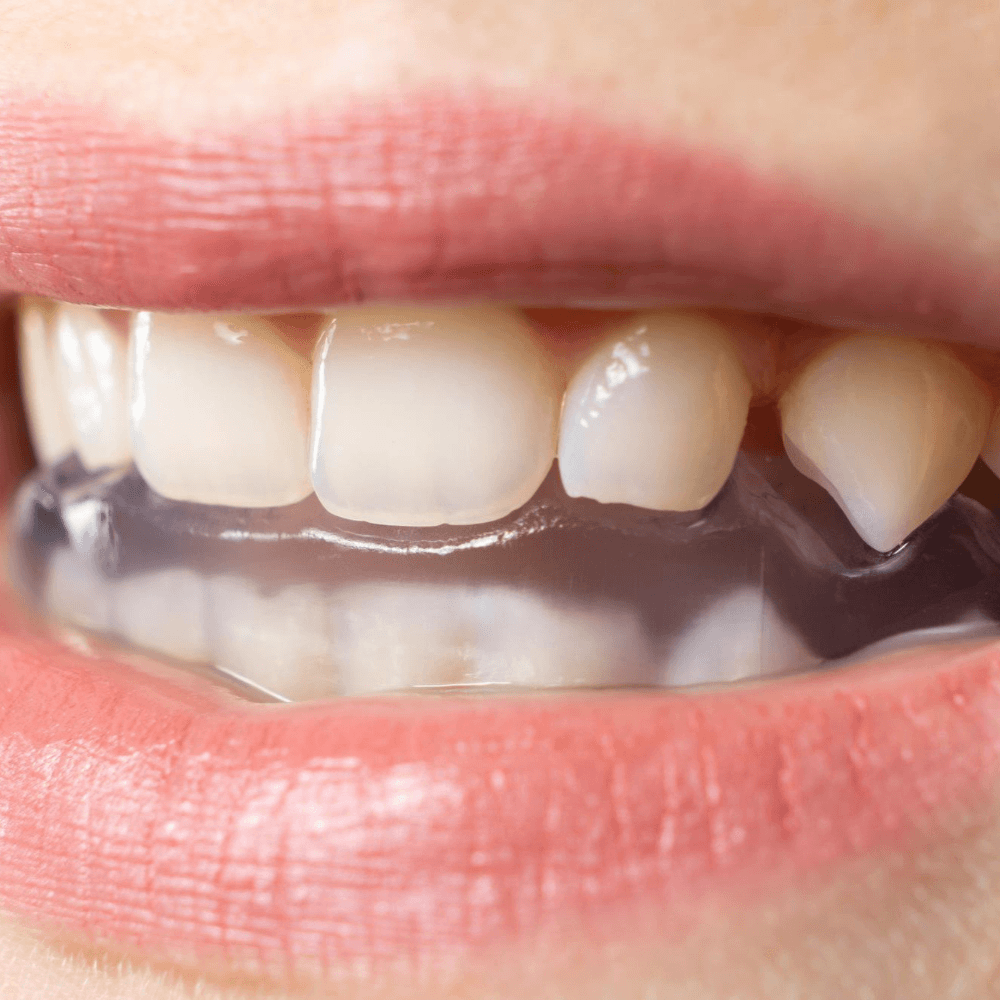
A TMJ splint is a therapeutic appliance used in patients with jaw joint disorders. It sits between your teeth and helps your jaw joint rest in the correct position. It looks similar to a night guard, but its purpose and design are different. While a night guard is designed to protect teeth from grinding, a TMJ splint is planned to balance the load on the jaw joint and relieve joint structures. For this reason, the thickness of the splint, its occlusal surface, and how it's adjusted to your bite are determined specifically after a bite analysis.
TMJ splints are particularly used in patients with TMJ disorders. Patients typically present with jaw pain, clicking or popping sounds in the jaw joint, difficulty opening or closing the mouth, trismus (inability to open the mouth fully), pain around the ear, and chronic headaches. These complaints are often caused by bruxism, bite discrepancies, stress-related muscle spasms, or jaw joint disc displacement.
A detailed examination is performed before treatment. Your jaw joint movements, muscle tenderness, and bite relationship are evaluated. MRI or CT imaging may be requested if needed. An impression is taken using digital or traditional methods, and the splint is custom-made for you in the lab. During the try-in appointment, your dentist fine-tunes the splint's occlusion. This adjustment is critical for the success of the TMJ splint, because each contact point is planned to relieve the joint.
You typically wear the splint at night. In some cases, you may be asked to wear it during the day for certain hours. Treatment duration usually ranges from 3 to 6 months, during which regular check-ups and fine adjustments are made. By the end of treatment, your jaw joint symptoms improve significantly. In some patients, orthodontic treatment or bite adjustment may be needed for a permanent solution. For complaints related to chewing muscles, masseter botox may be beneficial. In advanced cases, orthognathic surgery may be considered.
Types of TMJ Splints
A TMJ splint is not a one-size-fits-all appliance. Different splint designs can be applied depending on the patient's jaw joint condition, muscle findings, bite relationship, and type of symptoms. At Doredent, Uzm. Dt. Merve Özkan Akagündüz determines the most appropriate splint type based on the patient's clinical condition.Michigan Splint (Stabilization Splint)
This is the most commonly used TMJ splint type at Doredent. It is made from hard acrylic material and is fitted to the upper jaw. Its flat occlusal surface ensures that all lower teeth make equal and balanced contact with the splint. This design helps relax the chewing muscles, guides the jaw joint to its natural position, and allows balanced distribution of bite forces. Key features:- Custom-made from hard acrylic material.
- Fitted to the upper jaw; all lower teeth make equal contact on the splint surface.
- The flat occlusal surface allows the lower jaw to move freely, guiding the jaw joint to its natural position.
- Reduces excessive activity in chewing muscles and promotes muscle relaxation.
- Balances uneven loads on the joint.
- TMJ pain and tenderness.
- Morning jaw fatigue, muscle tension, and headaches.
- Advanced bruxism (teeth grinding and clenching) cases.
- Jaw joint clicking and limited movement.
- Joint load due to bite imbalance.
- Jaw joint stabilization before orthodontic treatment.
Difference Between TMJ Splint and Night Guard
Although a TMJ splint and a night guard serve similar purposes, they are clinically different appliances. Understanding this difference is important for patients to receive the right treatment.- Night guard (Essix type): A thin, clear retainer that fits over the teeth. Its main purpose is to prevent direct tooth-on-tooth damage. It is used for mild to moderate bruxism and orthodontic retention. It does not actively adjust the bite relationship; it is a protective barrier.
- TMJ splint (Michigan splint): A thick, hard acrylic appliance. Its main purpose is not only to protect the teeth but also to guide the jaw joint to its natural position and promote relaxation of the chewing muscles. It actively adjusts the bite relationship. It is used for advanced bruxism, TMJ disorders, and muscle-related symptoms.
Treatment Process
Alternative Treatments
A TMJ splint is an important tool in treating jaw joint disorders and advanced bruxism. However, a TMJ splint is not the only solution for every case. Depending on the type, severity, and underlying cause of your symptoms, different treatment approaches may be considered. At Doredent, no single method is imposed for jaw joint complaints. The most suitable approach for your case is recommended honestly.Night Guard (Essix-Type)
For mild to moderate bruxism cases where jaw joint symptoms are not prominent, a standard night guard may be sufficient. The thin, clear Essix-type splint protects your teeth from bruxism-related wear and provides comfort during sleep. Advantages:- Thinner and lighter compared to a TMJ splint.
- Adaptation period is typically shorter.
- More cost-effective than a TMJ splint.
- Combines orthodontic retention and bruxism protection.
- Does not actively regulate jaw joint load.
- May not provide adequate protection in advanced bruxism cases.
- Insufficient for cases involving jaw joint pain, clicking sounds, or muscle problems.
- Does not actively modify bite relationships.
Physical Therapy and Muscle Relaxation Exercises
Some jaw joint problems are related to excessive tension and muscle spasm in the chewing muscles. In these cases, physical therapy, muscle relaxation exercises, and jaw mobility exercises can alleviate symptoms. Advantages:- A non-invasive, natural approach.
- Can be combined with a TMJ splint—complementary.
- Supports long-term muscle health.
- Effective for stress-related muscle tension.
- May be insufficient alone in advanced TMJ cases.
- Requires patient discipline and consistent practice.
- Does not resolve bite-related or skeletal TMJ problems.
Medication Therapy
In the acute phase, medication therapy may be used to manage jaw joint pain, muscle spasm, and inflammation. Muscle relaxants, pain relievers, and anti-inflammatory drugs provide short-term relief. Advantages:- Provides rapid relief for acute pain and spasm.
- Can be used alongside a TMJ splint.
- May improve sleep quality.
- Does not resolve the underlying cause—it is symptomatic treatment.
- Long-term use is not recommended.
- May have side effects; should be used under medical supervision.
Botox (Limited Cases)
In cases of severe chewing muscle spasm and advanced bruxism, botox injections into the masseter muscle can temporarily reduce muscle activity. This approach is a temporary solution and requires regular repetition. Advantages:- Provides rapid relief in severe muscle spasm.
- Can reduce bruxism-related muscle hypertrophy.
- Reversible; does not create permanent changes.
- Temporary; requires repetition every 4-6 months.
- Does not resolve joint-related problems.
- Not directly administered at Doredent; referrals are made to specialist physicians.
- Long-term safety profile is debated.
Orthodontic Treatment (Bite Correction)
Some jaw joint problems stem from bite discrepancies. Improper tooth alignment causes unbalanced load on the jaw joint. In these cases, correcting the bite with Invisalign or braces can balance the joint load. Advantages:- Permanently corrects the underlying bite discrepancy.
- Balances joint load long-term.
- Provides both aesthetic and functional improvement.
- Orthodontic treatment is a lengthy process (12-24 months).
- Not all TMJ problems are bite-related.
- Joint stabilization may be required before orthodontic treatment (splint first, then orthodontics).
Important Considerations
A TMJ splint does not cause major discomfort in daily life; however, you need to pay attention to certain points for long-term effectiveness and comfort.Usage Instructions
- Wear it every night: A TMJ splint only provides protection and stabilization when you wear it. Irregular use reduces treatment effectiveness. You must strictly follow the usage protocol determined by your dentist.
- Do not eat while wearing the splint: You should not eat or consume sugary drinks while wearing your TMJ splint. You can only drink water.
- Storage: When your splint is not in your mouth, you must keep it in its storage case or in water. Hard acrylic splints can crack if left dry for extended periods.
- Do not force it: You should not force the splint when putting it on or removing it. When inserting it, press gently to seat it in place; when removing it, start from the back areas and take it out gently.
- Daytime use: In some cases, your dentist may recommend daytime use as well. This decision is made based on your clinical condition.
Cleaning and Care
- Rinse after each removal: You should rinse your splint with cold or lukewarm water every time you remove it.
- Regular brushing: You can gently brush it with a soft toothbrush and toothpaste. Hard acrylic surfaces are more resistant to scratching compared to Essix retainers.
- Odor and bacteria control: If not cleaned regularly, it can develop odor due to bacterial buildup. You can use weekly retainer cleaning tablets (such as Polident or Retainer Brite).
- Moist storage: Hard acrylic splints can be stored in water or in a moist environment. They should not be left dry for long periods; this can cause cracking.
Follow-Up Appointments
- First check-up (after 2 weeks): The first adjustment appointment is scheduled 2 weeks after your splint is delivered. Necessary adjustments are made to the occlusal surface (the areas on the splint where your lower teeth contact). Your symptoms are evaluated.
- Second check-up (after 1 month): A follow-up is done after one month. The progress of muscle relaxation, the course of joint findings, and the fit of the splint are evaluated. Additional occlusal adjustments are made if needed.
- Subsequent check-ups: After the first two appointments, you will be monitored at regular intervals. The frequency of check-ups is determined based on your clinical condition.
- Why occlusal adjustment is important: The effectiveness of a TMJ splint depends on proper occlusal adjustment. All your lower teeth must contact the splint surface evenly and in a balanced manner. An unadjusted splint can worsen your symptoms instead of improving them.
Situations Requiring Attention
- Increase in symptoms: If your pain, muscle tension, or jaw joint clicking increases despite using the splint, you must contact the clinic. An adjustment to the splint or an update to your treatment plan may be needed.
- Splint breakage or cracking: Hard acrylic splints can rarely crack or break. If this happens, do not continue using the splint and contact the clinic.
- Changes to your teeth: After a new filling, crown, or tooth extraction, the fit of your splint may change. A splint check-up is recommended after such treatments.
- Do not use an ill-fitting splint: If your splint does not fit properly on your teeth, feels loose, or causes discomfort, do not continue using it; consult your dentist.
Who Is It Suitable For?
A TMJ splint is planned for patients with specific complaints related to the jaw joint and chewing muscles. Not every jaw joint complaint requires a splint; clinical evaluation determines which patients are suitable candidates.- Pain or tenderness in front of the ear.
- Pain or restriction during jaw movements.
- Discomfort in the jaw area while eating.
- Difficulty opening the mouth or a feeling of locking.
- Clicking sound when opening or closing the jaw.
- Joint sounds during chewing.
- More urgent evaluation if pain accompanies the clicking.
- Clicking does not always require treatment; clinical evaluation determines the need.
- Significant tooth wear and enamel loss.
- Cracks or fractures in the teeth.
- Essix-type night guard wearing through quickly.
- Jaw joint complaints accompanying bruxism.
- Pain in the temple or jaw area upon waking.
- Jaw muscle tension throughout the day.
- Tension-type headaches related to teeth clenching.
- Complaints that intensify during stressful periods.
- Orthodontics should not be planned on an unstable joint.
- The splint provides muscle relaxation and joint balance.
- Afterward, treatment with Invisalign or braces begins.
- This approach supports long-term treatment success.
- Significantly reduces risk of crown fracture and cracking.
- Protects implant superstructures.
- Reduces risk of laminate debonding.
- Protects your treatment investment long term.
Usage and Care
Proper use and regular care of your TMJ splint are essential both to maintain treatment effectiveness and to extend the splint's lifespan.Usage Protocol
- Standard use: TMJ splints are typically worn every night during sleep. They help relax your jaw muscles overnight and balance the load on your jaw joint.
- Daytime use: In some advanced cases, your dentist may recommend daytime wear as well. This decision is based on symptom severity and muscle findings.
- Duration of use: How long you wear your TMJ splint depends on your clinical condition. For some patients, a few months may be sufficient, while others may need long-term or indefinite use. This decision is made through regular follow-up.
- Do not stop using it on your own: Even if your symptoms improve, stopping splint use on your own is not advisable. Reducing or discontinuing use is planned by Uzm. Dt. Merve Özkan Akagündüz.
Lifespan of Your TMJ Splint
- Average lifespan: A hard acrylic TMJ splint typically lasts 2-3 years. In patients with severe bruxism, this period may be shorter.
- Signs of wear: Visible wear marks on the splint surface, cracks, discoloration, or loss of occlusal fit indicate the need for replacement.
- Replacement: When your splint becomes worn or loses its fit, new impressions are taken to fabricate a new splint.
Splint Fabrication Process
- Examination and assessment: At your initial exam, your jaw joint movements, tenderness in your jaw muscles, bite relationship, and the nature of your symptoms are thoroughly evaluated.
- Taking impressions: At Doredent, we take traditional impression molds for your TMJ splint. The impression process takes just a few minutes and is painless.
- Laboratory fabrication: Your impressions are sent to the laboratory. The lab mounts them on an articulator and fabricates your custom splint. This step is critical to ensure your splint is made with the correct occlusal relationship.
- Delivery and fit check: Your splint is tried in your mouth, occlusal fit is checked, and necessary adjustments are made. The usage protocol is explained in detail.
- First follow-up (after 2 weeks): Your splint's fit, symptom progression, and occlusal contact points are evaluated; additional adjustments are made if needed.
- Second follow-up (after 1 month): Muscle relaxation progress, jaw joint findings, and long-term treatment planning are assessed.
Follow-up and Control Schedule
- First 2 weeks: Your splint's occlusal fit, your adaptation, and symptom progression are evaluated.
- After 1 month: Muscle relaxation, jaw joint findings, and treatment response are assessed.
- Subsequent period: Depending on your clinical condition, follow-up is recommended every 3-6 months.
- Routine dental checkups: During your standard 6-month dental checkups, your splint's condition is also evaluated.
Permanent Solutions After TMJ Splint Therapy
Frequently Asked Questions
What is a TMJ splint and what is it used for?
What is the difference between a TMJ splint and a night guard?
Is it difficult to get used to a TMJ splint?
Does a TMJ splint completely eliminate jaw joint pain?
How long should a TMJ splint be used?
When should a TMJ splint be replaced?
Treatment Pricing
TMJ Splint Pricing
At Doredent, we offer transparent pricing for our international patients. As every case is different, the final treatment cost depends on your individual evaluation.
The cost of TMJ Splint varies based on factors such as the type of splint produced, case complexity, and the follow-up process. For an accurate quote, a personalized assessment is recommended.
For pricing details, reach out via WhatsApp or book your initial consultation.
Our Dentists
Meet our specialist team.



Content Information
This page was prepared by the Dore Medical Editorial Board and medically reviewed by Dr. Merve Özkan Akagündüz.