


Braces Treatment
Effective orthodontic treatment for patients of all ages using metal, ceramic, or lingual brackets. A strong and reliable solution for everything from crowding to bite problems, including more complex cases. Medically reviewed. Last updated: April 11, 2026.
Get your teeth into a healthy and correct position with braces treatment.
Orthodontic treatment that brings teeth and jaws into their ideal positions provides significant benefits both aesthetically and functionally. Thanks to braces, crowding is corrected, bite problems are resolved, and oral health is better maintained.
The treatment process is planned on a custom basis and progressed with regular check-ups by an orthodontic specialist. This way, teeth are moved in a controlled manner over time to achieve a healthy and balanced smile.
Your bite relationship, tooth alignment, jaw structure, and treatment goals are evaluated together. X-rays, clinical examination, and models are used to create a fully personalized braces treatment plan.
The type of brackets (metal, ceramic, or lingual) is selected based on your needs and preferences. Brackets are carefully positioned on each tooth for optimal force delivery.
At scheduled appointments, archwires are adjusted to guide the teeth toward their target positions. Your orthodontist monitors progress and modifies the plan as needed.
When treatment is complete, brackets are removed, teeth are polished, and a retention plan is implemented to maintain the results long-term.
What is braces treatment?
Braces treatment is an orthodontic method aimed at improving oral health and aesthetics by correcting the position of teeth and the jaw and bite relationships. There is no age limitation for braces treatment. Today, it has become a treatment frequently applied by adults as well.
Modern braces used in orthodontics are much smaller and more aesthetic than in the past. While metal brackets offer a durable and effective treatment, aesthetic bracket options can also provide a less visible alternative. Most people quickly get used to braces in their daily life while talking or smiling.
The duration of braces treatment can vary depending on the individual's tooth structure, the degree of crowding, and jaw relationships. On average, treatment duration ranges between 12 to 24 months. In some mild cases this can be shorter, while more complex cases may take longer.
After braces are placed or wires are adjusted, mild sensitivity or a pressure sensation may occur for the first few days. This is a normal process indicating the teeth have started to move. It generally subsides on its own within a few days.
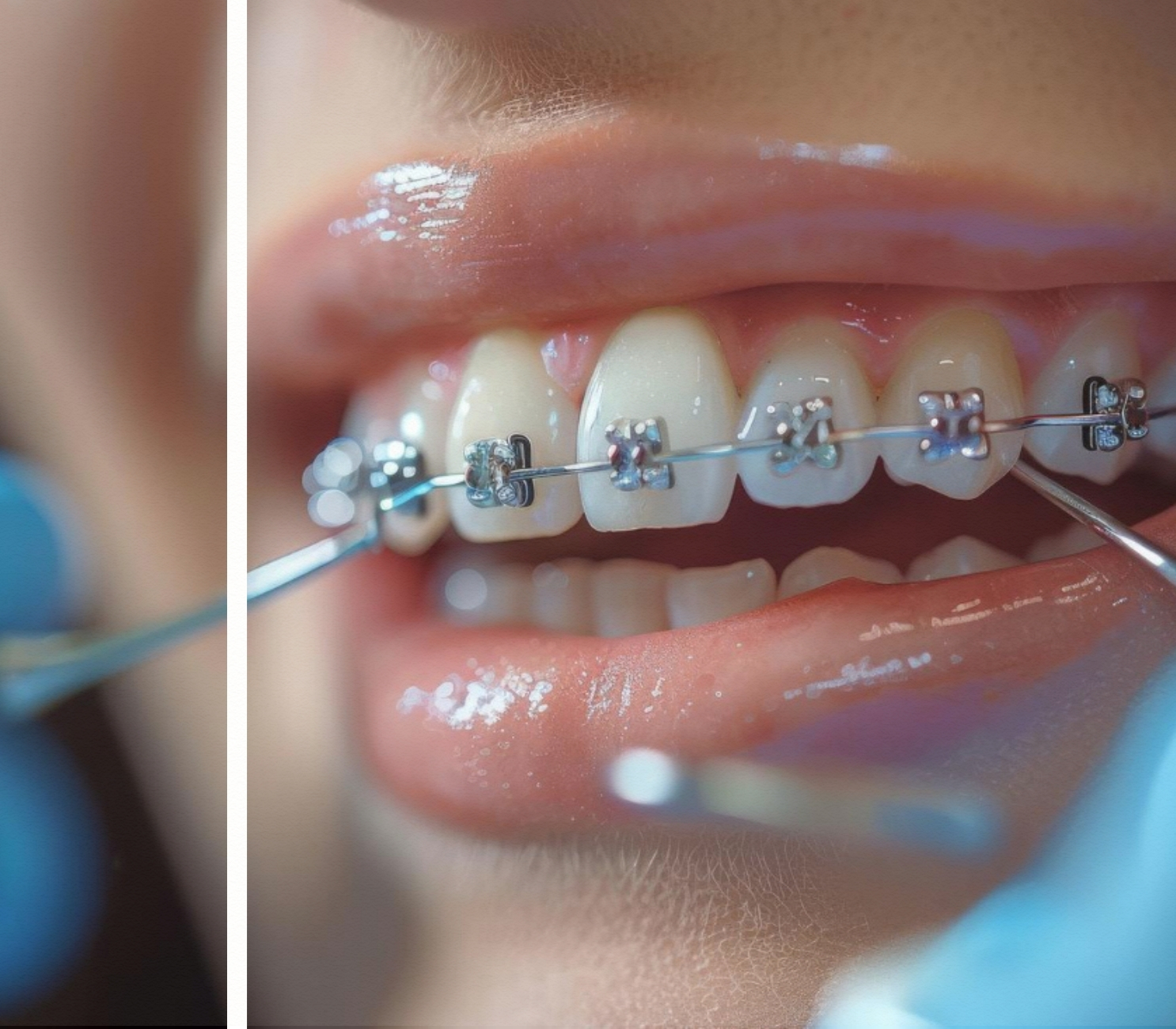
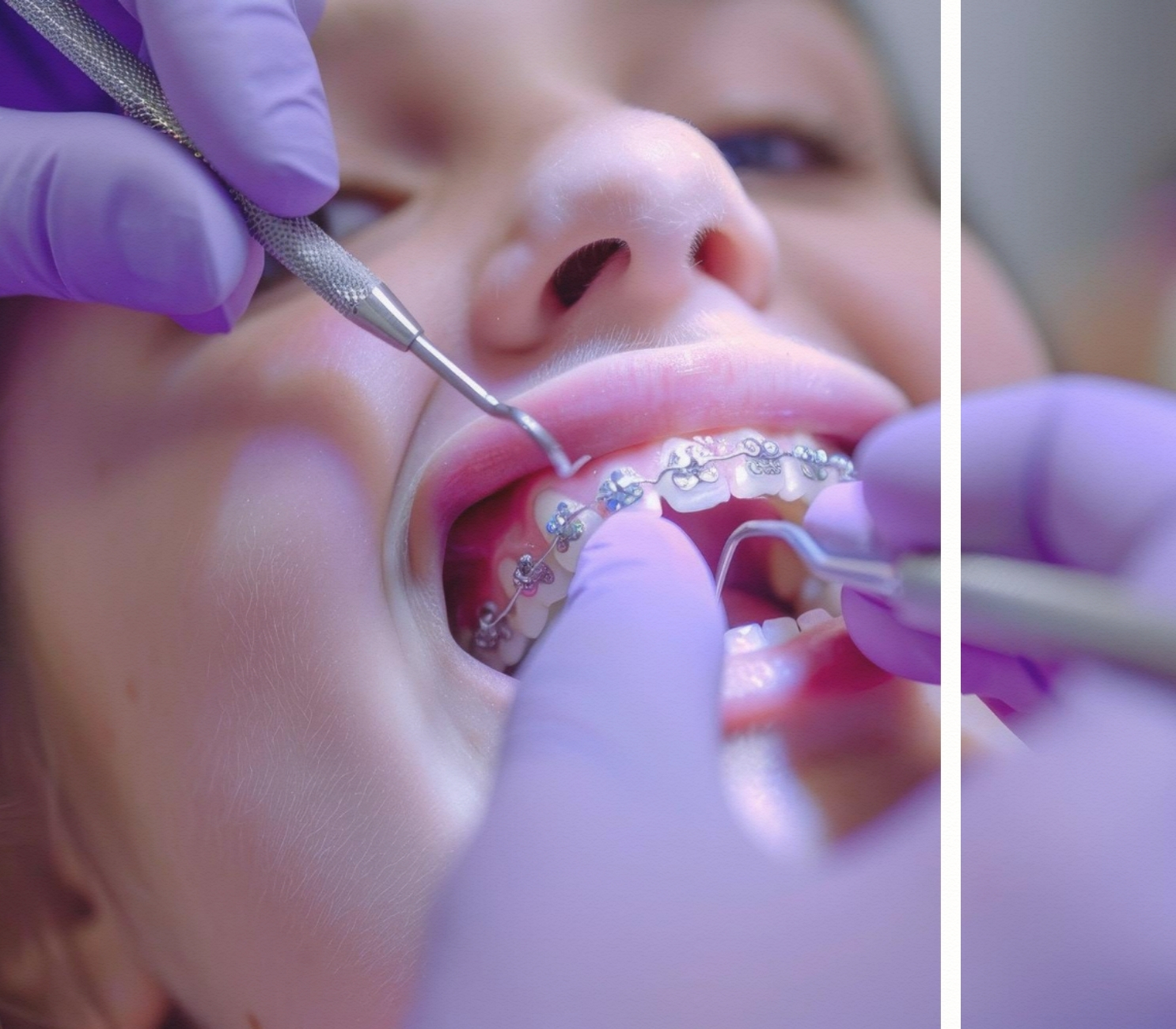
Healthy and straight teeth with braces treatment
Braces treatment is an orthodontic method applied to correct crowding in teeth and jaw bite disorders.
Thanks to brackets and wires placed on the teeth, a controlled and continuous force is applied to the teeth. This way, the teeth move toward their ideal positions over time.
Crowding in teeth is corrected, jaw bite problems are improved, and a healthier and more aesthetic smile is achieved.
During the treatment process, which progresses with regular check-ups, tooth movement is monitored by the orthodontic specialist and necessary adjustments are made to achieve the best result.
- Jawbone and anatomical structure are examined in detail.
- Implant positions are determined with digital planning.
- Temporary and permanent prosthesis processes are planned in advance.
- Both function and aesthetics are evaluated together.
Orthodontic Problems That Can Be Treated with Braces
Braces treatment is effective in solving a wide range of orthodontic problems. Crowded teeth, gap teeth (diastema), deep bite, open bite, crossbite, and underbite are successfully treated with braces. Especially for advanced jaw discrepancies and complex tooth movements, braces provide strong control thanks to their fixed structure.
Braces or Invisalign?
For mild and moderate cases, Invisalign clear aligner treatment is an advantageous alternative in terms of aesthetics and comfort. However, braces may be more effective in the following situations:
In advanced crowding or severe bite disorders, complex tooth rotations, bringing impacted teeth into the mouth through orthodontic traction, and in young patients where patient compliance may be low, braces provide more predictable results. Being fixed, they work 24/7 and do not require aligner-wearing discipline.
At Doredent, our orthodontic specialist can apply both methods. The most suitable option for your case is determined together.
Post-Treatment Retention and Relapse Risk
After braces treatment is completed, retainer use is mandatory. A fixed retainer wire and a removable night retainer are applied to ensure the teeth permanently settle into their new positions. When retainers are not used, teeth tend to return to their old positions; this is called orthodontic relapse. If relapse occurs, short-term correction with Invisalign is possible.
Sequencing of Orthodontics and Other Treatments
Before starting braces treatment, existing issues in the mouth are addressed. Cavities are treated with fillings or root canal treatment. Teeth that need to be extracted, especially extractions planned for space creation or problematic wisdom teeth, are extracted in coordination with the orthodontic plan.
If aesthetic improvement is desired after orthodontic treatment, laminates or zirconia crowns can be planned. If there is a missing tooth, the teeth are first brought to the correct position, then an implant is placed.
Early Orthodontic Evaluation in Children
It is recommended that every child be seen by an orthodontic specialist by age 7. For children between 6-10 years of age, early intervention can be done with Invisalign First or traditional appliances during the mixed dentition phase. Orthodontic problems are detected early through regular pediatric dentistry check-ups.
Frequently Asked Questions
We have compiled the questions we receive about this treatment and answered them as openly and transparently as possible.
When braces are first placed, there may be a few days of mild adjustment due to the new situation in the mouth. Some patients may notice a very slight difference in their speech during this period. However, the tongue and oral tissues adapt quickly, and speech generally returns completely to normal within a few days.
The duration of braces treatment varies from person to person. The degree of crowding, jaw structure, and treatment plan determine this timeline. On average, orthodontic treatments are completed in 12 to 24 months. In simple cases, this period can be shorter, while more advanced orthodontic problems may take longer.
After braces are placed, mild sensitivity or a pressure sensation may occur for the first few days due to the teeth beginning to move. This is normal and usually resolves on its own within a few days. Short-term sensitivity may also be experienced after check-up adjustments during treatment.
No pain is felt during the placement of braces. The procedure is performed in a completely comfortable manner and generally takes 30-60 minutes. However, a mild pressure sensation may occur during the first days as the teeth adapt to treatment.
It is recommended to avoid hard and sticky foods that could damage the braces. Hard-shelled nuts, very hard foods, sticky foods like caramel and gum can damage the brackets. Eating in smaller bites and consuming hard foods carefully helps treatment progress smoothly.
Oral hygiene is very important during braces treatment. Teeth should be brushed at least twice a day with an orthodontic brush, and dental floss or interdental brushes should be used for between the teeth. Careful cleaning around the wires and brackets is very important for maintaining gum health.
Braces do not seriously affect daily life. There may be a small adjustment period in the first few days, but patients quickly resume their normal lives. There are generally no restrictions in terms of playing sports, working, or maintaining social life.
After orthodontic treatment is completed, retention treatment (retainer use) is applied to help teeth maintain their new positions. When retainers are used as recommended by the dentist, the risk of teeth shifting back is largely prevented.
Our Dentists
Meet our expert dentists.



References
The information on this page has been prepared based on the current guidelines of international orthodontic associations, peer-reviewed scientific publications, and textbooks recognized as academic standards.
View Sources(5)
- American Association of Orthodontists (AAO). How Do Braces Work?.
- American Association of Orthodontists (AAO). Orthodontic Treatment Options.
- Abbing A, Koretsi V, Eliades T, Papageorgiou SN. Duration of orthodontic treatment with fixed appliances in adolescents and adults: a systematic review with meta-analysis. Progress in Orthodontics, 2020.
- Martin C, Littlewood SJ, Millett DT, et al. Retention procedures for stabilising tooth position after treatment with orthodontic braces. Cochrane Database of Systematic Reviews, 2023.
- Proffit WR, Fields HW, Larson BE, Sarver DM. Contemporary Orthodontics, 6th Edition. Elsevier, 2018.
Content Information
This page was prepared by the Dore Medical Editorial Board and medically reviewed by Dr. Merve Özkan Akagündüz, DDS, MSc.