


Dental Filling
Removal of decayed tooth structure and restoration with a tooth-colored composite material. With early intervention, it is the simplest, fastest, and most cost-effective way to save your tooth.
Aesthetic, Protective, and Natural-Looking Restoration with Composite Dental Filling
Composite filling treatment involves cleaning the decay that has formed on a tooth and filling the resulting cavity with a special tooth-colored filling material. It can be preferred not only for treating cavities but also for correcting minor fractures, shape irregularities, and for certain aesthetic enhancements. The goal is to achieve a healthy and natural result while preserving as much tooth structure as possible.
Every patient's oral structure, bone condition, expectations, and needs are different. That is why we plan the treatment process on a custom basis after a detailed evaluation, rather than using a standard template.
Before treatment, we thoroughly examine the current condition through clinical examination and necessary imaging. This allows us to make each stage of the process clearer, more controlled, and more predictable.
We value our patients being clearly informed about the process, stages, and possible details before starting treatment. Our goal is to make the decision-making process more understandable and reassuring.
We believe that the treatment process is about patient experience as well as clinical outcomes. That is why we prioritize regular follow-ups and patient comfort during the planning, application, and follow-up stages.
What Is a Composite Dental Filling?
A composite dental filling is a procedure in which the area formed after cleaning decayed or damaged tooth structure is restored with a special tooth-colored filling material. It can be used both for back teeth that are subjected to chewing forces and for front teeth where aesthetics are important. With proper planning, the tooth's form, function, and appearance can be supported once again. This way, both aesthetic appearance and everyday comfort can be restored.
Composite filling can be applied for cavity treatment, minor tooth fractures, wear, and certain aesthetic corrections. Suitability is evaluated after examination.
Yes. Since the composite material can be selected to match the tooth color, it can provide an appearance close to that of a natural tooth.
It can be applied in many cases; however, depending on the depth of the cavity, the extent of tooth structure loss, and the overall condition of the tooth, different treatments may also be needed.
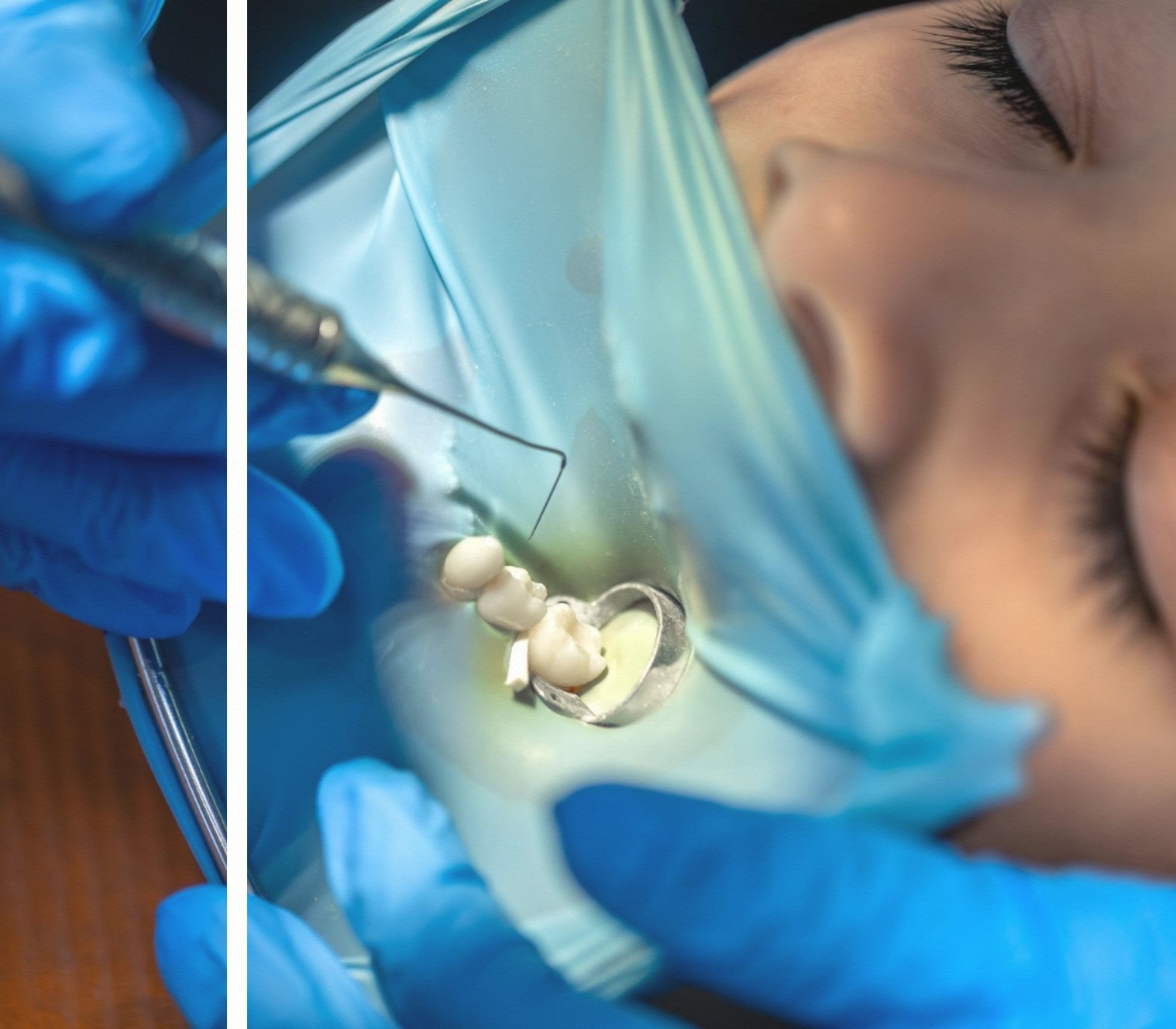
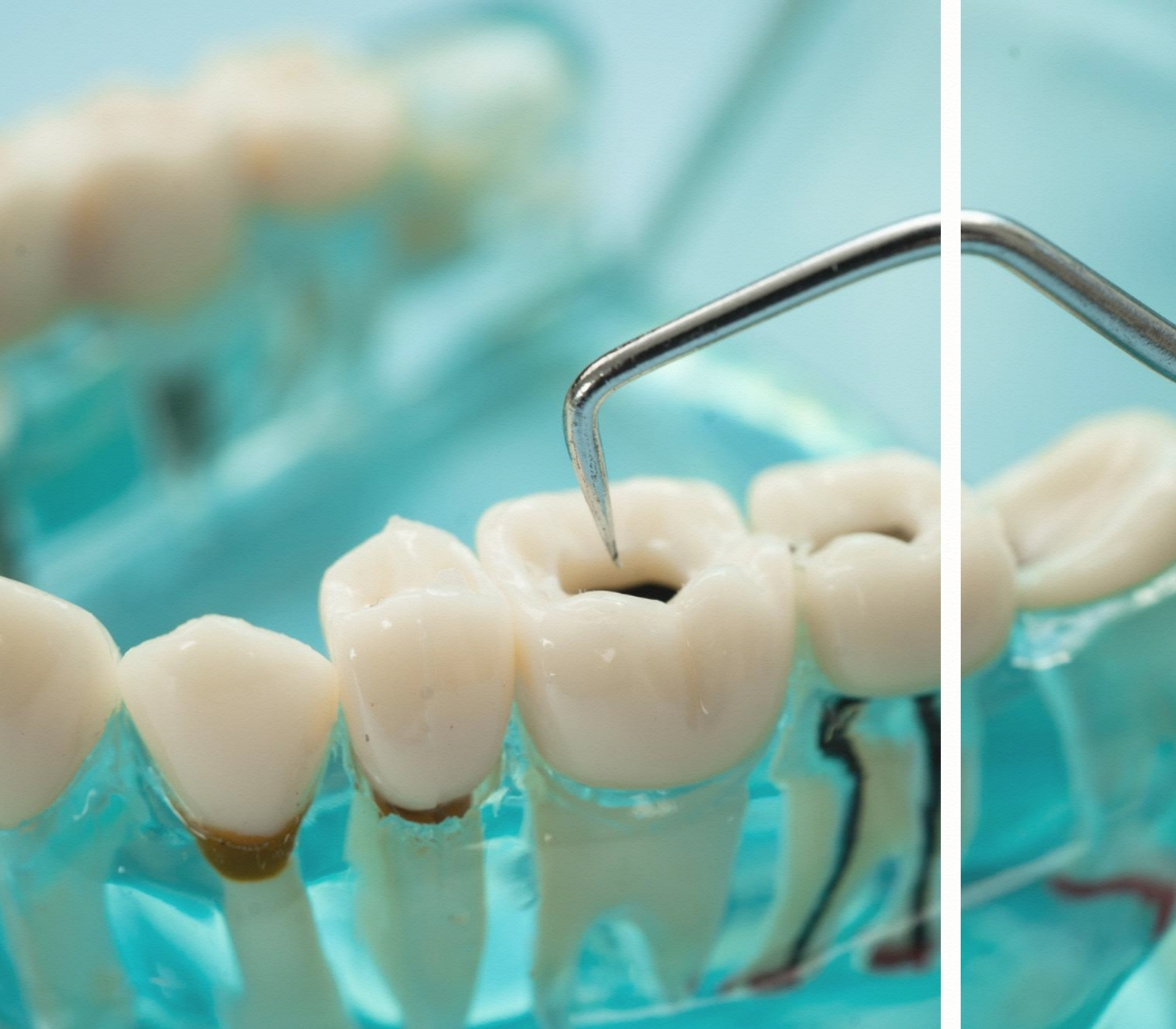
Plan the Treatment Process with a Detailed Evaluation
The right approach to composite filling treatment is not just filling the cavity, but making the appropriate restoration while preserving the existing tooth structure. For this reason, the depth of the decay, the fracture condition of the tooth, contact points, and chewing relationship are carefully evaluated before treatment.
- The decayed or damaged area is examined in detail.
- If necessary, a supplementary X-ray evaluation is performed.
- The filling material color is selected to match the tooth.
- Bite and occlusion alignment are checked at the end of the procedure.
What Happens If Filling Treatment Is Delayed?
Tooth decay does not heal on its own and progresses every day. A cavity initially limited to the enamel surface, if left untreated, reaches the dentin layer and from there the nerve tissue (pulp) of the tooth. A problem that could be resolved with a 20-30 minute filling at the enamel stage requires root canal treatment once it reaches the pulp. If root canal treatment is also delayed, an abscess forms and tooth extraction may become unavoidable. Implant treatment is then planned to replace the extracted tooth. At each stage, both time and cost increase exponentially.
Filling, Bonding, and Crown: Which One and When?
For cavities in back teeth and moderate-sized damage, a standard composite filling is the most suitable option. For minor fractures, shape irregularities, or aesthetic corrections on front teeth, anterior bonding is applied. Bonding also uses composite material, but the aesthetic craftsmanship is more detailed.
When the structural integrity of the tooth is too compromised to be restored with a filling, zirconia or porcelain crowns are needed. If minimal-intervention aesthetic improvement is desired for front teeth, laminate veneers can also be considered.
Cavity Risk in Crowded Teeth
In crowded teeth, areas form where the brush and dental floss cannot reach. Plaque buildup increases in these areas and cavities develop. Correcting tooth alignment with Invisalign or braces makes cleaning easier and reduces the need for future cavities and fillings.
Filling Treatment in Children
Cavities in baby teeth should not be neglected with the mindset of “they will fall out anyway.” Infected baby teeth can damage the permanent tooth buds beneath them. With baby tooth filling, cavities are treated at an early stage and the tooth is kept in the mouth. If neglected, pulpotomy, baby tooth root canal treatment, or extraction may be required.
Cavity formation can be largely prevented with regular pediatric dentistry check-ups and dental sealant application.
Frequently Asked Questions
We have compiled the questions we receive about this treatment and answered them as openly and transparently as possible.
Composite filling is a tooth-colored aesthetic material. It provides a result that blends more naturally with the natural tooth in terms of appearance. Which material is suitable is evaluated based on the location of the tooth and the clinical situation.
In many cases, the procedure is completed comfortably. When necessary, local anesthesia is administered to ensure patient comfort.
Over time, there may be a risk of wear, fracture, or detachment. This varies depending on the size and location of the filling, chewing forces, and usage habits.
Yes. It can frequently be applied to front teeth, especially for minor fractures, cavities, and aesthetic corrections.
Some patients may experience short-term hot-cold sensitivity. This is usually temporary. If it persists for a long time, a follow-up may be needed.
No. Some cavities may be too advanced and may require different treatments. The appropriate approach is determined after examination.
Our Dentists
Meet our expert dentists.



Content Information
This page was prepared by the Dore Medical Editorial Board and medically reviewed by Dr. Merve Özkan Akagündüz, DDS, MSc.