
Decay Under Dental Crowns: The Hidden Threat You Never Expected
"I got a crown on my tooth, so it can't decay anymore." We hear this often at the clinic. And every time, we have to correct it. Because a crown is like protective clothing worn over the tooth, but the tooth underneath is still alive, can still decay, and is still at risk.

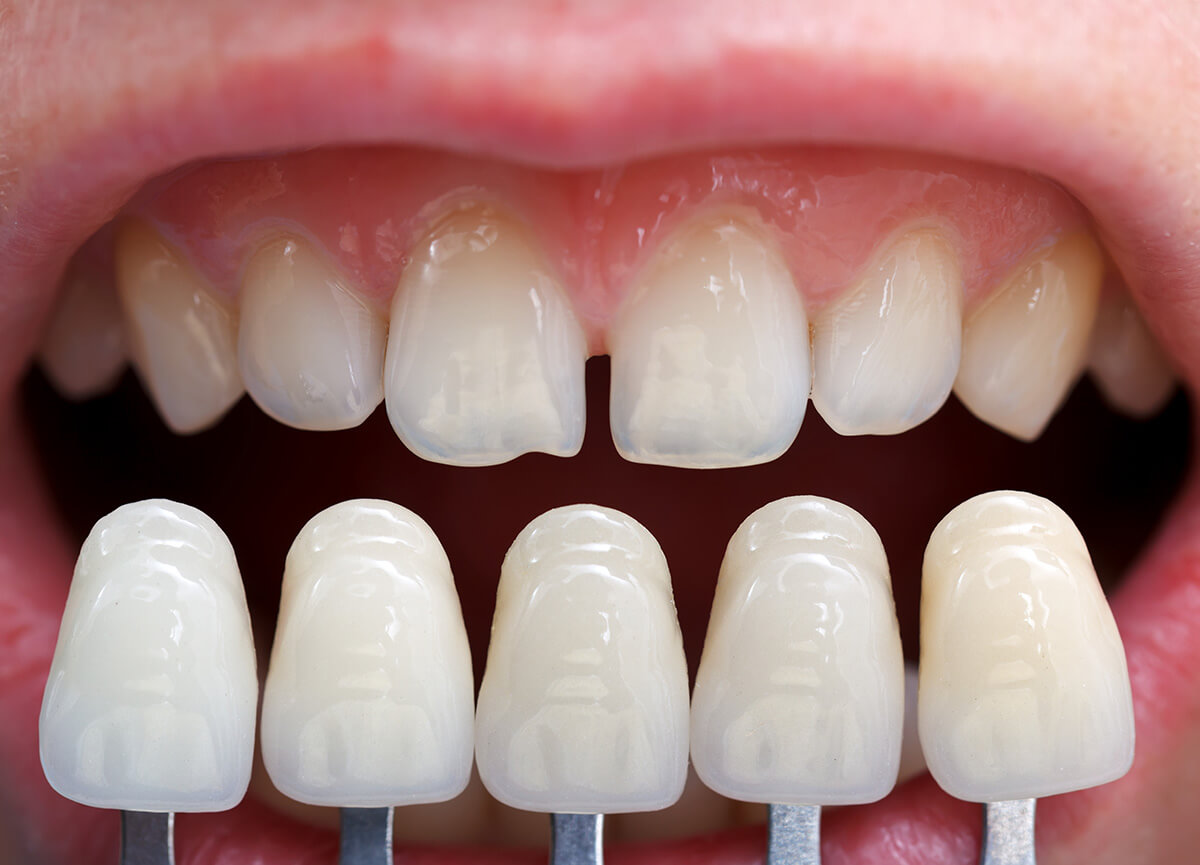
"I got a crown on my tooth, so it can't decay anymore." We hear this often at the clinic. And every time, we have to correct it. Because a crown is like protective clothing worn over the tooth, but the tooth underneath is still alive, can still decay, and is still at risk.
Decay under a crown is a condition most patients are unaware of, but dentists encounter frequently. And here's the most dangerous part: decay under a crown is invisible from the outside. It can progress for a long time without causing pain. By the time the patient notices, it often requires root canal treatment, or even extraction.
Crown does not equal protection. A crown protects the underlying tooth from external factors to some degree, but it is not completely impermeable to bacterial infiltration. When cleaning around crown margins is neglected, decay progresses silently.
How Does It Decay?
On a crowned tooth, there is a boundary line where the crown attaches to the natural tooth. This line is usually located at the gum margin. No matter how precisely crowns are manufactured, there is a microscopic transition zone at this boundary.
When oral hygiene is inadequate, bacterial plaque accumulates at this transition zone. Bacteria in plaque produce acid, and decay begins from the crown margin into the tooth's internal structure. The decay cannot be seen without removing the crown because the crown gives the impression that everything is fine from the outside.
Over time, the decay deepens, reaches the dentin layer, and eventually progresses to the pulp (nerve tissue). At this stage, toothache begins, but often the decay has already reached an advanced level.
Risk Factors
Not every crowned tooth develops decay. There are specific factors that increase the risk.
Inadequate oral hygiene is the biggest risk factor. Cleaning crown margins requires more attention than cleaning natural teeth. In patients who do not regularly clean crown margins with dental floss or interdental brushes, decay risk increases significantly.
The quality of the crown's fit is also critical. The crown must seat on the tooth with millimeter precision. If the crown margin overhangs the tooth or is short (undercontoured), bacterial accumulation increases in these areas. Quality laboratory work and careful fitting by the dentist minimize this risk.
Older crowns carry more risk. In a 10 to 15 year old crown, the cement line can erode over time, the material bonding the crown to the tooth can dissolve, and microleakage can begin. This is why regular monitoring of old crowns is important.
Dry mouth also increases risk. Saliva is the mouth's natural cleaning and protection system. When saliva decreases due to medication use, systemic diseases, or hormonal changes, decay risk at crown margins rises.
What Are the Symptoms?
The most frightening characteristic of decay under a crown is that it may not cause symptoms for a long time. But an attentive patient can catch some clues.
Watch for these signs: Dark discoloration at the crown margin, cold sensitivity that wasn't there before, food impaction at the crown margin, a sense of looseness in the crown, or bad taste coming from underneath. If you notice any of these, do not delay your checkup appointment.
Tooth sensitivity is an important indicator. If sensitivity to cold or sweets begins in your previously trouble-free crowned tooth, this can be a signal that something is changing under the crown.
And of course, pain. But pain is usually the last symptom to appear. When pain starts, decay has usually reached the pulp and root canal treatment is needed.
How Is It Treated?
When decay under a crown is detected, the existing crown is removed and the underlying condition is evaluated. The treatment plan is shaped according to the degree of decay.
If the decay is still at a superficial level, the decay is cleaned and a new filling or core (foundation) is placed. Then a new crown is prepared. You can access current information from our dental filling cost calculator and zirconia crown cost calculator pages.
If decay has reached the pulp, root canal treatment is performed first. The tooth's canals are cleaned, disinfected, and filled. Then the tooth is restored with a new crown. You can learn about the cost of this stage from our root canal cost calculator page.
If the decay has progressed so far that the tooth structure is too weak to support a crown, unfortunately extraction may be necessary. You can get information from our tooth extraction cost calculator page. After extraction, filling the space with an implant or bridge is planned.
When Should Old Crowns Be Replaced?
"My crown looks fine, why should I replace it?" We hear this question often. Looking fine from the outside does not mean there are no problems underneath.
Crowns do not last forever. Their average lifespan ranges from 10 to 20 years. This duration depends on material quality, the dentist's workmanship, and the patient's oral hygiene.
Crown monitoring schedule: If you have crowns over 10 years old, get an X-ray checkup at least once a year. If opening in the cement line, marginal discrepancy, or early decay underneath is detected, the crown can be replaced proactively.
Porcelain-Fused-to-Metal and Decay Risk
Old generation porcelain-fused-to-metal crowns are more disadvantageous than zirconia in terms of marginal fit. The transition point of the metal substructure at the gum margin can become exposed over time with gum recession. This exposed area creates an ideal environment for bacterial accumulation.
If you have porcelain-fused-to-metal crowns over 10 years old in your mouth and a dark line is visible at the gum margin, it is time for evaluation from both aesthetic and health perspectives. Replacement with zirconia crowns provides superior results in both aesthetics and marginal fit.
Decay Under Bridges
In patients who have had bridge treatment, decay risk is higher than in patients with single crowns. Because a bridge is a structure connecting multiple teeth together, cleaning the underlying natural teeth becomes difficult. Food accumulation can occur under the bridge pontic, and this area cannot be cleaned with standard brushing.
Special bridge floss (superfloss) or interdental brushes must be used for cleaning under bridges. When this extra care is neglected, decay starts in the abutment teeth, and the entire bridge may need to be removed. If one of the bridge abutment teeth is lost, implant treatment and new planning are required.
Prevention
The most effective way to prevent decay under a crown is to meticulously clean the crown margins. Daily use of dental floss or interdental brushes prevents plaque accumulation at crown margins.
Regular dental checkups and periodic X-rays detect invisible decay at an early stage. Professional dental scaling also reduces decay risk by removing tartar accumulated at crown margins.
After getting a crown, abandon the thought that "I'm done with that tooth." A crowned tooth may be the tooth requiring the most care in your mouth. Because decay on a natural tooth can be seen with the eye, but decay under a crown is hidden. This concealment makes it much more dangerous.
Wondering what's happening under your crown?
Send your photos and let our specialist dentist do the initial evaluation for you.
Get Online AssessmentThis content is prepared for informational purposes. It absolutely does not replace a dental examination and individual evaluation.
Benzer Yazılar
 İmplant
Why Public Hospital Tooth Extraction Can Be the Most Expensive Option
Public hospitals operate a bit differently. I'm not criticizing my colleagues, most are extremely well-trained professionals. But the system is structured so that a dentist needs to see 40-50 patients per day.
 İmplant
What Happens If You Ignore a Cavity? From Filling to Implant
You notice a small dark spot on your tooth in the mirror. No pain, no sensitivity. You tell yourself it's nothing and put it off. Six months later, cold drinks sting. A year later, nighttime pain begins. Two years later, the tooth breaks.
 İmplant
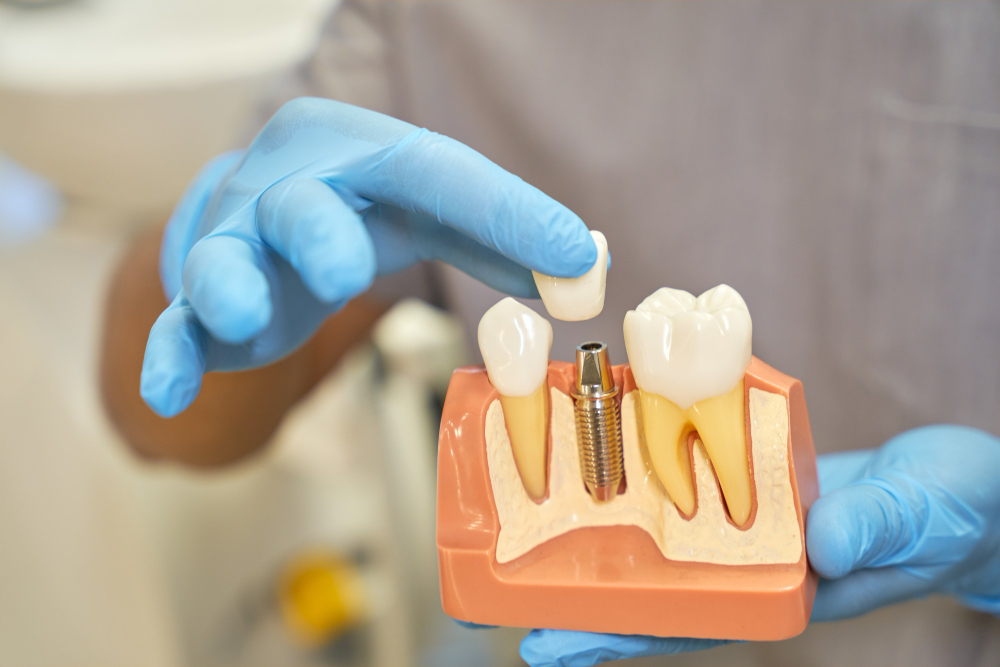
What is a dental implant? Who can get one?
For millions of people experiencing tooth loss, dental implants are the most permanent and natural-looking solution. Today, implants have become one of the most reliable treatment options in dentistry. But what exactly is a dental implant, how is it done, and can everyone benefit from this treatment? In this...
