
What is a dental implant? Who can get one?
For millions of people experiencing tooth loss, dental implants are the most permanent and natural-looking solution. Today, implants have become one of the most reliable treatment options in dentistry. But what exactly is a dental implant, how is it done, and can everyone benefit from this treatment? In this...

For millions of people experiencing tooth loss, dental implants are the most permanent and natural-looking solution. Today, implants have become one of the most reliable treatment options in dentistry. But what exactly is a dental implant, how is it done, and can everyone benefit from this treatment? In this article, we answer all your questions.
Tooth loss can lead to serious health problems beyond aesthetic concerns, including difficulty chewing, speech disorders, and bone loss. Implant treatment is a modern method that solves these problems at their root.
What is a dental implant?
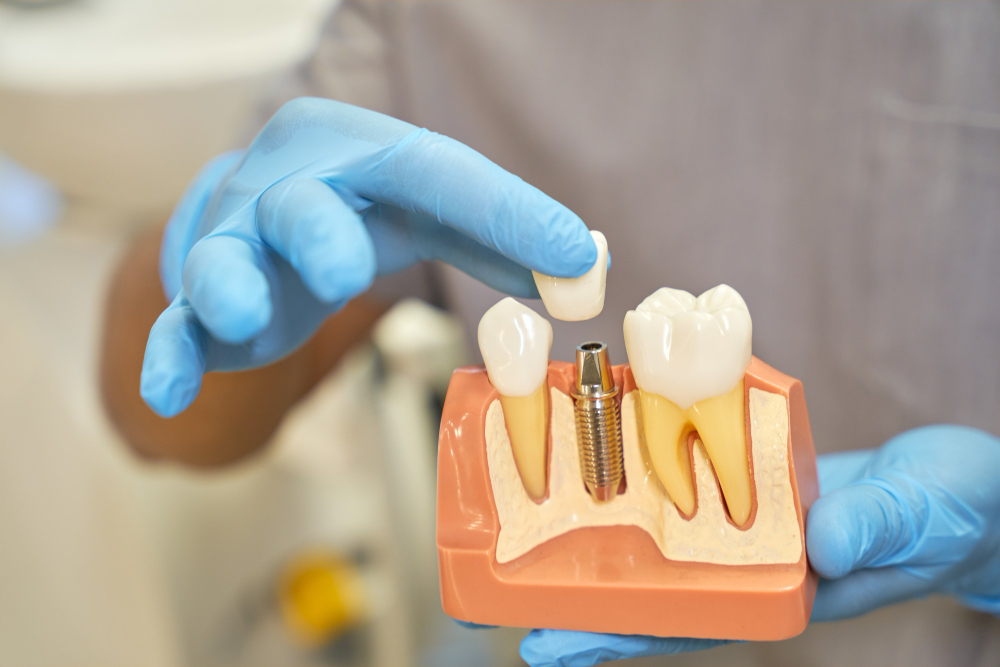
A dental implant is an artificial screw system made from titanium alloy that mimics the root structure of a lost natural tooth. This screw is surgically placed directly into the jawbone and over time fuses with the bone (osseointegration) to form a permanent foundation. A porcelain or zirconia crown (tooth cap) that looks like a natural tooth is placed on this foundation to complete the procedure.
The three basic components of an implant are:
- Implant screw: The titanium piece placed into the jawbone
- Abutment (connector piece): The intermediate element that connects the screw to the crown
- Crown: The visible porcelain or zirconia cap that performs the function of the tooth
How is a dental implant done? Step-by-step process
Implant treatment is a planned process completed in several stages:
1. Examination and planning
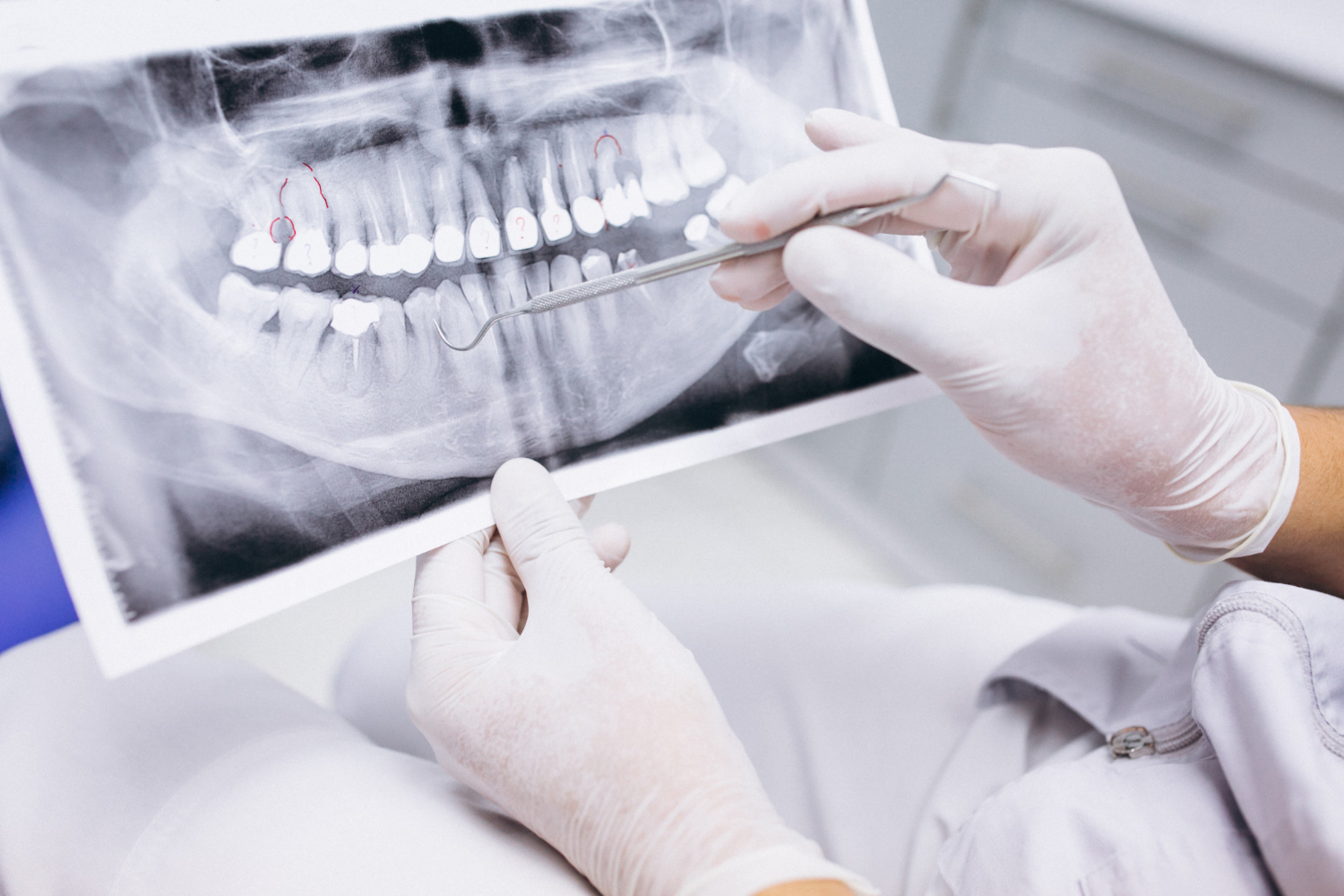
Your dentist evaluates your mouth, gums, and jawbone density. Suitable areas for implant placement are determined with panoramic X-ray or 3D tomography (CBCT) imaging.
2. Placement of the implant screw
In this surgical procedure performed under local anesthesia, the titanium screw is placed into the jawbone. The procedure typically takes 30 to 60 minutes and is painless. Mild swelling and sensitivity after the procedure subsides within a few days.
3. Osseointegration (bone fusion) process
Complete fusion of the implant with the jawbone can take 3 to 6 months. During this process, a temporary tooth can be placed. Osseointegration forms the foundation for the implant's long life and stability.
4. Crown placement
After bone fusion is complete, the abutment is attached and a custom-made porcelain or zirconia crown is placed on top. The result is an appearance indistinguishable from a natural tooth, both functionally and aesthetically.
Who can get a dental implant?
Implant treatment may not be suitable for every patient. Suitability assessment must be made by a specialist dentist. Generally, individuals who meet the following criteria are implant candidates:
- Being over 18 years old with completed jawbone development
- Having sufficient bone density and volume
- General health condition suitable for surgical procedure
- No active gum disease or tooth decay
- Not smoking or willing to quit
Who cannot get implants?
- Patients with uncontrolled diabetes (bone healing may be negatively affected)
- Patients who have received cancer radiation therapy (in the jaw area)
- Those with blood clotting disorders
- Cases with advanced bone loss requiring graft (implants can be applied after grafting)
Note: Some contraindications may be temporary. For example, implants can be applied after active gum disease is treated, or after sufficient bone volume is created. For this reason, we strongly recommend visiting our clinic for a final decision.
Advantages of dental implants
- Natural appearance and feel: Indistinguishable from your natural tooth
- Long-lasting solution: 15 to 20 years or more with proper care
- No damage to adjacent teeth: Unlike bridge treatment, there is no need to grind down neighboring teeth
- Prevents bone loss: The implant stimulates the jawbone, preventing its resorption
- Comfort: Unlike removable dentures, it does not move, making eating and speaking easier
How to care for implants?
Implants require the same care as your natural teeth. For long-lasting use, paying attention to the following is sufficient:
- Regular brushing twice a day
- Using dental floss or interdental brushes
- Dental checkups every 6 months
- Avoiding excessively hard foods
- Staying away from smoking and excessive alcohol consumption
Which implant systems are used at Doredent?
At Doredent Dental Clinic, we offer our patients implant options suitable for different budgets and needs. All the systems we use meet international quality standards and are applied by our experienced dentists.
Nucleoss (Turkish-made)
Nucleoss implants, a source of domestic production pride, are a product of Turkey's rising technology in the field of dentistry. While appealing to a wide patient base with their affordable cost, they offer reliability at international standards.
NTA (Korean-made)
NTA implants, produced with South Korea's strong medical technology infrastructure, stand out with their high precision and durability. They are an ideal mid-range option for patients seeking a price-performance balance.
NTA (Swiss-made)
NTA implants, carrying Switzerland's legendary engineering quality, are the top-tier choice for those seeking the premium segment. With superior biocompatibility and long-lasting performance, they are confidently preferred even in challenging cases.
Your dentist will decide together with you which implant system is right for you during the examination, evaluating your budget and oral structure. All three options are applied with high success rates at our clinic.
Conclusion
Dental implants are the most permanent, comfortable, and aesthetic solution currently available for lost teeth. With the right patient selection and an experienced dental team, the success rate exceeds 95%.
To learn more about dental implants or to schedule an examination appointment, you can contact our Doredent clinic. Our expert team will be happy to prepare a personalized treatment plan for you.
Frequently asked questions
Are dental implants painful?
Since the procedure is performed under local anesthesia, no pain is felt. There may be mild discomfort and swelling for 2 to 3 days after the procedure, which can be easily managed with painkillers.
How long do implants last?
Including the osseointegration process, total treatment takes between 3 to 6 months. This period may be extended if bone grafting is needed. With proper care, implants can be used for 20 years or more.
Can implants be rejected?
Titanium is a biocompatible material accepted by the body, the risk of rejection is extremely low (1 to 2%). Risk factors include smoking, uncontrolled diabetes, and inadequate oral hygiene.
Benzer Yazılar
 İmplant
Why Public Hospital Tooth Extraction Can Be the Most Expensive Option
Public hospitals operate a bit differently. I'm not criticizing my colleagues, most are extremely well-trained professionals. But the system is structured so that a dentist needs to see 40-50 patients per day.
 İmplant
What Happens If You Ignore a Cavity? From Filling to Implant
You notice a small dark spot on your tooth in the mirror. No pain, no sensitivity. You tell yourself it's nothing and put it off. Six months later, cold drinks sting. A year later, nighttime pain begins. Two years later, the tooth breaks.
 İmplant
The Cost of Delaying Treatment for a Missing Tooth
You've lost a tooth. It's in the back, so no one can see it. You chew on the other side. "I'll get it fixed later," you tell yourself. A year passes, then two. Then you realize it's no longer just one missing tooth: the neighboring teeth have shifted, the opposing tooth has drifted, your bite is off, and now a single implant won't be enough.
