
Invisalign First for Children
A clear aligner system designed specifically for children ages 6-11. Jaw expansion, space creation, and early orthodontic correction during the mixed dentition phase.
Medically reviewed. Last updated: May 20, 2026.What Is Invisalign First?
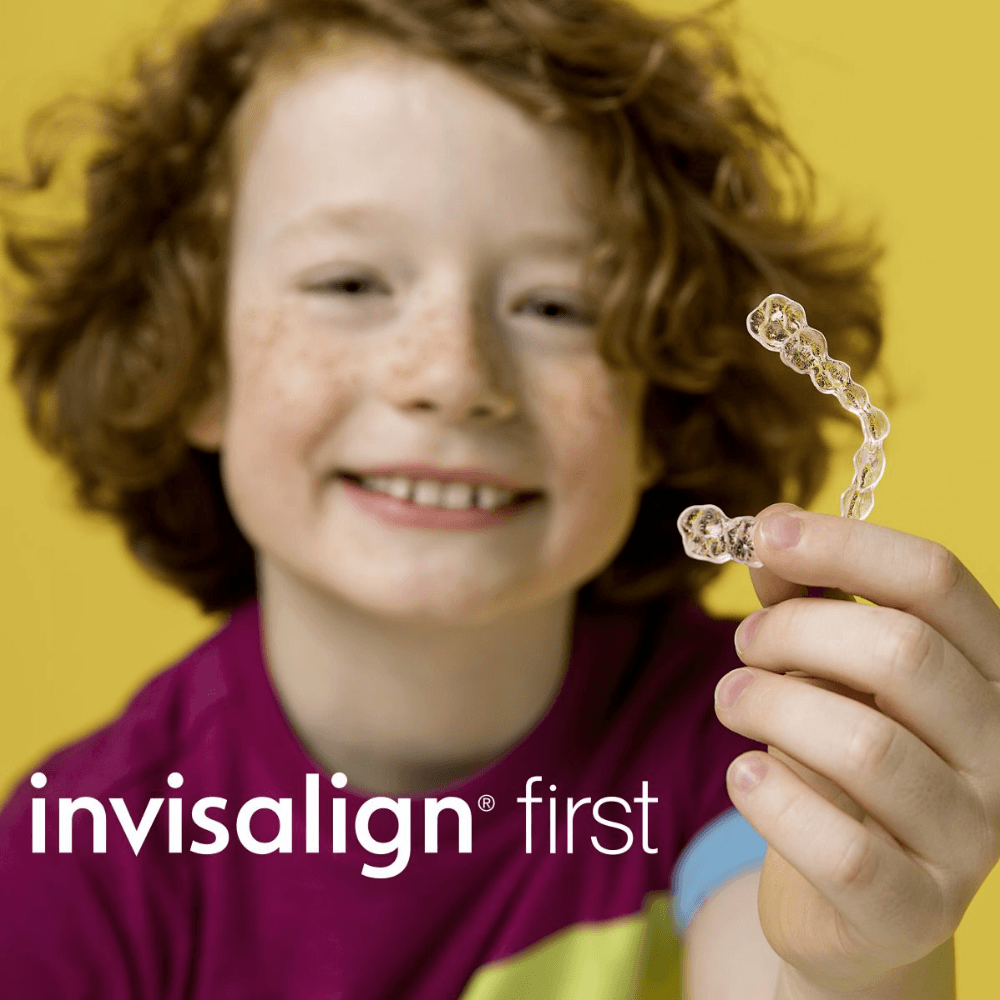
Invisalign First is a clear aligner system specifically designed for children aged 6 to 10 who are in the mixed dentition phase. At this age, a child's mouth contains both baby teeth and newly erupting permanent teeth. Traditional clear aligner treatment is not designed to accommodate this mixed structure. Invisalign First uses aligners engineered precisely for this developmental period, comfortably fitting both primary teeth and newly emerging permanent teeth.
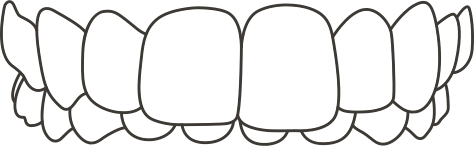
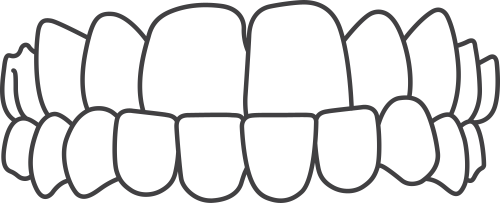
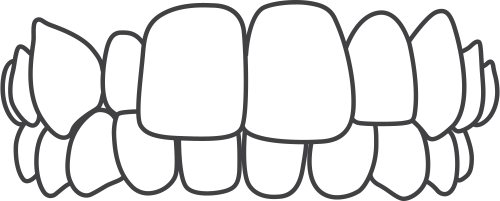
The primary goal of this system is early intervention to prevent future orthodontic problems. When treated at an early age, jaw growth can be guided, space can be created for permanent teeth, and conditions that might require extractions later can be prevented. Invisalign First delivers effective results especially for issues like narrow upper jaw, narrow dental arch, crowding, gap teeth, deep bite, and crossbite.
Before treatment, a detailed examination is performed by pediatric dentistry and orthodontic specialists. Your child's jaw development, dentition stage, and existing problems are evaluated. A digital impression is taken using the iTero intraoral scanner, and the plan is simulated with ClinCheck software. Once the aligners are delivered to your child, they need to be worn 20 to 22 hours per day. They are only removed when eating and brushing teeth. The aligners may feature special structures such as small expansion balloons, space maintainer properties, and tooth eruption zones. These structures ensure newly erupting teeth are positioned correctly.
Treatment duration varies depending on your child's condition, typically ranging from 12 to 18 months. The biggest advantage for your child is that the aligners are invisible and do not cause embarrassment at school. Because they can be removed when eating, there are no dietary restrictions. Tooth brushing is also easy, which reduces the risk of tooth decay in children. After treatment is completed, a second phase of treatment can be planned during adolescence if needed. For all pediatric dentistry services at our clinic, visit our pediatric dentistry page. For treatment costs, see our clear aligner cost calculator page.
Conditions Treated
Which orthodontic problems can clear aligners fix?
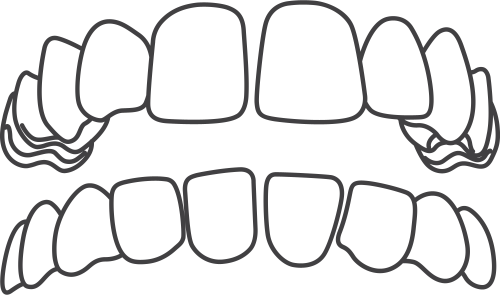
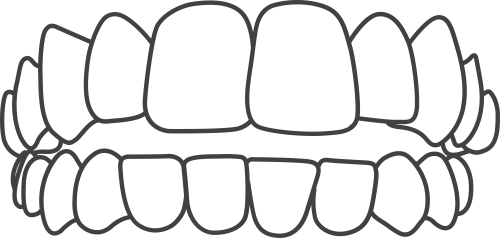
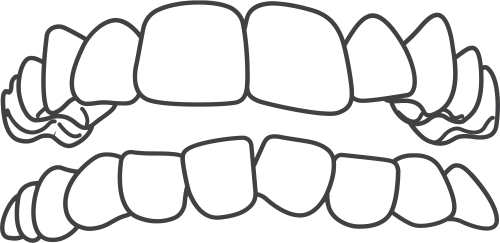
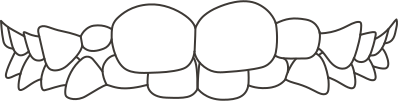
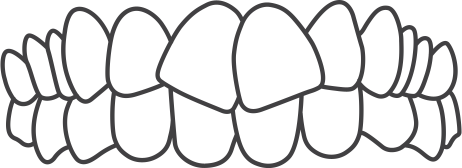
Doredent's Invisalign Diamond Provider orthodontists effectively treat many orthodontic conditions with clear aligners. Click on a condition to see a short simulation of how it works.
Treatment Process
Alternative Treatments
Invisalign First is a modern orthodontic treatment option applied during the mixed dentition period in children. However, Invisalign First is not the only option for early orthodontic treatment in children. Different approaches can be applied depending on clinical conditions, the child's orthodontic needs, and compliance capacity. Doredent's core philosophy is clear: we do not impose a single method on children, we select the method most suitable for the case. Below you will find the main alternatives that can be used for early orthodontic treatment in children and when each one is most appropriate.Removable Orthodontic Appliances
Removable appliances are a traditional method used in pediatric orthodontics for many years. They consist of wires and screws placed on an acrylic body. The child can insert and remove the appliance themselves. They are typically used for creating space, jaw expansion, or simple tooth movements. Advantages:- More economical than Invisalign First in terms of cost.
- The child can remove the appliance during cleaning.
- Effective for certain space-gaining and expansion cases.
- Supported by decades of clinical experience.
- As a visible appliance, it may cause aesthetic concerns in the child.
- Speech adaptation may take longer than with Invisalign First.
- May be insufficient for complex orthodontic problems.
- The ease of removal can sometimes lead to irregular wear by the child.
Fixed Palatal Expander (RPE / Hyrax)
This is an orthodontic appliance fixed to the upper palate, used when the upper jaw is narrow. A screw mechanism expands the suture (the junction point) in the middle of the upper jaw bone, bringing the jaw structure to a wider position. It is frequently applied especially in crossbite and narrow upper jaw cases. Advantages:- Provides the most powerful effect for jaw expansion purposes.
- Being fixed, it does not depend on the child's compliance.
- When applied early, it directly guides jaw development.
- Produces highly effective results in crossbite cases.
- The child cannot remove the appliance; the adaptation period may be somewhat longer.
- Difficulty with speech and swallowing may be experienced in the first days.
- Hygiene must be performed more carefully.
- Applied only in cases requiring expansion; not sufficient for correcting crowding.
Traditional Braces for Children
In some pediatric cases, especially when multiple orthodontic problems need to be solved simultaneously, traditional braces treatment may be preferred. In this method, small metal or aesthetic brackets are bonded to the teeth and teeth are moved via a wire passing between them. In children, it is usually applied later, after permanent teeth have largely erupted. Advantages:- Produces strong and effective results in complex orthodontic problems.
- Being fixed, it does not depend on the child's compliance.
- Offers all movement possibilities of braces treatment.
- A clinically well-understood and proven method.
- May cause aesthetic concerns due to visible brackets.
- Hygiene must be performed more carefully; cavity risk increases.
- Certain foods must be avoided.
- Generally not suitable in the very early stages of the mixed dentition period.
Postponing Treatment and Monitoring
Early orthodontic treatment is not necessarily required in every child. In some children, the existing orthodontic condition can be resolved in one go with adult orthodontics (Phase 2) after permanent teeth have fully erupted. In this situation, regular monitoring rather than early intervention is recommended at Doredent. Advantages:- Unnecessary treatment burden is not placed on the child.
- The most appropriate option in terms of cost.
- Some problems may improve spontaneously when permanent teeth erupt.
- Results can be achieved with a single comprehensive treatment.
- Some problems are more difficult to correct at older ages.
- The opportunity to guide jaw development may be missed.
- Certain conditions like crossbite require early intervention.
- In advanced cases, Phase 2 may become longer and more complex.
Choosing the Right Treatment: Doredent's Approach
Choosing the right orthodontic treatment in children is based on the child's age, the type of orthodontic problem, the status of jaw development, the child's compliance capacity with appliance use, and family support. Even for two children of the same age, the most suitable method may be different. At Doredent, we do not impose a single method in pediatric orthodontics. Whichever method is most suitable for the case is applied. Invisalign First, removable appliances, palatal expander, or traditional braces (whichever approach will best contribute to the child's long-term orthodontic health is preferred). In some cases, regular monitoring rather than treatment is recommended, because early intervention is not necessary in every child. The fundamental reason for this approach is: pediatric orthodontics is a sensitive field that guides the growth and development process. Intervention at the wrong time or unnecessary early treatment can lead to more complex problems in the future. During the initial examination, your child's condition is evaluated in detail and which approach is appropriate is discussed honestly with you.Risks and Complications
Invisalign First is a modern and clinically well-understood orthodontic treatment option for children during the mixed dentition phase. With proper patient selection, appropriate planning, and regular follow-up, treatment is completed without issues in most children. However, due to the nature of pediatric orthodontics, there are some inherent risks and complications. The vast majority of these risks are mild and temporary and can be managed with proper follow-up. Below you will find the main risks and complications that may occur during Invisalign First treatment.Factors That Increase Risk
Certain conditions can increase the risk of complications and the likelihood of treatment failure in Invisalign First. These factors do not mean treatment cannot be performed, but they do indicate that additional evaluation and stronger family support are required.- Insufficient family support: In pediatric orthodontics, family monitoring accounts for half of treatment success. Parents need to regularly check aligner wear and hygiene habits.
- Lack of child motivation: For children who are not willing participants in treatment and avoid wearing aligners, a fixed appliance may be considered instead of Invisalign First.
- Poor oral hygiene: In children without regular brushing habits, the risk of cavity development inside the aligner is high. Hygiene habits must be established before treatment begins.
- High consumption of sugary drinks and snacks: Consuming such foods with aligners in place significantly increases the risk of tooth decay.
- Discontinuing treatment before completion: If Phase 1 treatment is interrupted before completion, the gains achieved may be lost. This can lead to your child requiring more complex treatment later.
- Missing regular check-up appointments: Check-up appointments are an important part of treatment planning in orthodontics. Missed appointments extend treatment duration.
How Are These Risks Managed at Doredent?
The vast majority of potential risks in pediatric orthodontics can be minimized through proper patient selection, appropriate planning, family education, and regular follow-up. The key elements of the approach at Doredent include:- Proper indication: Invisalign First is only recommended for clinically appropriate children. If your child's orthodontic problem would be better resolved with a fixed appliance, or if early intervention is not yet required, this is explained honestly to the family.
- Detailed family consultation: Before treatment, the process is discussed in detail with both the child and family. Aligner usage rules, the importance of hygiene, and family responsibilities are clearly communicated.
- Assessing the child's motivation: Children who are not willing participants in treatment are not pressured. In such cases, a different orthodontic approach may be recommended or treatment may be postponed.
- Hygiene education: Before treatment begins, proper brushing, aligner cleaning, and general oral care habits are demonstrated in detail to both the child and family.
- Regular check-ups: Check-up appointments are typically scheduled every 6-8 weeks to evaluate treatment progress, aligner compliance, hygiene status, and tooth positioning. Problems detected early are resolved quickly.
- Backup aligner planning: Treatment planning remains flexible to account for lost or damaged aligners, and backup aligner needs are evaluated in advance.
- Retention planning: The retention phase after treatment is incorporated into the treatment plan from the start. A retention approach appropriate to your child's growth phase is designed.
Who Is Invisalign First Suitable For?
Invisalign First is an orthodontic treatment option for children during the mixed dentition phase. However, not every child is a suitable candidate for Invisalign First. For successful treatment, certain clinical conditions must be met, the child must be within the appropriate age range, and have the maturity to comply with aligner wear. Below you'll find the most common profiles of children who receive Invisalign First treatment.A Critical Prerequisite: Mixed Dentition Period
- Produces good results in mild to moderate crowding.
- Prepares a foundation for permanent teeth to erupt in correct position.
- Both tooth alignment and space requirements are assessed together.
- In severe crowding, a different appliance may be recommended.
- This is the ideal period for guiding jaw development.
- Early intervention prevents the need for more complex treatment in later years.
- Chewing balance is restored.
- In advanced crossbite cases, a palatal expander may produce stronger results.
- Suitable for mild to moderate narrow jaw cases.
- Produces results during the active jaw growth period.
- For advanced expansion needs, a fixed palatal expander may be more effective.
- After treatment, permanent teeth erupt more easily.
- Space is created for permanent teeth that are about to erupt.
- Balances prolonged retention or early loss of baby teeth.
- Prepares a foundation for permanent teeth to erupt in correct sequence.
- The risk of severe crowding is reduced at an early stage.
- The bite can be corrected with early intervention.
- Breaking the thumb sucking habit is also incorporated into treatment.
- Speech and chewing functions are supported.
- Permanent teeth erupt in correct position.
- Early intervention prevents complex treatment in later years.
- Jaw development is guided in a positive direction.
- Later adult orthodontics (Phase 2) duration may be shortened or may not be needed at all.
- Provides long-term benefit to overall oral health.
Your Child's Compliance Capacity and Family Support
Even if Invisalign First is clinically suitable, your child's maturity level and family support are crucial for treatment success. This is always assessed at Doredent during the initial examination.- Your child's maturity level: Your child must be mature enough to wear aligners 20 to 22 hours per day, understand the rules, and approach treatment willingly.
- Aligner management capacity: Your child must be able to carefully remove and protect the aligners during school, play, and meals.
- Hygiene habits: Your child must have or be willing to develop habits for regular brushing and aligner cleaning.
- Family support: Family monitoring of aligner wear and hygiene is half of treatment success.
When Is Invisalign First Not Suitable?
In some situations, Invisalign First treatment is not appropriate. This does not mean orthodontic treatment cannot be done. It often means a different approach is more suitable.- Children who do not yet have baby teeth in all four quadrants: Invisalign First is not suitable because the mixed dentition requirement is not met. For these children, monitoring is recommended if needed, or a different approach is considered.
- Children who have largely transitioned to permanent teeth: For these children, adult Invisalign treatment may be more appropriate.
- Very severe jaw development problems: In situations such as severely narrow upper jaw, a fixed palatal expander (RPE/Hyrax) produces stronger and more effective results. Invisalign First alone may be insufficient.
- Children who cannot comply with aligner wear: In children who are not willing to undergo treatment or avoid wearing aligners, a fixed appliance may be more suitable.
- Children with active tooth decay: Active cavities must be resolved before treatment. Wearing aligners on decayed teeth can worsen the situation.
- Children with inadequate family support: Family monitoring is essential in pediatric orthodontics. In cases where the family cannot monitor aligner wear and hygiene, a different approach is recommended.
- Complex skeletal problems: Severe skeletal anomalies such as significant upper-lower jaw size discrepancies may require a different orthodontic or surgical approach.
After Treatment
When Invisalign First treatment is completed, your child's orthodontic condition will have reached the desired position. However, in pediatric orthodontics, completing treatment does not mean the process is finished. Because your child's growth and development continues, the orthodontic situation may change over time as permanent teeth continue to erupt. For this reason, the period after Invisalign First may include regular monitoring, retention, and if necessary, a new orthodontic intervention (Phase 2) in the future. Below you will find the post-treatment period step by step.Completion of Phase 1 Treatment
Invisalign First is the first intervention phase, called Phase 1, in pediatric orthodontics. When treatment is completed, the orthodontic problem will be largely resolved, but your child's oral structure is still developing.- End-of-treatment evaluation: When the use of the final aligner set is completed, the position achieved by the teeth is clinically evaluated by Uzm. Dt. Merve Özkan Akagündüz. It is compared with the targeted result and, if necessary, additional aligners (refinement) are used.
- Family information: When treatment is completed, the family is informed in detail that the process is not completely finished, that your child's growth and development will continue, and that regular follow-up is necessary.
- Retention planning: Retention treatment is planned to maintain the results obtained after treatment. Retention is an integral part of orthodontic treatment and cannot be skipped.
Retention Treatment: Maintaining the Result
After treatment is completed, teeth naturally tend to return to their original position. This situation is called relapse. Retention treatment is critically important to ensure that the results obtained are permanent. At Doredent, the retention approach after Invisalign First is planned by Merve Hoca according to your child's current oral condition:- Night guard: In most children, a night guard is used for retention after treatment. Your child wears the appliance only at night while sleeping, and removes it during the day. This approach is comfortable and easy for your child. Initially the appliance is used every night, and in later months the frequency of use can be gradually reduced.
- Fixed retainer (lingual retainer): If your child's permanent front teeth have erupted by the time treatment is completed, a fixed retainer can also be applied to the back surface of the teeth in cases where it is deemed necessary. A fixed retainer cannot be removed by your child and continuously maintains the position of the teeth.
- Retention duration: In pediatric orthodontics, retention is planned differently than in adults. Because your child's growth and development continues, permanent teeth will erupt, and jaw structure may change, retention extends over a long period. The retention protocol recommended by your doctor must be strictly followed.
Observation Period: Eruption of Permanent Teeth
After Phase 1 treatment is completed, your child may still have baby teeth in their mouth. Permanent teeth erupt gradually in the following months and years. This period is called the observation period and requires regular monitoring.- Regular checkups: At checkup appointments, typically done every 4-6 months, your child's development is monitored. Whether permanent teeth are erupting in the correct position, jaw development, and general orthodontic condition are evaluated by Merve Hoca.
- Retention follow-up: During this period, it is important to continue using the night guard. If the appliance wears out or your child grows, it may need to be renewed.
- Eruption problems: If delays or incorrect positioning are observed in the eruption of some permanent teeth, early intervention can be planned. In these situations, an additional orthodontic appliance may be needed.
- Primary tooth loss: During the observation period, primary teeth falling out at the right time is monitored. For primary teeth that fall out early, space maintainer application may be necessary.
Transition to Phase 2: When Necessary
After all of your child's permanent teeth have erupted (usually around age 12-13), their orthodontic condition is reevaluated. At this point, three scenarios are possible:- Second treatment may not be necessary: If Phase 1 treatment was completed successfully and retention was done regularly, some children may not need a second orthodontic treatment at all. This is the most desired outcome of Phase 1 treatment.
- Minor corrections may be needed: In some children, minor corrections may be needed during the eruption of permanent teeth. In this case, final adjustments are completed with a short-term adult Invisalign treatment.
- Comprehensive Phase 2 treatment may be needed: In some cases, a second comprehensive orthodontic treatment may be necessary due to the position of permanent teeth, jaw development, or other factors. In this case, adult Invisalign or, if necessary, braces treatment is applied.
Long-Term Care After Treatment
Some habits are important for protecting your child's oral health and orthodontic condition in the long term after Invisalign First:- Regular oral hygiene: Brushing twice daily with correct techniques, using dental floss, and regular oral care are the foundation of your child's lifelong oral health.
- Routine dental checkups every 6 months: Standard checkups every 6 months are sufficient to monitor both orthodontic condition and general oral health.
- Professional dental scaling: When deemed necessary at regular checkups, professional cleaning is performed.
- Limiting sugary drink and snack consumption: Reduces cavity risk and supports oral health.
- Monitoring habits like thumb sucking and tongue thrusting: These habits can lead to recurrence of orthodontic problems.
- Adherence to retention protocol: The night guard or retainer use protocol recommended by your doctor must be strictly followed.
An Important Message to Families
Frequently Asked Questions
At what age is Invisalign First applied?
Can children use clear aligners?
What problems can be corrected with Invisalign First?
Which is more suitable: clear aligners or traditional orthodontic treatment?
Is Invisalign First painful?
Is parental support important in treatment?
What happens after Phase 1 treatment is completed?
How long does Invisalign First take?
If my child has Invisalign First, might they not need adult Invisalign later?
Treatment Pricing
Invisalign First (Clear Aligners for Children) Pricing
At Doredent, we offer transparent pricing for our international patients. As every case is different, the final treatment cost depends on your individual evaluation.
The cost of Invisalign First (Clear Aligners for Children) varies based on factors such as the child's developmental stage, scope of the case, number of aligners, and treatment duration. For an accurate quote, a personalized assessment is recommended.
For pricing details, reach out via WhatsApp or book your initial consultation.
Our Dentists
Meet our specialist team.


Content Information
This page was prepared by the Dore Medical Editorial Board and medically reviewed by Dr. Merve Özkan Akagündüz.
