
Dental Sealants
A protective coating applied to the grooves and pits of permanent molars in children. The most effective and painless way to protect teeth before decay develops.
Medically reviewed. Last updated: May 18, 2026.What Are Dental Sealants?
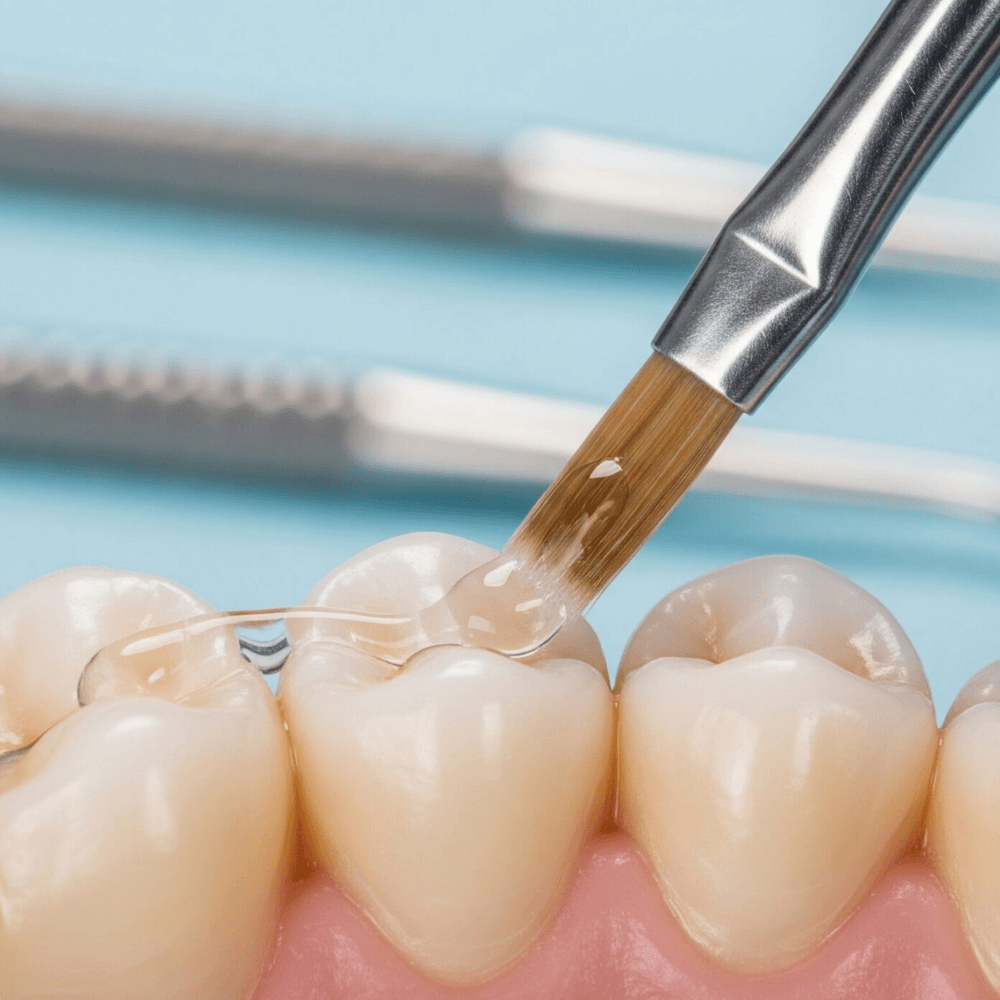
Dental sealants are a preventive procedure in which deep grooves and pits on the chewing surfaces of molars are sealed with a special flowable filling material. Children's molars have natural grooves on their chewing surfaces called "fissures." These grooves can be so narrow and deep that toothbrush bristles cannot reach them. Despite brushing, plaque and food debris accumulate in these areas, making fissures one of the most common sites where cavities begin. Dental sealants seal these grooves and prevent cavities from forming.
Dental sealants are a preventive application, not a treatment. They are applied to healthy teeth that have not yet developed cavities. They are most commonly applied to the six-year molars and other permanent molars that emerge later. Six-year molars erupt in a child's mouth without any baby teeth falling out, so parents often do not realize these are permanent teeth and do not pay sufficient attention to their care. The year they erupt is when cavity risk is highest. Dental sealants act as a strong shield for the tooth during this critical period. Sealants can also be applied to primary molars, especially in patients with high cavity risk in children.
The procedure is painless, requires no anesthesia, and is very easy for the child. The tooth surface is cleaned, lightly etched with acid, dried, and the flowable resin material is placed in the fissures. The material is hardened with a special light. The entire procedure takes approximately 5-10 minutes per tooth. The child can eat and drink immediately after the procedure. After dental sealant application, the tooth surface becomes smooth and plaque and food debris cannot accumulate.
Dental sealants typically last 3-5 years, sometimes longer. Regular checkups evaluate whether there is any wear or cracking, and they are renewed when necessary. Dental sealants alone are not sufficient — protection should be combined with regular brushing, healthy nutrition, and fluoride treatment. Regular pediatric dentistry checkups are also important for early cavity detection. For all pediatric dentistry procedures, you can visit our pediatric dentistry page, and for cost information, see our dental sealant cost calculator page.
Treatment Process
Alternative Treatments
Risks and Complications
Which Children Should Receive Dental Sealants?
Dental sealants are not automatically applied to every child. Your dentist evaluates your child's tooth structure, the depth of grooves on chewing surfaces, cavity risk, and oral hygiene habits before recommending treatment. Below are the most common situations where dental sealants are applied.- First permanent molars typically erupt around age 6.
- Because they erupt behind baby teeth, parents may not notice them.
- Dental sealants are most effective when applied soon after eruption.
- Cavity risk is highest during the first 2 years.
- Second permanent molars typically erupt around age 12.
- Located at the very back of the mouth where brushing is difficult.
- Dental sealants provide effective protection for these teeth as well.
- Children who received sealants on 6-year molars should also be evaluated for 12-year molars.
- Deep and narrow grooves cannot be cleaned with brushing alone.
- Food debris and bacterial accumulation are unavoidable.
- Cavity risk is significantly higher in these teeth.
- Dental sealants seal the grooves and provide protection.
- History of cavities or fillings in baby teeth.
- Frequent consumption of sugary snacks and beverages.
- Irregular or inadequate brushing habits.
- Children with low saliva flow have higher risk.
- Considered in children with very high cavity risk.
- May be applied if primary molars have deep grooves.
- Not routinely applied to all baby teeth.
- Decision is based on clinical evaluation.
- For teeth with weak or incomplete enamel.
- In children with sensitivity complaints.
- Dental sealants strengthen the enamel surface.
- Regular follow-up and preventive approach are essential.
After the Procedure
Dental sealant application is a simple preventive procedure that is painless, requires no anesthesia, and is completed very quickly. Your child can return to normal activities immediately after the procedure. However, to ensure the sealant provides long-term protection, certain points need attention.The First Minutes After Treatment
- Eating immediately allowed: Because the sealant is hardened with a curing light, it is ready for use as soon as the procedure is complete. Your child can eat and drink right away without waiting.
- No anesthesia needed: Sealant application does not require anesthesia; there is no pain or numbness. There is no risk of biting the lip or cheek.
- Feeling of occlusion: After the procedure, your child may feel the sealant slightly when closing their teeth. This sensation usually disappears completely within a few days. If your child continues to express discomfort saying "there's something there," a follow-up appointment is recommended.
Sealant Longevity and Follow-Up
- Average lifespan: A properly applied sealant can remain on the tooth for years. However, wear, partial loss, or complete loss may occur over time. For this reason, regular monitoring of the sealant's condition during check-ups is important.
- Check-up frequency: During pediatric dentistry check-ups every 6 months, the sealant's integrity, wear status, and complete coverage of the tooth surface are evaluated.
- If partially lost: If the sealant is partially lost, the exposed groove becomes vulnerable to decay again. In this case, the sealant is reapplied. Reapplication is as simple and quick as the initial procedure.
- If completely lost: If the sealant is completely lost, the tooth's chewing surface loses its protective barrier. Regular check-ups detect this situation, and reapplication is done if necessary.
Oral Hygiene and Sealants
- Brushing continues: Sealants do not replace toothbrushing. Your child must brush regularly twice a day with age-appropriate toothpaste and a soft brush. Sealants only protect the deep grooves on the chewing surface; the other surfaces of the tooth (interproximal surfaces, tongue side, cheek side) still need to be cleaned by brushing.
- Flossing: Sealants do not protect the surfaces between teeth. Decay risk continues in these areas; using dental floss or interdental brushes reduces the risk of cavities.
- Controlling sugary foods: Even though sealants protect the chewing surface, frequent consumption of sugary snacks and beverages can lead to cavity formation on other surfaces of the tooth.
When Should a Sealant Be Replaced?
An Important Message for Parents
- Sealants are like a vaccine: They are a preventive step before decay occurs. Sealants cannot be applied after a cavity has formed; at that stage, a filling is needed. This is why timing is critical: applying sealants right after teeth erupt provides the highest protection.
- Six-year molars may go unnoticed: The first permanent molars erupt behind the baby teeth and emerge without any baby tooth falling out. Parents may not notice these teeth. Regular pediatric dentistry check-ups track when these teeth erupt, and sealants are applied at the right time.
- Protection is not complete: Sealants only protect the grooves on the chewing surface. The other surfaces of the tooth (interproximal, tongue side, and cheek side) are still at risk for decay. Regular brushing, flossing, and controlling sugary foods complement the sealant's protection.
Frequently Asked Questions
What are dental sealants?
At what age should dental sealants be applied?
Is dental sealant application painful?
How long do dental sealants last?
Does having dental sealants mean my child doesn't need to brush?
Should every child get dental sealants?
Treatment Pricing
Dental Sealant Pricing
At Doredent, we offer transparent pricing for our international patients. As every case is different, the final treatment cost depends on your individual evaluation.
The cost of Dental Sealant varies based on factors such as the number of teeth treated and the material used. For an accurate quote, a personalized assessment is recommended.
For pricing details, reach out via WhatsApp or book your initial consultation.
Our Dentists
Meet our specialist team.


Content Information
This page was prepared by the Dore Medical Editorial Board and medically reviewed by Dr. Merve Özkan Akagündüz.
