
Adult Orthodontics: Is It Too Late to Straighten Teeth in Your 30s or 40s?
"I wish I'd done this when I was younger." We hear this nearly every day at our clinic. From adults who catch sight of their crooked teeth in the mirror, who cover their mouth when smiling in meetings, who keep their lips closed in photos. Their shared concern: is it too late?

"I wish I'd done this when I was younger." We hear this nearly every day at our clinic. From adults who catch sight of their crooked teeth in the mirror, who cover their mouth when smiling in meetings, who keep their lips closed in photos. Their shared concern: is it too late?
The short and clear answer: no, it's not too late. Orthodontic treatment has no age limit. Teeth can be straightened in your 30s, 40s, even your 50s. What's more, today's treatment experience for adult patients is completely different from the metal braces era of years past.
In this article, we cover how adult orthodontics works, how it differs from treatment in younger patients, your treatment options, and frequently asked questions.
Why Should Adults Straighten Their Teeth?
Adults seek orthodontic treatment for reasons that generally fall into two categories: aesthetic concerns and functional problems. Often, the two overlap.
Aesthetic reasons: Crooked, crowded, or gapped teeth detract from smile aesthetics. Especially in the social media age, smile appearance matters more in professional and social life. Many adults decide to pursue treatment they've delayed for years, now doing it "for themselves."
Health reasons: Crowded teeth make cleaning difficult, increasing the risk of cavities and gum disease. Bite problems can cause jaw joint pain, headaches, and tooth wear. These issues don't improve with age, they deepen.
Relapse cases: Patients who had orthodontic treatment during adolescence but didn't use retainers and experienced tooth shifting make up a significant group. Orthodontic relapse is one of the most common reasons adults seek treatment, and it's usually corrected in a short time.
Is Adult Orthodontics Different From Treatment in Younger Patients?
The basic principle is the same, controlled force is applied to teeth to move them to the desired position. However, several important differences in adults affect treatment planning:
Bone growth is complete. In children, the jaw bones are still growing, so the orthodontist can guide jaw development. In adults, this isn't possible. Only the teeth can be moved. In cases of severe jaw discrepancy, orthodontics alone may not suffice and orthognathic surgery may be needed. But such cases are the minority, most adult cases are successfully treated without surgery.
Tooth movement is somewhat slower. Because bone density is greater in adults, teeth move slightly more slowly compared to younger patients. This can add a few months to treatment time, but results are equally successful.
Existing restorations must be considered. Adult patients typically have fillings, crowns, bridges, or implants in their mouth. The treatment plan is adapted to these restorations. For example, teeth on implants cannot be moved because the implant is fixed to bone, so if implant placement is planned, orthodontic treatment should be done first.
Periodontal health is a prerequisite. Gum disease prevalence is higher in adults than in younger patients. If active gum disease is present, periodontal treatment must be completed before starting orthodontic treatment. Healthy gums are essential for safe tooth movement.
Treatment Options: Straightening Invisibly Is Possible
One of adult patients' biggest concerns is "how will I look wearing metal braces?" Today, options exist that eliminate this concern entirely.
Invisalign Clear Aligner Treatment
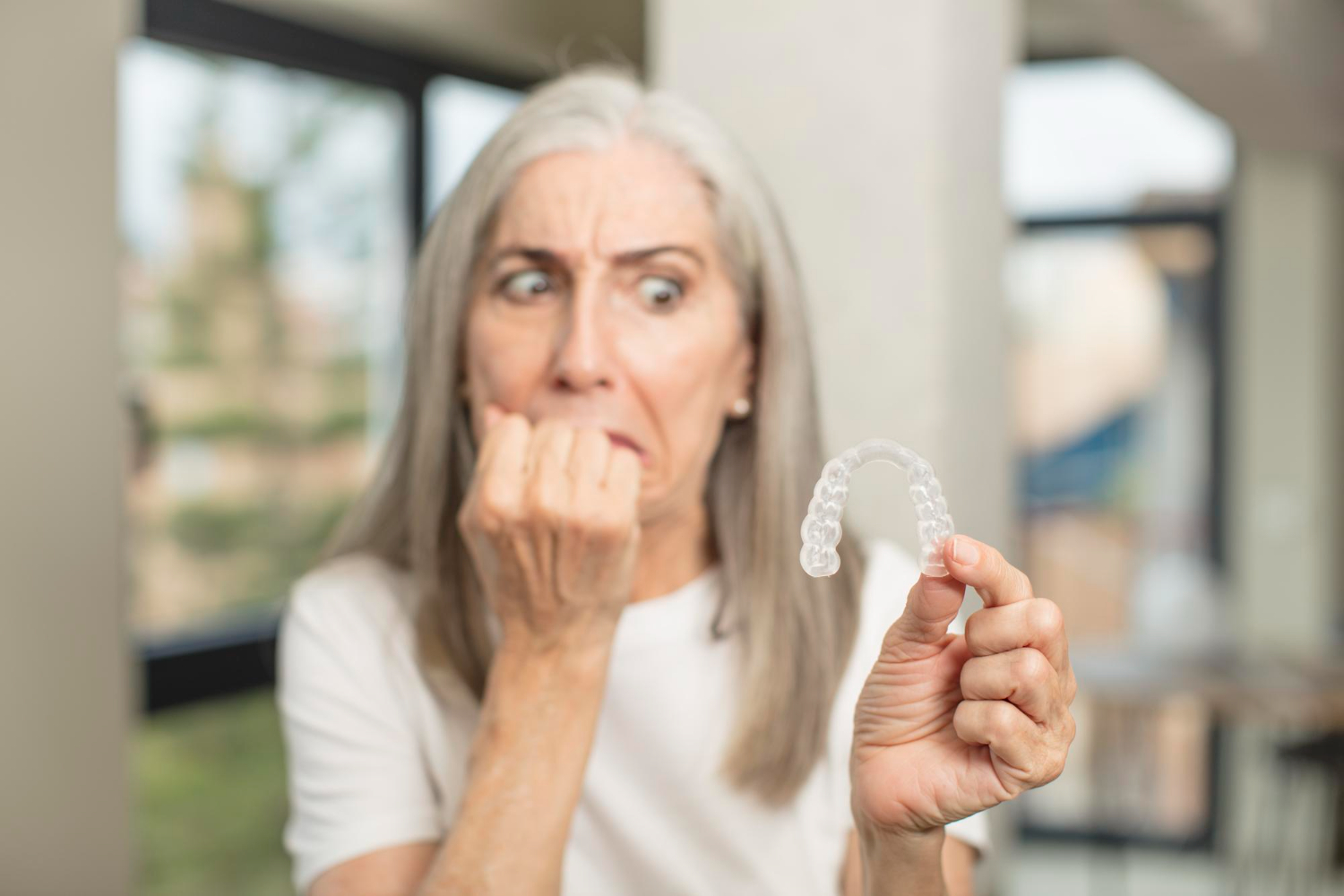
Invisalign is the most commonly chosen treatment method in adult orthodontics. The clear, removable aligners are virtually invisible, the person across from you won't notice you're in treatment. Being removable for eating and brushing aligns perfectly with the adult lifestyle.
Invisalign successfully treats the vast majority of problems including gapped teeth, crossbite, open bite, deep bite, underbite, and crowding.
At Doredent, before Invisalign treatment begins, a 3D model of your mouth is created using the iTero digital scanner and your treatment outcome is simulated before you start. You see how your teeth will look on screen and make an informed decision.
Braces Treatment
Braces are a strong option especially for severe crowding, significant bite problems, and complex tooth movements. For adults, aesthetic concerns can be reduced by choosing ceramic (tooth-colored) brackets or lingual brackets (attached to the inside surface of teeth).
Most Commonly Treated Problems in Adults
Lower front teeth crowding: Overlapping of lower front teeth with age is very common. It occurs frequently both in people who've never had orthodontic treatment and in those who had treatment but didn't use retainers. It's usually corrected in 6 to 12 months.
Gaps opening between teeth: Gaps can open between teeth due to gum disease, tooth loss, or natural aging. They can be closed with Invisalign. After treatment, laminate veneers may be considered for aesthetic enhancement.
Bite problems: Crossbite, deep bite, or open bite are also common in adults. These problems can cause jaw joint pain, tooth wear, and headaches. Worn teeth may require restoration with zirconia crowns after orthodontic treatment.
Teeth shifting due to missing tooth: When an implant isn't placed promptly to replace a lost tooth, adjacent teeth shift toward the gap and the bite becomes disrupted. After orthodontic treatment moves teeth to the correct position, an implant is placed.
Treatment Duration and Process
Orthodontic treatment duration in adults varies with case complexity. To provide a general framework: mild cases (single area crowding, small gaps) 6 to 10 months, moderate cases (multiple problems, relapse correction) 12 to 18 months, complex cases 18 to 24 months.
During treatment, checkup appointments every 4 to 8 weeks are sufficient. Patients using Invisalign change aligners at home and checkup intervals can be longer, a major convenience for adults with busy work schedules.
Adult Orthodontics and Sequencing Other Treatments
Adult patients typically need more than one dental treatment. Doing these treatments in the correct order directly affects the outcome:
Periodontal treatment first: If gum disease is present, it must be treated before starting orthodontics.
Orthodontics first, then restorations: After teeth are brought to the correct position, porcelain crowns, veneers, or implants should be applied. Otherwise, when teeth move, restorations will be misaligned.
Orthodontics first, then implants: Implants are fixed to bone and cannot be moved. After orthodontic treatment brings teeth to ideal positions, the implant is placed in the missing tooth area.
Decay and root canal treatment are urgent: If pain or infection is present, fillings or root canal treatment cannot wait. They must be done immediately, independent of the orthodontic process.
After Treatment: Retention Is Essential at Every Age
After treatment ends, retainer use is at least as important in adults as in younger patients, in fact more important. Because bone remodeling is slower in adults, it takes longer for teeth to settle into their new positions.
At Doredent, a fixed retainer wire plus a removable night retainer is applied after treatment. Retainer use is explained as a lifelong habit and monitored through a regular checkup schedule.
Adult Orthodontic Treatment at Doredent
At Doredent Dental Clinic, adult orthodontic treatments are performed by our Invisalign Diamond Provider orthodontist, Uzm. Dt. Merve Özkan Akagündüz. At the first appointment, a complimentary iTero digital scan creates a 3D model of your mouth, and treatment options and estimated duration are reviewed together.
Because periodontal treatment, restorative treatments, and surgical procedures are also performed under the same roof at our clinic, your treatment process is coordinated seamlessly.
Frequently Asked Questions
Is it too late for orthodontic treatment at 30 or 40?
Absolutely not. Orthodontic treatment can be performed at any age when gum and bone health are adequate. At Doredent, successful Invisalign treatment is also provided to patients over 50. What matters is not age, but that your oral health is suitable for treatment.
How long does Invisalign take in adults?
It varies with case complexity. Mild cases 6 to 10 months, moderate cases 12 to 18 months, complex cases 18 to 24 months. Your personalized treatment duration becomes clear at the initial digital scan.
Will treatment affect my work life?
With Invisalign, hardly at all. Because the aligners are clear, the person across from you won't notice. In meetings, presentations, and client interactions, it won't be obvious you're in treatment. Because aligners are removable, business meals aren't a problem either.
Can I have treatment if I have fillings and crowns?
Yes. Fillings and crowns are not obstacles to orthodontic treatment. The treatment plan is adapted to existing restorations. However, some old or large restorations may need renewal after treatment. This situation is communicated to you at the initial evaluation.
Can I have treatment if I have gum disease?
Orthodontic treatment is not started while active gum disease is present. First, gum health is achieved through periodontal treatment, then you can safely proceed to orthodontics. At Doredent, both treatments are performed in the same clinic in a coordinated manner.
Can my child and I have treatment at the same time?
Yes, this is quite common. Parents who bring their child for an orthodontic evaluation also consult about their own teeth during the pediatric dentistry exam, and family treatment begins. A parent and child in treatment at the same time motivate each other.
Conclusion: Age is not a barrier to orthodontic treatment. In your 30s, 40s, or beyond, the best time to straighten your teeth is when you decide to do it. Today, with Invisalign, you can complete treatment comfortably and predictably without anyone noticing. Take the first step toward that beautiful smile you've been postponing for years.
