
Most People Using Mouthwash Are Actually Harming Their Oral Health
Every year, a new mouthwash brand explodes on social media. "Kills 99% of bacteria," "Freshens your breath," "Prevents gum inflammation." The promises sound great. But the story behind these promises is more complex than you think.

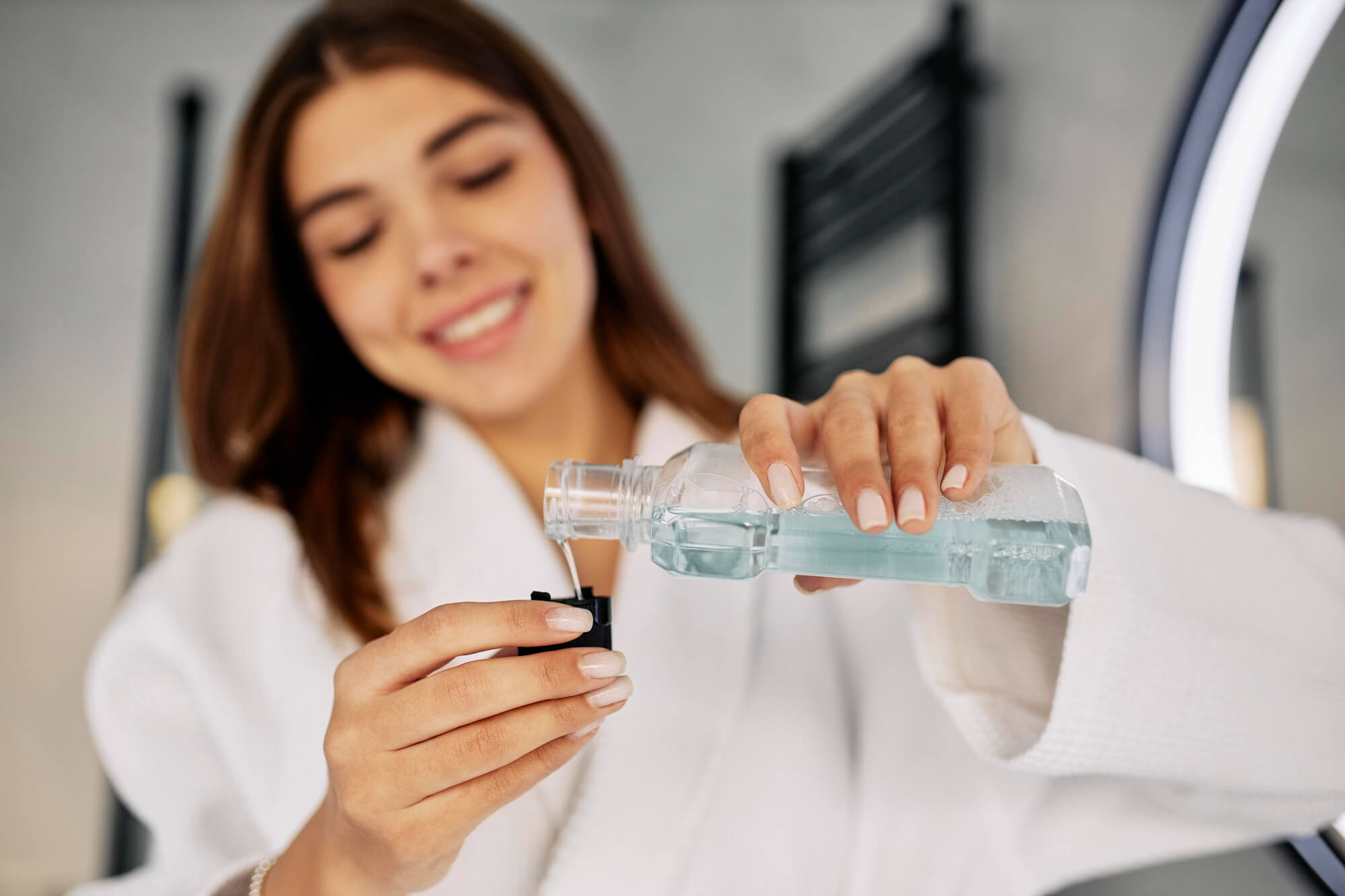
Most of my patients proudly mention during their exams, "I use mouthwash every day, doctor." The response they get is usually not what they expect. Because when used incorrectly, mouthwash doesn't support oral health at all. Instead, it becomes a habit that disrupts a delicate balance. And this is a pattern I see in more than half of my patients.
Every year, a new mouthwash brand explodes on social media. "Kills 99% of bacteria," "Freshens your breath," "Prevents gum inflammation." The promises sound great. But the story behind these promises is more complex than you think.
Your Oral Microbiome Is a Real Thing
Let's clarify this first. Your mouth is not sterile, nor should it be. Over 700 bacterial species live in your mouth. The vast majority are not harmful. In fact, they're essential for your health. This structure, which we call the oral microbiome, is one of your body's first lines of defense. A balanced microbiome prevents bad bacteria from settling in, suppresses cavity-causing pathogens, and regulates many mechanisms from saliva production to immune responses.
Here's the problem. When a standard antibacterial mouthwash claims to "kill 99% of bacteria," it doesn't distinguish between good and bad. It hits everything that enters your mouth. Beneficial bacteria also become casualties of this cleaning. The result? For several hours, your mouth becomes an almost empty space. Who settles in this empty space first? Usually resistant and pathogenic species. So while you're killing bad bacteria with mouthwash, you're actually preparing the ground for worse ones to settle in later.
This situation is very similar to how antibiotics affect gut flora. When you take a broad-spectrum antibiotic, both the disease-causing bacteria and the beneficial species in your gut die. Afterward, doctors recommend probiotics because the flora balance needs to be restored. The same logic applies to the mouth, but oral probiotic routines haven't become widespread here yet.
Alcohol-Based Mouthwashes and Dry Mouth
A significant portion of mouthwashes on the market are alcohol-based. Alcohol is effective at killing bacteria because it breaks down cell membranes. The problem? The soft tissues in your mouth are also made of cell membranes. So mouthwash irritates both bacteria and the upper layers of the oral mucosa to some extent.
The second problem is dry mouth. Alcohol-based mouthwashes suppress saliva production. For a few minutes, your mouth feels moist and pleasant, then saliva production decreases. Why is saliva important? Because saliva is the mouth's natural cleanser. It contains antibacterial agents, calcium and phosphate for mineralization, and a buffer system that neutralizes acid. So in the absence of saliva, tooth decay risk increases significantly.
The paradox starts here. The mouthwash you think will protect against cavities may actually be creating an oral environment more susceptible to decay in the long run. This effect is particularly noticeable with mouthwashes that have high alcohol content and are used two to three times a day.
The Chlorhexidine Issue
There are chlorhexidine-containing mouthwashes sold over the counter in pharmacies. This substance is one of the most powerful antibacterial mouthwashes. It's very valuable when used with a dentist's recommendation after surgery, after periodontal treatment, or for oral infections. But here's the thing: chlorhexidine is not a substance for long-term use.
First, it causes staining on tooth surfaces. With continuous use, teeth take on a brownish-gray appearance. These stains don't come off with a toothbrush and require professional cleaning. Second, it affects taste perception and can lead to metallic taste complaints in some patients. Third, it can cause erosion in the oral mucosa over the long term.
Because chlorhexidine is sold over the counter, everyone uses it whenever they want. "I have bleeding gums, I'll use this" is a common thought. However, chlorhexidine should be used for a maximum of 10-14 days, then discontinued. Some patients have been using this mouthwash twice daily for three to four months and come in complaining, "My teeth turned bright yellow." They don't know the cause.
Those Who Use It "As a Cure for Bad Breath"
The most common reason for mouthwash use is bad breath. People panic because their breath smells, buy mouthwash from the pharmacy, and use it all day. The problem? Ninety percent of bad breath originates from the tongue or gum disease. Mouthwash only masks it, it doesn't solve the cause.
A patient uses mouthwash every morning, and by afternoon, their breath smells again. The solution isn't increasing the mouthwash dose. Bad breath is a symptom, not a disease. Bacterial buildup on the back of the tongue, decayed teeth, inflamed gums, dry mouth, digestive system problems. There are causes that need to be examined one by one. These causes aren't solved with mouthwash alone.
Moreover, the odor-masking effect of mouthwash lasts at most two to three hours. After that, because the cause hasn't been eliminated, the odor returns. The patient takes another dose, this cycle continues all day. The oral microbiome continues to lose its balance under this constant attack.
Mouthwash Doesn't Replace Brushing
Another common misconception is this: "I use mouthwash, can I skip brushing?" No, you can't. Because mouthwash doesn't do mechanical cleaning. The plaque layer on tooth surfaces doesn't dissolve with a chemical substance, it needs to be physically wiped away. What the brush does is physically clean the tooth surface. Mouthwash is only a supportive step.
Similarly, mouthwash doesn't replace floss. Food debris and plaque between teeth can only be cleaned with dental floss or interdental brushes. Mouthwash can reach those spaces in liquid form, but because the contact time is very short, its cleaning effect is limited.
The ideal sequence is this: First brushing. Then interdental cleaning. Finally, if needed, mouthwash. Most people reverse this order. They use mouthwash first, then brush. In this case, protective substances like fluoride in the mouthwash get rinsed away by brushing, reducing their effectiveness.
When Is Mouthwash Actually Necessary?
I want to emphasize this point: mouthwash isn't a bad thing. When used appropriately and correctly, it's a very valuable tool. In what situations?
First, after periodontal treatment. In patients receiving gum treatment, antibacterial mouthwash supports healing in the first few weeks. This approach has become standard in patients being treated for periodontitis.
Second, after tooth extraction. Some dentists recommend warm salt water rinses or low-dose antibacterial mouthwash to keep the extraction socket clean. This short-term use supports healing.
Third, during implant or orthodontic treatment. Because cleaning around braces or implants is difficult, mouthwash can help. During braces treatment, cleaning around brackets with standard brushing sometimes isn't enough. At this point, mouthwash is a supportive step.
Fourth, fluoride mouthwash in patients with high cavity risk. These are not antibacterial but enamel-strengthening mouthwashes. They contain low-dose fluoride and provide beneficial protection for teeth. In children, these types of mouthwashes can also be recommended in age-appropriate ways. In pediatric dentistry practices, they're sometimes used as a home extension of fluoride application.
Fifth, moisturizing mouthwashes in patients with age-related dry mouth or xerostomia due to certain medications. These are not for killing bacteria but for preventing dryness in the mouth.
How Effective Is Salt Water Really?
Now let me get to an inexpensive but valuable tip. A small inflammation in your mouth, mild gum swelling, a sore on your tongue, post-extraction healing period. In all these situations, warm salt water rinse is often safer and more effective than commercial mouthwashes.
Half a teaspoon of salt in a glass of warm water. You mix it, rinse, then spit it out. Salt water reduces mild edema in the oral mucosa, dries the wound while supporting healing, and doesn't disrupt bacterial balance. Plus, it's free.
There's serious wisdom in the old generation's advice to "rinse with salt water." Clinical literature has documented the supportive effect of salt water rinses in many oral problems. For gum swelling or mild inflammation, salt water is the safest first home intervention while waiting for professional evaluation.
Who Should Use Mouthwash and How Often?
The answer varies by individual. There's no clear formula, but here are some general recommendations.
A person with a healthy oral microbiome, no history of cavities, and no gum problems doesn't need daily mouthwash. In fact, it could be considered unnecessary. Brushing and flossing are sufficient.
In the post-periodontal treatment period, it should be used for the duration recommended by the dentist, at the frequency recommended. Usually 7-14 days, twice daily.
In people with high cavity risk, using fluoride mouthwash once daily (usually before bed, after brushing) may be appropriate. This provides extra protection for enamel.
During supportive treatments like braces or implants, using antibacterial or fluoride mouthwash once or twice daily may be appropriate as recommended by the dentist.
Over-the-counter chlorhexidine mouthwashes should not be used for more than 7 days without a dentist's recommendation. After this period, harm starts to outweigh benefit.
Learning to Read Labels
Reading the label before buying a mouthwash is a good habit. There are several things to look for.
Does it contain alcohol? If so, what percentage? High-alcohol mouthwashes (above 20%) cause dry mouth with long-term use. Alcohol-free alternatives are now available from most manufacturers.
Does it contain fluoride? Fluoride mouthwashes can be used for protective purposes.
Does it contain chlorhexidine? If so, this is a product for short-term use, not for daily routine.
What substance is used as an antibacterial agent? Substances like cetylpyridinium chloride and essential oils show different effects. Some are milder, some more aggressive.
If designed for sensitivity, does it contain potassium nitrate? In patients with tooth sensitivity complaints, the right mouthwash can make a significant difference.
Being Moderate
As a dentist, one of the most common pieces of advice I give is this: In oral care, the "more is better" mentality doesn't work. The right thing is to do it at the right frequency, for the right reason. Going overboard often causes more harm than you think.
Mouthwash falls into this category. Not everyone needs to use mouthwash. If they're going to use it, they need to know what they're using it for. Continuous and unconscious use can negatively affect the oral microbiome, mucosa, and even tooth surfaces. At your next exam, ask your dentist, "Is mouthwash necessary for me, and if so, which one?" The answer should not be "yes, all of them," but a personalized recommendation. Dt. Buse Esen often tells patients to stop mouthwash completely or use it at very low frequency because there's no need.
No matter what ads say, a healthy mouth is not a place that needs to be washed like perfume every day. It's a region with a natural balance, its own ecosystem, that requires smart intervention. Professional applications like dental scaling, when combined with the right home routine, produce miraculous results. But when combined with the wrong routine, no professional application alone is enough.
Remember, mouthwash is not a miracle, it's a tool. Like every other tool, it's valuable when used appropriately, harmful when used unnecessarily.
This content has been prepared for informational purposes. It is not a substitute for a dentist's examination and personal evaluation.
