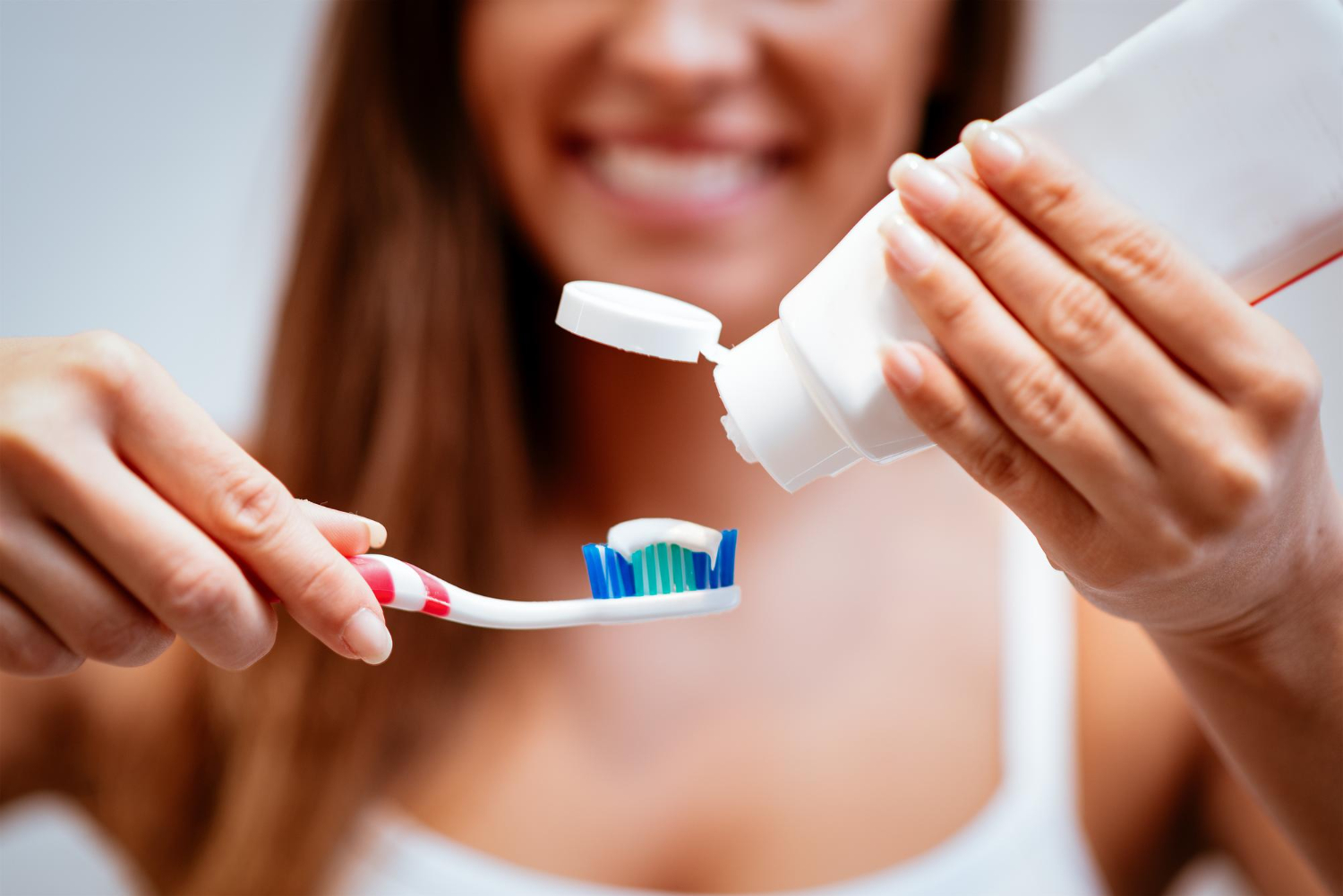
You walk into the store and stand in front of the toothpaste aisle. A wall full of options: 'activated charcoal', 'baking soda', 'sensitivity relief', 'gum protection', 'whitening', 'fluoride', 'fluoride-free', 'natural', 'organic', 'probiotic'. You can't decide which one to choose. Is the expensive one better? Should you trust the celebrity endorsement in the ad? Or are they all the same?
Here's the truth: most toothpastes aren't very different from each other, and the marketing world leaves you facing far more choices than you actually need. Once you understand what each label really means, choosing the right one for your needs becomes much easier.
What's in Every Toothpaste?
Every toothpaste has a similar basic structure. It contains these components:
Abrasives: Particles that mechanically remove plaque and surface stains from tooth surfaces. Substances like silica, calcium carbonate, or aluminum oxide serve this purpose. The particle size and hardness of abrasives determine how the paste affects tooth enamel.
Detergents: Substances that create foam. The most commonly used is sodium lauryl sulfate (SLS). While foam doesn't increase cleaning effectiveness, it gives you the sensation that cleaning is happening and helps remove food particles.
Humectants: Prevent the paste from drying out in the tube. Glycerin and sorbitol are the most frequently used.
Sweeteners and flavors: Improve the taste of the paste. Mint, thyme, and wintergreen aromas are common. Saccharin or xylitol is typically used as sweetener.
Preservatives: Extend the shelf life of the paste.
Active ingredient: This is what actually distinguishes one paste from another. The active ingredient varies according to the benefit the paste is marketed for.
Fluoride: The Essential Active Ingredient
The most important substance that should be in toothpaste is fluoride. Fluoride supports remineralization on the enamel surface, suppresses bacterial acid production, and prevents cavity formation. It's the most scientifically supported dental health ingredient.
The Turkish Dental Association and World Health Organization recommend toothpastes containing 1000-1500 ppm fluoride for adults. For children, lower concentration products (500 ppm or labeled 'children's toothpaste') should be preferred.
The 'fluoride-free toothpaste' trend has become widespread in recent years. These products are marketed based on misinformation about fluoride safety. But here's the scientific truth: fluoride toothpaste is safe when used in the correct amount and is the most effective way to prevent cavities. Choosing fluoride-free paste means depriving your teeth of their strongest protector.
Activated Charcoal: Real or Just a Trend?
Activated charcoal toothpaste, social media's favorite for the past few years, has become a controversial product as it gained popularity. Ads claim it noticeably whitens teeth. But what's the truth?
Activated charcoal, with its highly porous structure, can absorb surface stains. In this sense, it can remove externally caused stains (tea, coffee, cigarettes) to some degree. However, it doesn't change the color in the tooth's internal structure. So activated charcoal won't whiten a 'yellowed' tooth, it only cleans the surface stain on it. We discussed what determines tooth color in
Sunday Breakfast #1, Why Are Some People's Teeth Naturally White While Others Are Yellow?
The real problem is activated charcoal's abrasive effect. It can be too harsh for tooth enamel. With regular use, enamel thinning can be observed. As enamel thins, the yellow dentin layer underneath becomes more visible. The paste used for whitening purposes can actually make teeth appear more yellow in the long run.
Also, most activated charcoal pastes don't contain fluoride. This increases cavity risk. Taking a long-term health risk for short-term cosmetic benefit isn't a smart choice.
Recommendation: don't use products containing activated charcoal more than once or twice a week; if you do use them, continue with a fluoride option as your main paste.
Baking Soda Toothpastes
Baking soda (sodium bicarbonate) is a mildly abrasive and alkaline substance. Baking soda toothpastes are effective at removing surface stains and slightly neutralize the acid balance in the mouth. In this respect, it's not a bad choice.
But baking soda also has its limits. Brushing with pure baking soda (which some people do) can damage teeth. Commercial products with baking soda added to the formula are safer because the abrasiveness is controlled.
Baking soda pastes can be used a few times a week, especially for people with surface stain problems. You don't need to use them every day. It's more important that your main paste contains fluoride.
Sensitivity Relief Toothpastes
If you have tooth sensitivity to cold, hot, or sweet foods, sensitivity relief toothpastes really do work. The active ingredients in these pastes work by either blocking the open channels in the dentin layer or reducing nerve cells' response to stimulation.
The most common active ingredients are:
Potassium nitrate blocks sensitivity by reducing nerve transmission.
Strontium chloride and
strontium acetate plug dentin tubules.
Arginine combines with calcium in saliva to form a protective layer on the dentin surface.
Novamin (calcium sodium phosphosilicate) supports remineralization in enamel.
The effect of sensitivity relief toothpastes doesn't appear instantly. With regular use, a noticeable difference is felt within 2 to 4 weeks. If you stop using it, sensitivity can return, so continuous use is necessary.
Caution: sensitivity isn't always a problem that can be solved with toothpaste. There may be an underlying cause such as tooth decay, crack, root canal problem, or gum recession. If you have persistent sensitivity, consulting a dentist first is the right step.
Root surface exposure due to gum recession can lead to sensitivity, and treatment for this condition isn't limited to toothpaste.
Gum Protection Toothpastes
Toothpastes in this category generally contain antibacterial substances. Stannous fluoride, triclosan, or herbal extracts (water extracts, tea tree oil, etc.) can help reduce gum inflammation.
This is a suitable choice for people with bleeding gums,
suspected gingivitis, or those wanting to support gum health. However, toothpaste alone doesn't treat gum disease. Professional dental scaling and correct brushing technique are much more important. We explained in detail how you can prevent tartar formation at home
in this article.
Whitening Toothpastes
Most toothpastes marketed as 'whitening' don't change tooth color. They make teeth appear brighter by removing surface stains. Real whitening, however, is done with peroxide-based professional applications.
Some whitening toothpastes contain low concentrations of hydrogen peroxide. This content can actually help lighten color, but its effect cannot be compared with professional whitening. Also, with long-term use, it can cause gum irritation and sensitivity.
If you truly want to whiten your teeth, you need to seek
professional teeth whitening treatment, not toothpaste. We examined why whitening results vary from person to person in
Disappointment in Teeth Whitening.
Which Toothpaste Should You Choose?
A simple answer: a toothpaste containing fluoride with a reasonable abrasiveness level (RDA value between 70 and 100) is sufficient for most people. High price doesn't mean high quality.
If you have a special need, you can choose a paste containing an active ingredient for it: potassium nitrate for sensitivity, stannous fluoride for gums, mild abrasive properties for stains, etc. But the basic criterion is always that it contains fluoride.
Toothpaste is only a small part of oral health. Correct brushing technique, floss use, and regular dental checkups are far more important than which toothpaste you use. For more information about preventive dentistry practices, you can check out our
knowledge base section.
Special Situation for Children
Children's toothpastes differ from adult toothpastes, and this difference is important. Due to children's fluorosis risk (tooth staining linked to excessive fluoride intake), low fluoride concentration pastes should be used in specific age groups.
For children under 3 years old, a rice grain-sized amount of paste containing 500 ppm fluoride is sufficient. For ages 3 to 6, a pea-sized amount of paste containing 1000 ppm fluoride is appropriate. Children 6 years and older can use adult toothpaste. You can find these age-based recommendations in more detail in our
pediatric dentistry section.
Taste matters in children's toothpastes. Minty adult toothpastes burn children's mouths and turn brushing into a negative experience. Child-friendly flavors like strawberry, watermelon, and bubblegum help establish brushing habits.
Organic and Natural Toothpastes
Toothpastes marketed with labels like 'organic', 'natural', 'vegan', 'chemical-free' have become popular in recent years. Some of these pastes are well-formulated products. However, the 'natural' label doesn't automatically mean 'better'.
Being natural isn't a reliability guarantee by itself. Some natural products contain clinically untested components with unproven effectiveness. Fluoride-free ones don't provide cavity protection.
If you prefer natural toothpaste, look for an option containing fluoride. Naturalness and scientific effectiveness can come together; you don't have to sacrifice one for the other.
SLS-Free Toothpastes
Sodium lauryl sulfate (SLS) is a foaming detergent found in most toothpastes. Some people show sensitivity to SLS. Switching to SLS-free paste can provide noticeable relief for people experiencing recurrent canker sores, oral mucosa irritation, or dryness.
SLS-free pastes foam less, but cleaning effectiveness doesn't decrease. Foam is added to formulas for marketing reasons, to give consumers the sensation of 'cleaning'. Cleaning happens through the fluoride and abrasives in the paste; foam has no significant contribution to this.
If you have recurrent canker sore complaints, checking whether your toothpaste contains SLS can be beneficial. This small change leads to noticeable improvements in some patients.
What Is RDA Value?
The abrasiveness of toothpastes is measured by RDA (Relative Dentin Abrasivity) value. This value ranges from 0 to 250. The higher it is, the more abrasive the paste.
The World Health Organization recommends that toothpastes used daily have an RDA value below 250. However, this limit is too broad. In practice, values below 100 are considered 'low abrasive', 100-150 'medium abrasive', and above 150 'highly abrasive'.
For daily use, toothpastes with RDA values between 70-100 are ideal choices. Most whitening toothpastes have RDA values above 100 and can lead to enamel wear with long-term use. In some activated charcoal pastes, this value can approach 200, which is quite risky.
Unfortunately, RDA value isn't clearly written on every product label. But it's possible to access these values on manufacturers' websites or in scientific publications. Being a conscious consumer requires looking at the back of the label.
Final Word
The confusion in the toothpaste aisle is the marketing world's attempt to sell you more products. What you really need is clear: fluoride-containing paste with moderate abrasiveness, suited to your needs.
On your next shopping trip, look at the labels. Focus on fluoride content and active ingredients instead of trendy claims like 'activated charcoal', 'natural', 'fluoride-free'. The rest is marketing.
This content has been prepared for informational purposes. It absolutely does not replace physician examination and personal evaluation.