
If you keep your toothbrush in the bathroom, you're putting fecal bacteria in your mouth every morning
Here's the thing: in most homes, toothbrushes sit openly on the counter, just a few feet from the toilet. And yes, this seemingly innocent setup tells a much dirtier story than you think.

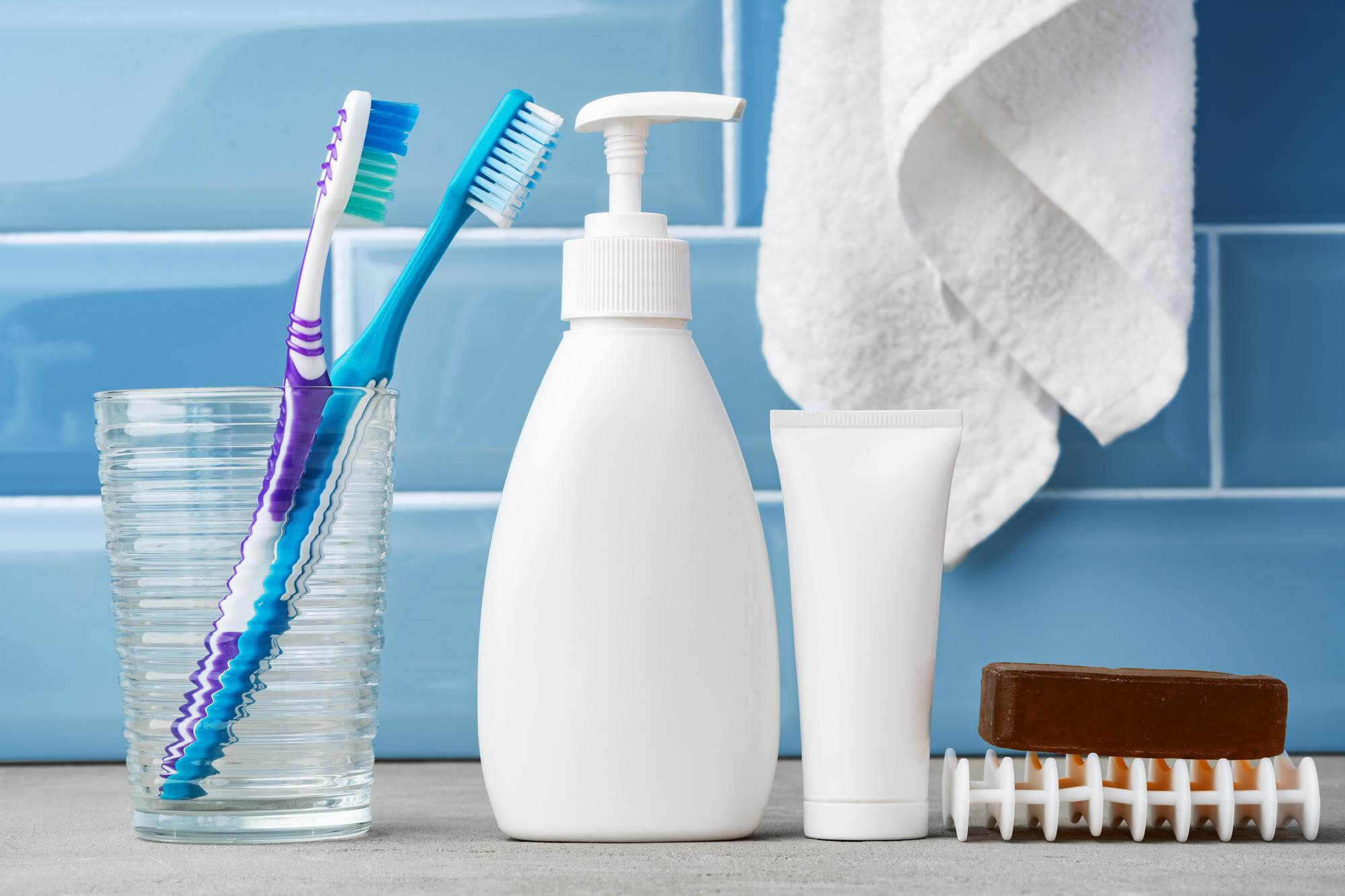
If reading that headline made your stomach turn, your reaction is completely valid. When I explain this topic to patients during exams, I'm usually met with skeptical looks and comments like "come on, you're exaggerating." Then I share the results from microbiology studies, and those reactions change. Here's the thing: in most homes, toothbrushes sit openly on the counter, just a few feet from the toilet. And yes, this seemingly innocent setup tells a much dirtier story than you think.
To understand this issue, we first need to talk about what happens when you use the toilet. It's not a pleasant topic, but it's important.
What You Don't See When You Flush
The moment you flush, a fine mist of water droplets sprays upward from the toilet bowl. In microbiology literature, this is called "toilet plume" or "aerosol spray." You can't see it with the naked eye. But it's there. This cloud stays suspended in the air for 6 to 8 seconds after flushing before settling on surfaces. Where does it land? Often exactly where you'd expect: the sink, the mirror, towels, and our main concern, your toothbrush.
This aerosol mist isn't just water. It contains intestinal bacteria: E. coli, enterococcus, streptococcus species, sometimes worse. Whatever is in the toilet bowl, a microscopic version of it gets launched into the air when you flush. If you flush with the lid closed, this dispersion is significantly reduced. If you flush with the lid open, your entire small bathroom essentially becomes an aerosol chamber for a few seconds.
Most bathrooms in Turkey are built with limited square footage, meaning there's sometimes less than two meters between the toilet and the sink. Your toothbrush sits right in the range of that aerosol cloud. If you store your brush with the bristles facing up and the head exposed, it becomes a perfect landing pad for bacteria.
"But I Always Close the Lid"
Closing the lid does make a real difference. Measurements show that when the lid is closed, 80 to 90 percent of the aerosol stays contained. That part is true. But it's not a complete solution on its own.
That's because bathrooms are inherently high-humidity environments. After showers there's steam, water splashes from the sink, towels are drying. In this moist environment, bacteria basically have a field day when it comes to reproduction. Even if you keep your toothbrush in a home with a lidded toilet, if the brush head stays wet for extended periods, you've created ideal conditions for bacterial growth.
Also, aerosol isn't the only threat to your brush head. Water droplets splashing from the faucet, hands touching the sink area, even water particles scattered during toilet cleaning and rinsing. Each one is a tiny bacterial carrier. So the problem isn't just flushing, it's the entire bathroom ecosystem.
Types of Bacteria on Your Brush
When you look at a toothbrush head that's been used for just a few days under a microscope, you'll see millions of bacteria. Some of these come from your own mouth, your normal flora. Cavity-causing bacteria like Streptococcus mutans, gum disease-associated ones like Porphyromonas gingivalis. These are already in your mouth, they're not the problem.
The problem starts with bacteria from other sources. E. coli, for example. That's an intestinal bacterium, a species that shouldn't be in your oral flora. When it enters the mouth, it can reach the digestive system and cause problems. Plus, when it contacts gum tissue, it increases the risk of gingivitis. In samples taken from people with gum disease, the variety of bacteria found on brush heads is much broader than in healthy individuals.
Beyond that, mold, fungus, and virus samples are also detected. Continuing to use the same brush after recovering from a cold can even cause the illness to recur. Most people don't have a habit of "changing the brush after being sick," so the brush essentially becomes a bacterial reservoir.
What Does Proper Storage Look Like?
Here are a few practical recommendations. Implementing all of them together makes a huge difference.
First, store your brush as far from the toilet as possible. If you have a separate sink area in your home, that's the ideal choice. If your bathroom and toilet are separate rooms, you're lucky. If they must be in the same room, storing the brush in a cabinet with a door minimizes aerosol contact.
Second, keep the brush upright and allow it to air-dry. The brush head should face upward so water can drain off. Plastic covers are very common, especially for travel. But a brush stored in a cover never fully dries. Bacteria multiply much faster inside a moist cap than on a brush left in the open. Caps should only be used during travel, left open until dry, then closed.
Third, avoid contact with other people's brushes. If multiple brushes are standing in the same cup and the bristles are touching, everyone in the household is essentially sharing the same brush. Bacterial transfer is that simple.
Fourth, rinse the brush with hot water before and after each use. This simple step significantly reduces the bacterial load on the brush head. Some people prefer rinsing their brush with mouthwash, which is also an effective method.
Fifth, replace your brush on time. Every three months, before the bristles start to fray, a used brush is worn out. Both its cleaning effectiveness decreases and its bacterial load increases. Buying replacement heads for your favorite brush can be a good habit.
The Connection Between Brush Hygiene and Oral Health
Now let's get to the main point. Does cleaning your mouth every morning with this bacterial load actually affect your oral health? The answer is yes, but context matters.
In someone with a healthy immune system and balanced oral flora, bacteria on the brush head are usually controlled by the body without causing problems. Mechanisms like swallowing, saliva, and stomach acid kick in. But in certain situations, this balance breaks down.
In people with sensitive, bleeding, or inflamed gums, bacteria on the brush head make direct contact with tissues and can enter the bloodstream through microscopic wounds. Someone with bleeding gums who brushes with a contaminated brush every day may essentially be keeping a small infection door open. Over time, this door can create conditions for more serious gum diseases, conditions like periodontitis.
For patients who've had implant treatment, brush hygiene is even more critical. That's because peri-implantitis that can develop around an implant is a condition prone to flare-ups from foreign bacterial loads on the brush head. The same applies to patients with gum recession. Exposed root surfaces are more vulnerable to bacteria transferred from the brush than normal enamel surfaces. For patients with gum recession, I always discuss brush hygiene as a separate topic at every visit.
Children and Brush Hygiene
For children's brushes, the issue is even more critical. Kids leave their brushes everywhere: on the edge of the sink, in the corner of the tub, sometimes even on the bathroom floor. Because children's immune systems aren't as mature as adults', they're more susceptible to bacteria that might transfer from brushes.
Our pediatric dentist Dr. Dt. Ceyda Pınar Tanrıverdi views brush hygiene in child patients as part of family education. A corner where the child's brush can stand upright without water splashing on it, a storage setup where air can circulate between the bristles every day. These may seem like small details, but they're steps with long-term effects on the child's oral health. In the field of pediatric dentistry, these kinds of practical points matter more than treatment itself.
For Electric Toothbrush Users
People who use electric brushes face the same problem, in some ways it's even more complex. That's because electric brush heads have a thicker, more intricate structure than manual brushes. The spaces between bristles are deeper, water drainage is harder. Drying time is longer. This means more favorable conditions for bacterial growth.
Electric brush heads should also be replaced every three months. Many people skip this rule because the heads are more expensive. But brushing with a brush head that's become a bacterial reservoir does more harm than good for oral health. Plus, the vibrating motion of an electric brush works bacteria deeper into oral tissues.
Mouthwash as a Complementary Step
One step that supports brush hygiene is using antibacterial mouthwash after brushing. But you need to be careful here too. Not every mouthwash is suitable for daily use. Chlorhexidine-containing rinses can cause tooth staining with long-term use. Alcohol-containing rinses cause dry mouth, which paradoxically increases bacterial growth. Using the mouthwash your dentist recommends as appropriate for you, at the frequency they suggest, is the best approach.
Before wrapping this up, let me say this: your toothbrush and how you store it are at least as important to your oral health as your brushing technique. Dental scaling and other professional treatments provide only temporary relief if your daily home routine isn't set up correctly. The real work starts with those small details at home.
A Practical Checklist
Take a look at your bathroom, especially where you store your brush. If it's in the same room as the toilet, does the toilet lid close with every flush? Is the brush stored in the open or with a cap? Is there standing water under the brush head? Are family members' brushes touching each other? When did you last replace your brush, can you remember?
The answers to these questions give you a good idea of what bacteria are circulating in your mouth. Often you don't need expensive treatments, just a few small changes in your daily routine can make a serious difference over the years. Reduced gum bleeding, improved bad breath, fewer cavities. It all partly depends on brush hygiene.
Tomorrow morning when you reach for your brush, look around. Think about the conditions in which you're storing it. Not much needs to change really, just a few feet, a few lids, a few small habits. The payoff could be a lifetime of healthy teeth and gums.
This content is prepared for informational purposes. It absolutely does not replace a clinical examination and personalized evaluation by a dentist.
