
Is it too late once you notice gum recession?
One day you notice in the mirror that your teeth look longer than before. Or a yellowish area appeared at the base of your teeth that wasn't there previously. Maybe you feel a sharp sting when you drink cold water. All these signs point to the same thing: gum recession...

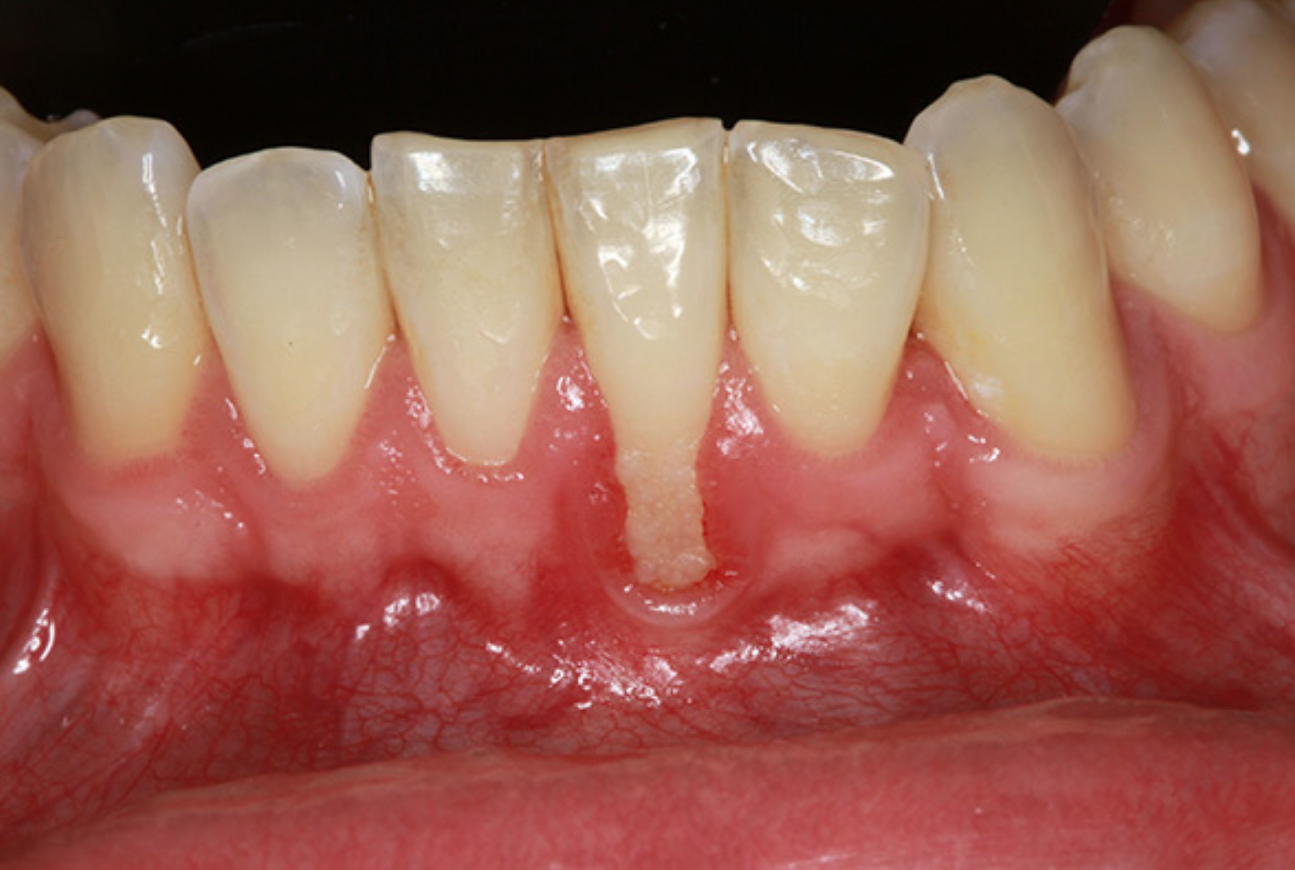
One day you notice in the mirror that your teeth look longer than before. Or a yellowish area appeared at the base of your teeth that wasn't there previously. Maybe you feel a sharp sting when you drink cold water. All these signs point to the same thing: gum recession.
The bad news: receded gums do not grow back on their own. The good news: if you catch it early, you can stop the progression and preserve the current state. Even if you notice it late, surgical treatment options can regenerate lost tissue. So what exactly is happening, why does it happen, and what can you do?
Why Do Gums Recede?
Gum recession is not caused by a single factor. In most cases, multiple factors work together.
Incorrect brushing technique is the most common cause, and most people don't want to hear this. Brushing teeth with hard, horizontal movements thinking "harder brushing cleans better" gradually pushes gum tissue back. Using a hard-bristled brush creates the same effect. Gum tissue is thin and delicate, it cannot withstand mechanical trauma.
Tartar buildup is another major cause of gum recession. When plaque mineralizes and turns into tartar, it creates irritation below the gum margin. This chronic irritation first leads to gum inflammation (gingivitis), and if left untreated, periodontitis develops, causing gum recession along with bone loss.
Gum recession can also occur during or after orthodontic treatment. When teeth are moved beyond the bone boundaries, the gum support in that area weakens. This is a risk that must be carefully evaluated in treatment planning.
Genetic predisposition also plays a role. Some people have naturally thinner gum tissue that is more prone to recession. In these individuals, even minimal irritation can lead to recession.
Bruxism (teeth grinding) is also an overlooked cause. Excessive force applied throughout the night can stress the gum attachment and contribute to recession.
How Do Symptoms Start?
Gum recession doesn't happen suddenly, it progresses slowly. That's why most people notice it when the process has already begun. The first signs are usually:
Teeth appearing "longer." Actually, the tooth doesn't grow longer, the gum recedes and the root portion of the tooth that is normally hidden becomes exposed. The root surface has a darker yellowish color because it is not covered with enamel. This color difference is the first visual clue that makes recession noticeable.
Tooth sensitivity, especially increased sensitivity to cold and sweets, is the most common symptom of recession. The dentin channels in the exposed root surface are directly exposed to external stimuli.
Gum bleeding can also accompany recession. Especially if the underlying cause is periodontitis, bleeding and recession are seen together.
What Happens If Left Untreated?
Although recession may seem like a standalone problem, the cascade of issues it triggers is serious.
The exposed root surface is extremely susceptible to root decay. Root cavities progress much faster than cavities on enamel-covered tooth surfaces and are more difficult to treat. When tooth decay starts in the root area, it can deepen quickly and lead to tooth loss.
Chronic sensitivity reduces quality of daily life. Having to avoid cold, hot, sweet, and acidic foods affects diet and social life.
Aesthetic loss is also significant. Especially recession visible on teeth in the smile line disrupts the harmony of the smile and can make a person look older.
Advanced recession can progress to tooth mobility and loss. A tooth that loses bone support has a decreasing chance of staying in the mouth.
Treatment Options
Treatment is planned according to the degree and cause of recession.
In mild recession, the first step is to eliminate the cause. Incorrect brushing technique is corrected, switching to a soft-bristled brush, and if tartar is present, professional cleaning is performed. You can check the cost of this procedure on our dental scaling cost calculator page. Desensitizing toothpastes and fluoride applications help protect the exposed root surface.
In periodontitis-related recession, treatment of gum disease is the priority. Infection sources are eliminated through curettage (subgingival cleaning) and root surface planing. After the disease is brought under control, regular follow-up is planned to prevent recession progression.
Moderate to advanced recession may require surgical treatment. Gum graft surgery involves covering the receded area with tissue taken from another location (usually the palate). This procedure both protects the root surface and provides aesthetic improvement.
In advanced cases where the tooth has lost so much support that it cannot be saved, extraction and dental implant treatment become an option. You can get current information from our dental implant cost calculator page. But early intervention is crucial to avoid reaching this point.
Prevention: The Most Effective Treatment
The most reliable way to prevent gum recession is to develop proper oral care habits.
Use a soft-bristled toothbrush. Place the brush at a 45-degree angle to the gum margin and brush with small circular motions. Never make horizontal back-and-forth scrubbing movements. If you use an electric brush, choose a model with a pressure sensor.
Use dental floss or interdental brushes at least once a day. Plaque accumulating between teeth is the starting point of gum disease.
Get professional tartar removal every six months. Tartar cannot be cleaned with home brushing. As buildup increases, so does the risk of gum disease.
If you have a teeth grinding habit, use a night guard. Make sure to inform your dentist about this.
If you smoke, quit. Smoking reduces gum blood flow, increasing recession risk and negatively affecting treatment response.
The Relationship Between Gum Recession and Tooth Sensitivity
One of the most obvious consequences of recession is sensitivity. The dentin layer in the exposed root surface is not as protective as enamel. Thousands of tiny channels in dentin (dentinal tubules) directly transmit hot, cold, sweet, and acidic stimuli to the nerve tissue.
This sensitivity can sometimes be so severe that the patient feels pain in their teeth even when breathing cold air. Feeling tooth pain while breathing outdoors in winter is a classic sign of gum recession.
Desensitizing toothpastes contain substances like potassium nitrate or strontium and provide temporary relief by blocking dentin channels or reducing nerve transmission. But this doesn't solve the underlying recession problem, it only masks the symptom.
Fluoride varnish, desensitizing agents, and laser therapy applied in a clinical setting can protect the exposed root surface more permanently. But the real solution is to find the cause of recession and stop its progression.
Are Gum Swelling and Recession the Same Thing?
These two are often confused. Gum swelling and recession are different conditions but can be different stages of the same disease process. During the gingivitis phase, gums are swollen, red, and puffy. At this stage, recession has not yet begun and complete reversal is possible with treatment.
However, when gingivitis progresses to periodontitis, inflammation leads to bone loss and gums begin to recede. In some cases, gums can be both swollen and receded, which presents a confusing situation for the patient. Professional evaluation is necessary to distinguish between the two conditions and create the correct treatment plan.
Is It Too Late?
If you said "I have this too" while reading this article, don't panic, but don't postpone either. Even if recession has started, it is possible to stop its progression. It is possible to regenerate lost tissue with surgical treatment. It is possible to intervene before root decay develops.
The only thing that is not possible is waiting for it to heal on its own. Gum recession never reverses by itself. But with proper treatment, it can be stopped and corrected. The difference is when you take action.
This content is prepared for informational purposes. It absolutely does not replace a physician's examination and personal evaluation.
