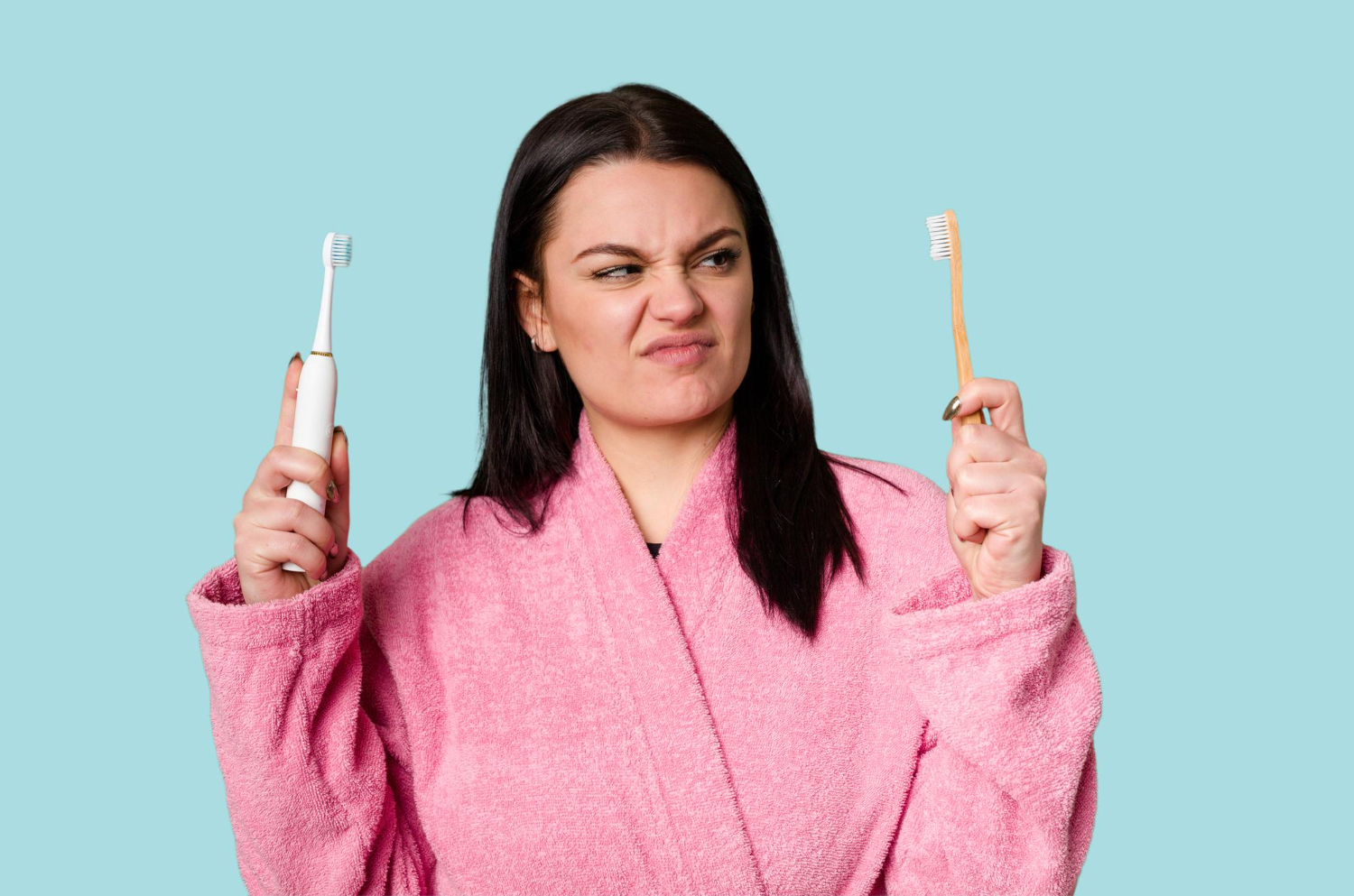
An electric toothbrush can cost anywhere from 500 to thousands of lira. A manual toothbrush costs about 20 lira. Does that price difference really add value? What can electric brushes do that manual ones can't? Or is this just another marketing story?
This is one of the most common questions dentists get from patients. And the answer is more nuanced than you might think, because whether one is "better" depends on who you are.
What Does the Science Say?
The most comprehensive research on this topic is a systematic review conducted by the Cochrane Collaboration. This review pooled studies involving thousands of participants and compared the two brush types.
The results are clear: electric toothbrushes show better plaque removal and gum inflammation reduction compared to manual brushes, on average. Specifically, rotating-oscillating electric brushes deliver about 21 percent better plaque control within three months. The improvement in gingivitis is about 11 percent better on average.
These numbers aren't revolutionary, but they're not negligible either. Over the long term, small differences compound into meaningful advantages in gum health and plaque control.
But there's a critical point: these are average results. Some individuals achieve excellent results with manual brushes, while others get inadequate cleaning even with electric brushes. The difference depends on individual technique and discipline level.
Where Do Electric Brushes Excel?
Electric brushes have several concrete advantages.
Tens of thousands of strokes per minute: You can make about 300 strokes per minute with a manual brush. Sonic electric brushes deliver 30,000 to 40,000 vibrations per minute. This speed difference breaks up plaque mechanically more effectively.
Standardized cleaning: When brushing manually, the pressure you apply, the type of motion, and the speed vary from person to person. You brush less when tired, faster when rushed. Electric brushes eliminate this variability. Every brushing session applies the same motion pattern.
Built-in timer: Dentists recommend brushing at least two minutes twice a day. But most people don't follow this. Research shows that manual brush users average 45 to 70 seconds of brushing time. Most electric brushes have a built-in two-minute timer, and this significantly increases actual brushing duration.
Pressure sensors: Higher-end electric brushes include sensors that alert you when you're applying too much pressure. For people with aggressive brushing habits, this feature is valuable, because hard brushing leads to enamel wear and gum recession.
Access to tight spaces: Electric brush heads are typically smaller than manual brushes and reach back molars, impacted wisdom teeth, and narrow areas more easily.
Is the Manual Brush Completely Outdated?
No. When used with proper technique, a manual brush is also a highly effective cleaning tool. Many healthcare professionals and dentists worldwide maintain their own oral hygiene with manual brushes.
The advantages of manual brushes shouldn't be ignored:
Cost: A manual brush costs a fraction of an electric brush. Electric brush heads are also expensive and need replacing every three months.
Simplicity: It doesn't run out of battery, doesn't need charging, has no electronics to break. Easy to carry while traveling.
Accessible to everyone: A large population that can't afford electric brushes economically can achieve excellent oral health with manual brushes.
Adaptability: A manual brush adapts to any mouth anatomy and preference. The fixed motion pattern of an electric brush may feel uncomfortable to some users.
Who Should Switch to an Electric Brush?
Not everyone needs an electric brush. But for certain groups, electric brushes have a clear advantage.
Orthodontic patients: During
braces treatment, cleaning plaque around brackets is extremely challenging. Electric brushes provide more effective cleaning in these tight areas. Especially when orthodontic brush heads are used, gum health and cavity risk improve significantly during braces treatment. For detailed information about orthodontic treatment costs, you can check our
dental treatment prices page.
Those with limited manual dexterity: Individuals with arthritis, Parkinson's, post-stroke patients, or those experiencing age-related decline in hand dexterity struggle to clean effectively with manual brushes. Electric brushes overcome this difficulty by minimizing hand movement.
Children: Brushing technique is usually inadequate in children. The fun designs and timers of electric brushes help children develop proper brushing habits with adequate duration and correct technique. Some models include fun app-connected features. You can find more information about establishing oral hygiene habits in children in our
pediatric dentistry section.
Patients with gum disease: Patients with
gingivitis or periodontitis benefit from electric brushes that are more effective at plaque control. Models with pressure sensors especially prevent excessive pressure in areas with gum recession.
Implant patients: Excellent hygiene is essential for long-term success after
implant treatment. Peri-implantitis (inflammation around the implant) is the most important cause of implant loss. Electric brushes provide more effective cleaning around implants.
Patients who clench or grind their teeth: In this patient group with aggressive brushing habits, electric brushes with pressure sensors reduce enamel wear.
Sonic or Rotating-Oscillating?
Electric brushes fall into two basic categories:
Rotating-oscillating brushes: A small round head rotates left and right. Brands like Oral-B use this technology. You clean each tooth individually. This is the type with the most scientific evidence supporting it.
Sonic brushes: An elongated head resembling a manual brush vibrates at high frequency. Brands like Philips Sonicare use this technology. The vibration creates fluid flow between teeth for cleaning.
Both types are effective. There's no definitive scientific conclusion about which is better. The choice can be made based on personal comfort and price.
Unrealistic Expectations
An electric brush isn't the solution to every problem. Let's correct a few misconceptions:
"I bought an electric brush, I don't need floss." Wrong. No brush can fully clean between teeth. Dental floss and interdental brushes don't replace an electric brush.
"An electric brush will whiten my teeth." Limited. It's effective at removing surface stains but doesn't change the intrinsic color of teeth. Real whitening requires
professional teeth whitening. We explained why whitening results vary from person to person in our article
Teeth Whitening Disappointment.
"The most expensive is the best." Not always. Mid-range brushes in the 800 to 1500 lira range offer most of the benefits of 5000 lira premium models. The extra features of expensive models (smart sensors, app connectivity, different modes) aren't useful for most users.
How Should You Decide?
If you're considering buying an electric brush, ask yourself these questions: Are you maintaining adequate oral health with a manual brush? Do plaque, gum, and cavity problems come up frequently during dental checkups? Do you have special circumstances like orthodontic treatment, implants, or periodontal problems? Do you have limitations in manual dexterity?
If you're answering "yes" more often to these questions, an electric brush is a good investment for you. If "no," a manual brush with proper technique and regular use provides everything you need.
The most important truth: technique change matters more than brush change. An electric brush used with poor technique can produce worse results than a manual brush used with correct technique.
Head Replacement and Maintenance
Electric brush heads have the same lifespan as manual brushes. Replacing them every three months is recommended. When bristles wear out, cleaning effectiveness decreases significantly, and worn bristles can damage gums.
There are practical methods to track head replacement. Most modern electric brushes have indicator bristles that change color after three months. When these bristles turn blue or fade, it's time to replace the head.
Head cost is a factor that increases the total cost of an electric brush. When you need to buy four heads per year, this expense exceeds the annual cost of manual brushes. It's important to factor in this recurring cost when making an investment decision.
Rechargeable or Battery-Operated?
Electric brushes come in two types: rechargeable and battery-operated. Rechargeable brushes are more powerful, longer-lasting, and provide more effective cleaning. Battery-operated brushes offer simple vibration and typically show cleaning performance close to a manual brush.
Marketing battery-operated brushes as "electric toothbrushes" is a common marketing bias. These products don't deliver real electric brush advantages. If you're switching to an electric brush, definitely choose a rechargeable model.
Smart Brushes and App Connectivity
In recent years, electric brushes that connect to smartphone apps have entered the market. These brushes track which areas of your mouth you're cleaning adequately during brushing, show missed spots, and analyze your brushing technique in real time.
These features sound futuristic, but how valuable are they really? For some users, they create a gamification effect and increase brushing motivation. They can be especially effective for children. However, most adult users stop opening the app after a few weeks. So paying extra just for smart features may not make sense.
If you genuinely plan to use the smart features and are tech-curious, this investment can be meaningful. Otherwise, a simple but reliable rechargeable brush offers the same cleaning quality.
Water Flosser (Oral Irrigator) Alternative
Most people evaluating electric brushes also consider getting a water flosser. Water flossers (oral irrigators) are devices that use water pressure to remove food particles from between teeth and in the gum sulcus. For a detailed look at this topic, check out our guide
What Is a Water Flosser and How Do You Use It?
Water flossers don't replace dental floss but complement it. They're especially useful for orthodontic patients, implant patients, those with gum pockets, or those who have difficulty using floss. Some electric brush manufacturers offer combined brush and water flosser sets.
If budget is limited, the priority should be an electric brush. A water flosser is an additional investment but isn't sufficient on its own. The most effective combination: a good brush plus dental floss, plus optionally a water flosser.
Final Word
An electric brush isn't a magic solution. When used correctly, it provides a small but meaningful advantage. If you can invest in yourself and one of the special circumstances we listed above applies to you, switching to an electric brush is a sensible decision.
But remember: the best brush is the one you use regularly and with proper technique. If you forget to charge an expensive electric brush and don't use it more than once a month, a 20-lira manual brush is more valuable for you.
This content is prepared for informational purposes only. It absolutely does not replace a physician's examination and personal evaluation.