
What you need to know to avoid disappointment with clear aligner treatment
You've decided to straighten your teeth, done your research, and started considering Invisalign clear aligner treatment. But there's so much information online that you don't know what to trust. On one side, users saying "it changed my life," on the other, warnings about "money traps." ...

You've decided to straighten your teeth, done your research, and started considering Invisalign clear aligner treatment. But there's so much information online that you don't know what to trust. On one side, users saying "it changed my life," on the other, warnings about "money traps."
The truth is, the vast majority of patients who experience disappointment are not unhappy with the treatment itself, but with incorrect expectations about the treatment. "I thought it would be completely invisible," "I didn't know it would take this long," "nobody told me I'd have to wear the aligners 22 hours a day." If these sentences sound familiar, this article is for you. We'll explain all the details of Invisalign treatment without marketing language, without exaggeration, and with complete honesty.
What Is Invisalign? A Brief and Clear Definition
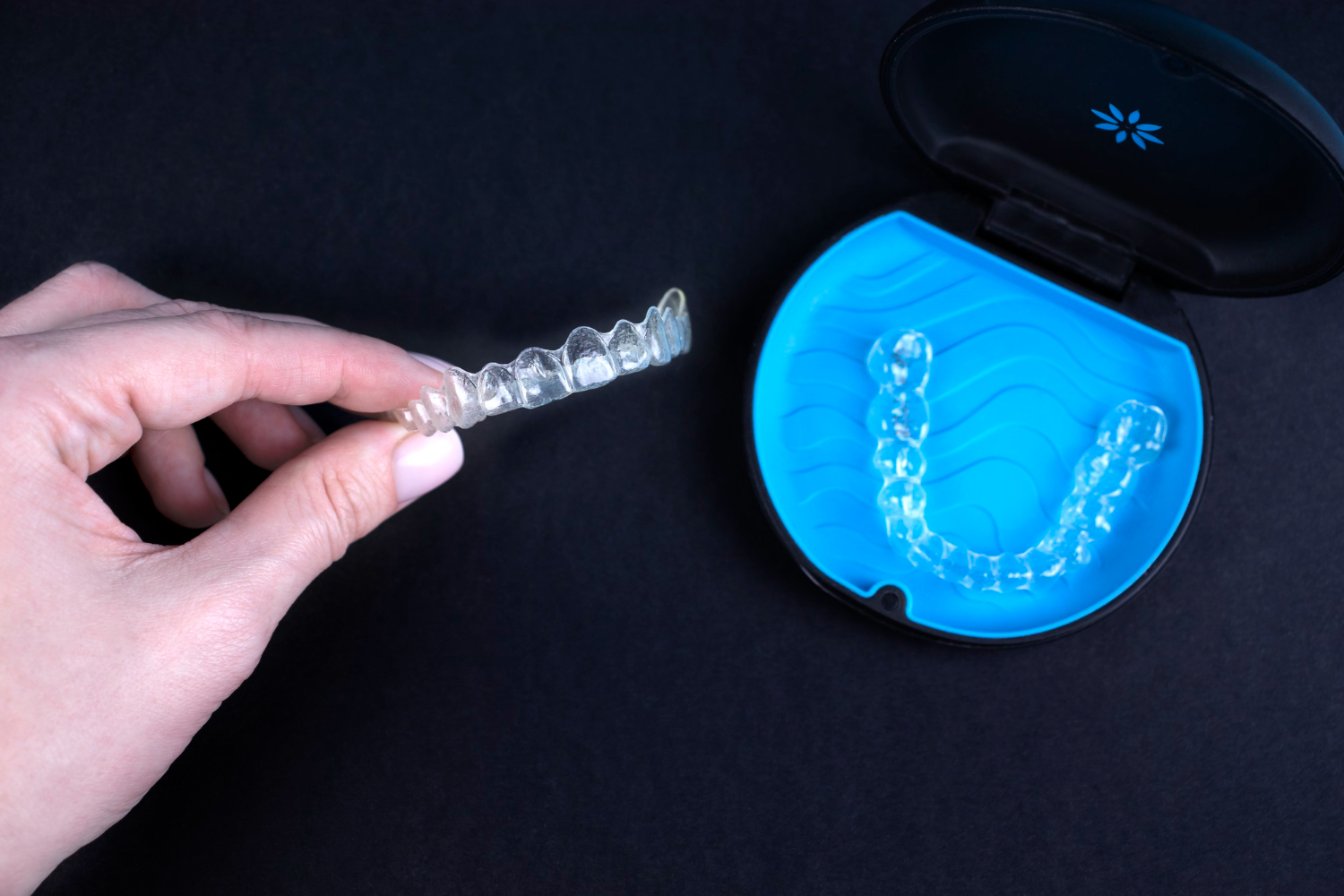
Invisalign is an orthodontic treatment system that moves teeth using clear, removable aligners. Unlike traditional metal braces treatment, no brackets are bonded to the teeth and no wires are attached. Instead, a series of clear aligners are used, each designed to move the teeth in a specific direction.
Each aligner is worn for approximately 7 to 14 days, then you move to the next aligner. Each new aligner moves the teeth slightly further from the previous position. This gradual movement ensures that by the end of treatment, the teeth reach their target position.
Invisalign is manufactured by Align Technology and has treated over 17 million patients worldwide. However, it's important to distinguish between "Invisalign" and "clear aligners" as concepts. There are many different clear aligner brands on the market. Invisalign is the most established and widely used among them. The difference lies in the patented SmartTrack material technology, the sophistication of the treatment planning software, and the clinical research background.
Can Every Case Be Treated With Invisalign?
Short answer: no. Invisalign has developed significantly in recent years and can now be used even in quite complex cases. However, not every orthodontic problem can be solved with clear aligners.
Mild to moderate crowding, spaced teeth, mild bite problems, and some moderate skeletal discrepancies can be successfully treated with Invisalign. These are the areas where the treatment is strongest.
However, advanced skeletal discrepancies (such as severe lower jaw protrusion or retrusion), cases requiring impacted tooth eruption, or situations involving very complex tooth rotations may not be solvable with clear aligner treatment alone. These cases may require traditional braces or combined treatment approaches.
What's critical here is the evaluation done before starting treatment. Your dentist's correct assessment of whether your case is suitable for clear aligner treatment directly determines the treatment's success. It's easy to say "it can be done" to every patient, but the right approach is being able to say "this method isn't the best option for you" in some cases.
Treatment Planning: The Role of Digital Scanning
One of Invisalign treatment's greatest strengths is the digital planning process. Before treatment begins, a 3D digital scan of your teeth is taken. This scan largely eliminates the need for traditional impression material molds.
Intraoral scanners like iTero create a millimeter-precise digital model of your teeth. Using this model, your dentist plans all stages of your treatment in software called ClinCheck. Which direction each tooth will move, how far it will move, how many aligners the treatment will take, and what your teeth will look like as a result can all be seen on the computer screen before treatment even begins.
This digital simulation is used not only to inform the patient but also to verify the accuracy of the treatment plan. An experienced orthodontist may revise the ClinCheck plan many times. They optimize the movement amount, movement sequence, and attachment placement for each tooth. The treatment's success largely depends on the quality of this planning stage.
Attachments: What Do Those "Bumps" on Teeth Do?
When people think of Invisalign, the first thing that comes to mind is that it's "invisible." However, there's a reality that many patients notice after starting treatment: attachments. Attachments are small composite bumps bonded to the teeth. They're tooth-colored, so they're not noticeable from a distance, but they can be seen up close.
The role of attachments is to help the aligner grip the tooth better and enable specific movements. Complex movements like bodily tooth movement, rotation, or extrusion (pulling outward) cannot be achieved with clear aligners alone without attachment support.
Attachments may not be used in every case, but they're used in the vast majority of cases. The number and location of attachments are determined according to the treatment plan. When treatment is complete, the attachments are removed and leave no permanent marks on the teeth.
Knowing this is important because patients who start treatment expecting it to be "completely invisible" can be disappointed when they see attachments. Realistic expectations mean a satisfying treatment process.
Daily Use: How Many Hours Per Day Should You Wear the Aligners?
The answer to this question is clear: at least 20 to 22 hours per day. Aligners should only be removed when eating and brushing teeth. Other than that, they should be in your mouth when sleeping, working, exercising, even when talking.
Compliance with wear time is the most critical factor directly affecting treatment success. Patients who don't wear their aligners for sufficient time don't achieve the planned tooth movement. In this case, either the treatment duration extends or additional aligners (refinement) are needed.
From a practical standpoint, assuming you eat three main meals per day and brush your teeth after each meal, the time the aligners spend out should not exceed approximately 2 to 3 hours. If you have a snacking habit, you may need to reorganize this. Because with each snack, you need to remove the aligner, brush your teeth, and put the aligner back in.
Many patients say Invisalign treatment directed them toward a more disciplined eating pattern. This can be considered an interesting side effect.
Pain and Discomfort: A Realistic Perspective
There's a widespread statement that "clear aligners don't hurt," but this isn't entirely accurate. When you switch to each new aligner, you may experience pressure and mild pain in your teeth for the first few days. This is an indication that your teeth are moving and is completely normal.
The intensity of pain varies from person to person. Some patients feel almost nothing, while others experience noticeable sensitivity for the first few days. Usually, the pain decreases on its own within 2 to 3 days.
Compared to braces treatment, the discomfort experienced with clear aligner treatment is generally milder. This is because each aligner moves the teeth in small increments. In the bracket and wire system, wire activations done at monthly checkups apply more pronounced force.
The edges of the aligner rubbing against the gums or cheeks can also occasionally cause discomfort. In this case, your dentist can trim the edge of the aligner or recommend using orthodontic wax.
Treatment Duration: How Long Does It Take?
Treatment duration depends entirely on the complexity of the case. For mild crowding, 4 to 6 months may be sufficient, while moderate and advanced cases range from 12 to 18 months. In some complex cases, this period can extend to 24 months.
However, there's an important detail here: the planned duration and the actual duration may not always align. The speed at which teeth move varies from person to person. Factors such as bone metabolism, age, wear time compliance, and biological response affect treatment duration.
Refinement aligners can also extend the duration. If the teeth haven't fully reached their target when the first set of aligners is finished, additional aligners are produced. This is a common situation in Invisalign treatment and doesn't mean the treatment has failed. On the contrary, it's fine-tuning to perfect the result.
Is Everything Over When Treatment Ends? The Retention Process
Absolutely not. There's another stage at least as important as the treatment itself: retention. After teeth are moved to their new positions, the surrounding bone and connective tissue haven't yet fully remodeled. During this period, teeth tend to return to their old positions. This is called "relapse."
To prevent relapse, wearing retainers after treatment completion is essential. For the first few months, the retainer is usually worn all day, then you transition to nighttime-only use. Some orthodontists provide additional security by bonding a fixed wire (lingual retainer) behind the teeth.
Patients who neglect the retention phase face the problem of teeth relapsing after orthodontic treatment. This is an extremely common and completely preventable situation. Protecting the result of years of treatment is as simple as wearing a retainer for a few hours every night.
Invisalign Provider Levels: What Do They Mean?
Invisalign classifies dentists according to the number of patients they treat annually. This classification is an important indicator of the dentist's experience level.
Starting from Bronze level, this classification rises to Silver, Gold, Platinum, and Diamond levels. A dentist with Diamond Provider status treats a large number of Invisalign cases per year. This means that dentist has encountered different case types, has experience dealing with complications, and has developed advanced skills in treatment planning.
However, provider level alone is not a sufficient criterion. Whether the dentist has orthodontic specialization, their treatment planning approach, and patient communication are at least as important as case volume. A dentist who has done hundreds of cases but with poor planning quality can fall behind a specialist who has done fewer cases but plans meticulously.
Oral Care During Clear Aligner Treatment
One of the biggest advantages of Invisalign treatment is that the aligners are removable. This makes oral care much easier compared to braces. You can brush and floss as you're used to, without having to clean around brackets and wires.
However, there are some points requiring extra attention. You need to brush your teeth after every meal and rinse your mouth before putting the aligners back in. Putting aligners over dirty teeth is an invitation for bacterial growth and cavity formation under the aligner.
The aligners themselves also need cleaning. Morning and evening, brush the aligners with a soft toothbrush under cold water. Don't use hot water, as it can deform the aligner. Instead of toothpaste, you can also use a small amount of liquid soap. The abrasive particles in toothpaste can make the aligner cloudy and increase its visibility.
There may be tartar and plaque buildup around attachments. Pay extra attention to these areas when brushing. Regular professional dental cleaning also remains important during treatment.
Cost and Payment Options
Invisalign treatment is generally more expensive compared to traditional braces. This difference stems from the patented material technology, digital planning infrastructure, and manufacturing process.
Treatment cost varies according to case complexity, the number of aligners to be used, and treatment duration. Giving a single price wouldn't be accurate, because there's a significant cost difference between treating mild crowding and comprehensive bite correction.
Clinics offering flexible payment options make treatment more accessible. Installment payment plans make treatment manageable budget-wise. However, price shouldn't be the only criterion when deciding. Inadequate planning quality and follow-up process at a place offering lower prices can lead to a much more costly situation in the end.
Who Should Choose Braces Instead of Invisalign?
Asking this question shows maturity in treatment selection. Invisalign is a great tool, but like any tool, it performs better for certain jobs.
Situations where braces might be preferred include severe skeletal discrepancies, many impacted teeth, cases requiring advanced rotation, and situations where there's serious concern about patient compliance. Especially in teenage patients, if the discipline to wear aligners regularly cannot be ensured, it's clear that a fixed treatment appliance will give more reliable results.
For adult patients, aesthetic concerns, social environment, and professional life conditions usually weigh heavily in favor of clear aligners. However, the final decision should be based on the dentist's clinical evaluation.
Final Word
Invisalign clear aligner treatment is an orthodontic treatment method that can give excellent results in the right case, with the right planning and patient compliance. However, it's not a miracle. Its success depends on the dentist's experience, the quality of planning, and the patient's participation in treatment.
If you're considering straightening your teeth, the first step should be a comprehensive orthodontic examination. In this examination, a detailed evaluation of your teeth, jaw structure, and bite relationship is performed. Which treatment method is most suitable for you emerges as a result of this evaluation.
