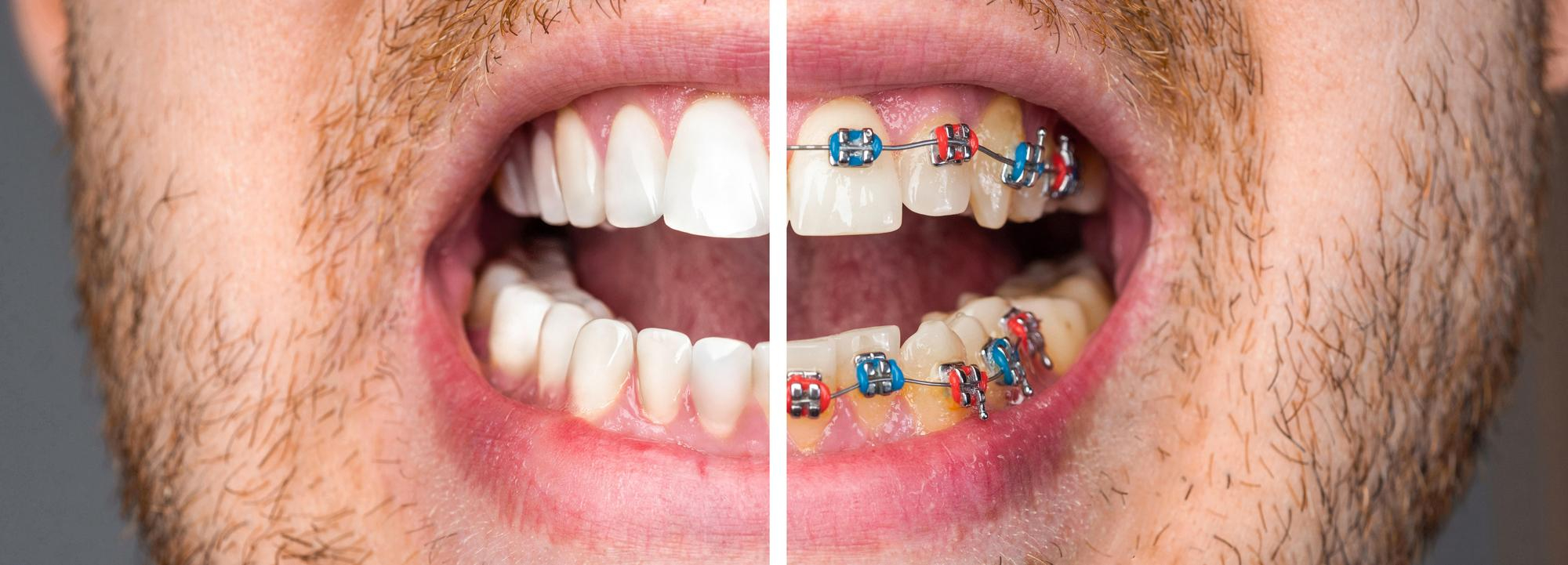
You open Instagram. A before-and-after photo from a dental clinic appears. On the left, yellowed, crooked, broken teeth. On the right, a porcelain-white, flawless smile. The difference is incredible. You think, "I want that too."
But wait a minute. Is that result in the photo really what it seems? And could that same result be achieved with your teeth?
The biggest cause of disappointment in dentistry isn't the quality of treatment, it's unrealistic expectations at the start. In this article, we'll discuss the illusions created by social media, how to properly evaluate real before-and-after images, and how to begin treatment with the right expectations.
Why Is Social Media Misleading?
Dental aesthetic posts on social media can mislead you in several critical ways.
Photo angle and lighting dramatically change how teeth appear. The "before" photo is often taken in poor lighting, while the "after" photo is shot in professional studio light. The same teeth can look completely different under different lighting.
Photo filters and editing apps are widely used. Tooth whiteness is enhanced, gum color is corrected, facial features are softened. The "result" you see may differ from what's actually visible in the mouth.
Case selection is also an important factor. Clinics naturally share the most dramatic transformations. A full smile design involving 20 crowns attracts a lot of attention on social media. But that doesn't mean every patient needs such extensive treatment. In many cases, beautiful results can be achieved with far more minimal interventions.
The vast majority of "before and after" photos on social media serve marketing purposes. Comparisons shot with the same lighting, same angle, same camera, without filters or editing, are far more reliable. A clinic's real case images provide much more information about that clinic's quality than social media posts.
What Should Real Before-and-After Look Like?
A trustworthy before-and-after comparison should meet certain basic criteria.
Photos should be taken under identical conditions. Same camera, same angle, same lighting, same distance. When these standards are met, you can clearly see the real difference.
Treatment details should be specified. How many teeth were treated? What treatment was performed? How long did the process take? Without this information, it's difficult to understand anything just by looking at the photo.
Different case types should be shown. A portfolio that displays not just dramatic transformations but also minor corrections reflects a clinic's true competence.
At Doredent, we share real patient cases with treatment details on our before-and-after page. Photos are taken under standard conditions and are not edited. These images will give you a much healthier idea about our treatment outcomes.
The "Hollywood Smile" Trap
In recent years, the "Hollywood smile" concept has become dentistry's most popular and most dangerous trend. The bright white, flawless teeth of social media influencers, TV stars, and celebrities have led thousands of people to clinics saying "I want that too."
But what's behind those smiles? Often it's the complete reduction of 20 to 28 teeth and placement of
zirconia crowns. This means the irreversible reduction of healthy teeth. Reduced tooth structure never grows back.
In many cases, such extensive intervention isn't necessary. Color can be improved with
teeth whitening. Minor shape irregularities can be corrected with
bonding (composite filling). Crowding can be eliminated with
clear aligner treatment. These methods require much less tooth intervention and preserve natural tooth structure.
The best treatment is the one that requires the least intervention. Crowning a healthy tooth purely for aesthetic reasons causes permanent damage to that tooth's natural structure. A truly beautiful smile is one achieved while preserving as much natural tooth structure as possible.
What's the Right Treatment for You?
The answer to this question isn't found on Instagram, it's found in the examination chair. Every mouth is different. Your tooth structure, gum form, bite relationship,
tooth color,
missing teeth, and facial proportions are the factors that determine the most appropriate treatment for you.
An orthodontist evaluates your tooth alignment and jaw relationship. If there's crowding or a bite disorder,
clear aligner or
braces treatment may be needed. If you have a color problem, whitening may be sufficient. If you have broken teeth or teeth requiring large fillings, crowns may be considered.
The right approach is to evaluate all these factors together and create a personalized plan. The "same treatment for everyone" mindset is one of the most common mistakes in dentistry.
Digital Smile Design: Seeing the Result Beforehand
In modern dentistry, digital planning tools allow you to see the treatment result in advance. With digital scanning and design software, how your teeth will look after treatment can be simulated on a computer screen.
This simulation serves two important purposes. First, it makes your expectations as a patient concrete. Instead of saying "I want it like this," you can ask "does this result suit my face?" Second, it strengthens communication between doctor and patient. The doctor can visually show what is possible and what is not.
At Doredent, pre-treatment simulations can be made with iTero digital scanning technology. Especially in
Invisalign treatment planning, ClinCheck software shows every stage of treatment and the final result in detail.
Be Careful When Comparing Prices
"Affordable Hollywood smile" ads are frequently seen on social media. Price is certainly an important factor, but the cheapest option isn't always the right choice.
The price of a crown varies according to the material used, the quality of the laboratory, the doctor's experience, and the clinic's infrastructure. A treatment done cheaply but causing problems in a short time becomes a much more costly situation when it requires re-treatment. You can get information about TDB reference fees and treatment details from our
zirconia crown cost calculator,
teeth whitening cost calculator, and
clear aligner cost calculator pages.
When choosing a clinic, check: What is the doctor's area of specialization? Can they show you real photos of cases they've done before? Can they do digital planning? Do they explain the treatment plan to you in detail? Do they provide transparent information about the materials and laboratory used?
See Real Results
The most reliable way to evaluate a clinic's quality is to look at that clinic's real case outcomes. Not social media filters, but a portfolio shot under standard conditions, with treatment details specified, showing different case types, shows you that clinic's true competence.
On the Doredent before-and-after page, we share our orthodontics, cosmetic dentistry, and restorative treatment cases with real patient photos. Each case is presented with the treatment details applied. These images provide a much more reliable reference about the quality of our treatments than social media posts.
First Step: Discuss Your Expectations
The most important thing you should do before starting treatment is to discuss your expectations clearly with your doctor. Instead of saying "I want teeth like that person," ask the question "what do I want and is it possible with my teeth?"
A good doctor tells you what they can do. But an even better doctor also tells you what shouldn't be done. A doctor who says "I recommend not reducing your healthy teeth, we can do whitening and minor correction instead" is much more trustworthy than one who says "let's crown 20 of your teeth."
Treatments that begin with realistic expectations end with satisfaction. Treatments that begin with exaggerated expectations can result in disappointment, no matter how well they're done.
What do you think about your smile?
Send your photos and let our specialist evaluate the most appropriate treatment options for you.
Get Online Assessment
Review our real patient cases →
This content is prepared for informational purposes. It does not replace a doctor's examination and personal evaluation.