
Orthodontics after 30: Too late, or perfect timing?
"I wish I'd done this when I was 15." We hear this from nearly every patient over 30 who walks into the clinic. They've finally decided to pursue the orthodontic treatment they delayed for years, but one question lingers: am I too late?

"I wish I'd done this when I was 15." We hear this from nearly every patient over 30 who walks into the clinic. They've finally decided to pursue the orthodontic treatment they delayed for years, but one question lingers: am I too late?
The short, clear answer: no, you're not too late. There's no age limit for orthodontic treatment. You can straighten your teeth at 35, at 45, at 55. But orthodontics after 30 has different dynamics than treatment during adolescence. Understanding these differences helps you set realistic expectations and enter the treatment process fully prepared.
Why the delay, and why now?
There are usually a few common reasons behind delaying orthodontic treatment: financial constraints in childhood, avoiding the appearance of metal braces, dismissing it as "just a cosmetic issue," or simply lacking proper information.
In your 30s, the trigger is usually different. Most patients have reached a certain point in their careers and feel more motivated to invest in themselves. The rise of social media and video meetings has amplified the importance of your smile. For some patients, worsening crowding over time, gum problems, or functional issues like jaw pain make treatment a necessity rather than a choice.
Whatever the reason, starting orthodontic treatment after 30 is a completely legitimate and healthy decision. What matters is making that decision with the right information.
Biological differences: Bone metabolism and treatment duration
The most important biological difference to understand about orthodontics after 30 is the slowing of bone metabolism. During adolescence, the bone remodeling process is highly active and teeth move faster. In adults, bone is denser and less elastic. This means teeth may take longer to travel the same distance.
But this doesn't make treatment impossible, it just requires patience. A case that might take 12 months in a teenager could extend to 15 to 18 months at age 35. Your orthodontist will use force levels appropriate to your bone structure to move teeth safely.
Another factor affecting treatment duration is periodontal status. Gum disease is more prevalent in patients over 30. If there's gum inflammation or bone loss, these issues must be treated before starting orthodontics. Otherwise, tooth movement can further weaken already compromised supporting tissues.
Another consideration is the risk of root resorption. During orthodontic treatment, tooth roots may shorten at the micron level, which in most cases is clinically insignificant. However, in adults, especially in teeth that have experienced trauma or root canal treatment, the risk of root resorption is relatively higher. Your orthodontist will monitor root status with periodic X-rays during treatment and modify the treatment plan if necessary.
Common orthodontic problems in adults
The orthodontic problems encountered in patients over 30 can differ from those in adolescents. Untreated crowding from childhood and adolescence may have worsened over time. Lower front tooth crowding becomes especially pronounced in the 20s and 30s, as pressure from erupting wisdom teeth pushes forward from the back of the jaw.
Relapse is common in patients who had orthodontic treatment before but neglected the retention phase. Teeth shift back toward their original positions and crowding returns. These patients often have high motivation for starting treatment again, because they've experienced firsthand the difference between the comfort of straight teeth and the discomfort of crooked ones.
Missing teeth are also a frequent situation in adult orthodontics. Adjacent teeth drift into the spaces left by lost teeth and the bite becomes disrupted. In these cases, orthodontic treatment alone may not be sufficient; a combined approach with dental implant treatment or prosthetic restorations may be needed.
Clear aligners or braces?
The vast majority of patients over 30 prefer clear aligner treatment. The reason is obvious: the appearance of metal brackets is uncomfortable in professional and social life. Wearing braces during a presentation at a meeting, in a client discussion, or at a social gathering is unacceptable for many adults.
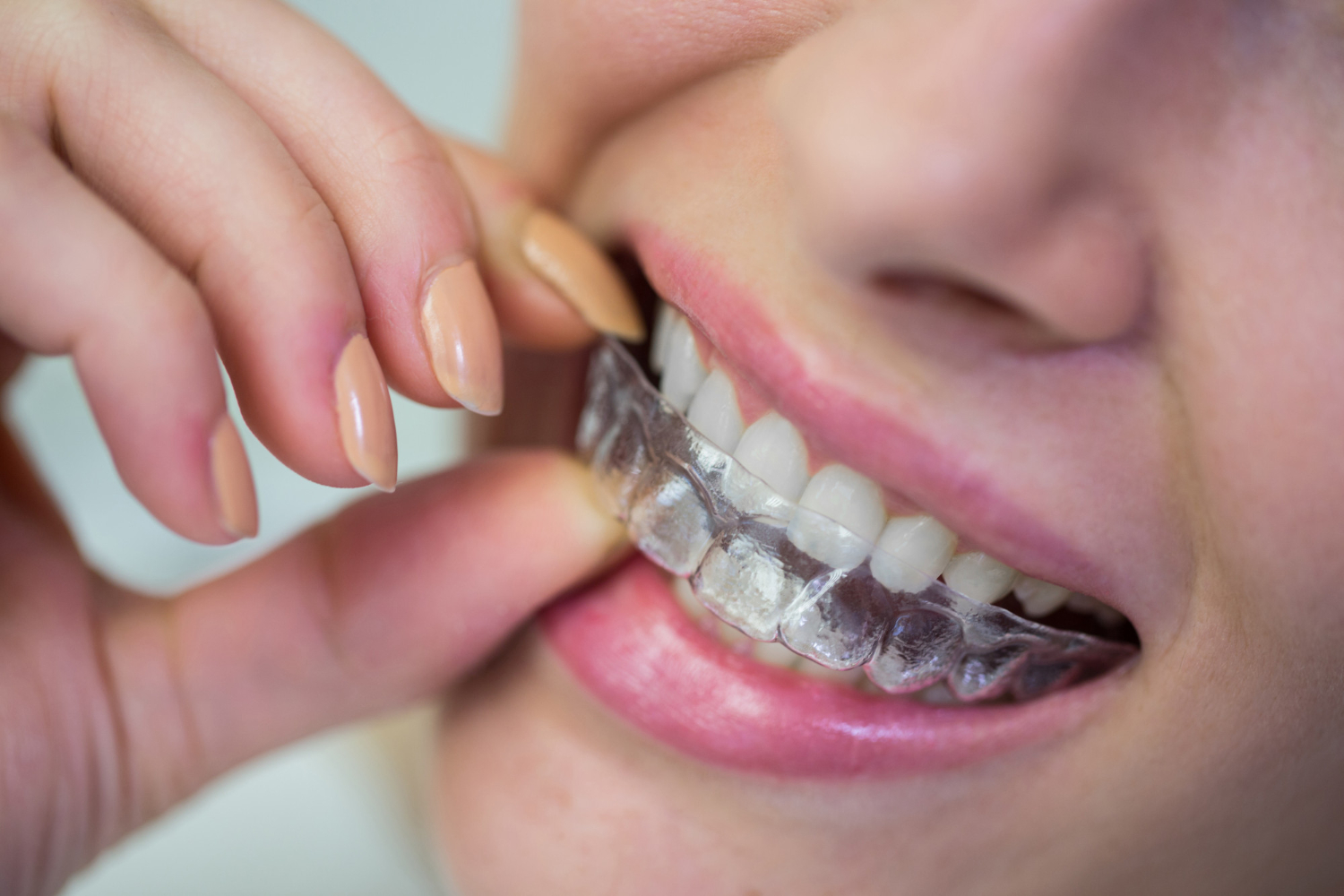
Clear aligner treatment offers a major advantage here. The aligners are nearly invisible, removable, and minimally disruptive to daily life. Adult patients also tend to have higher treatment compliance than adolescents, because they've started treatment with a conscious decision and have the discipline to wear their aligners consistently.
However, not every case can be treated with clear aligners. Severe bite discrepancies, complex tooth movements, or cases requiring jaw relationship correction may respond better to braces treatment. Even in these situations, aesthetic alternatives like ceramic (clear) brackets are available.
Some adult patients may benefit from a combined treatment approach, completing the most complex phase with short-term braces and then continuing with clear aligners. This strategy allows both effective execution of difficult tooth movements and an aesthetically acceptable experience for the bulk of treatment. The choice of treatment approach should be planned by your orthodontist based on the case requirements.
Gum disease and orthodontics together
The area requiring the most careful attention in adult orthodontics is gum health. Periodontitis (gum disease) is common in patients over 30, and this directly affects orthodontic treatment.
Orthodontic treatment should not be performed without a healthy periodontium (tooth-supporting tissues). Applying force to teeth in the presence of active gum disease accelerates bone loss and can cause teeth to become loose. For this reason, a comprehensive periodontal evaluation is performed before starting orthodontic treatment.
When necessary, tartar removal, deep curettage, or gum therapy is applied. Once gum health is under control, orthodontic treatment can safely begin. Periodontal monitoring continues throughout treatment. In some cases, the orthodontist and periodontist work together to both straighten the patient's teeth and preserve gum health.
Orthodontics in patients with bone loss
A condition that can be encountered in older age groups is alveolar bone loss. Bone height may have decreased due to gum disease or tooth loss. This doesn't make orthodontics impossible, but it does change the treatment approach.
The force applied to teeth with bone loss must be very carefully calibrated. A standard force applied to a tooth with normal bone level, when applied to a tooth with bone loss, can cause excessive movement or even tooth loss. The orthodontist manages this risk by using lighter forces and planning more frequent monitoring intervals.
In these types of cases, a multidisciplinary approach is critical. The orthodontist, periodontist, and when necessary, prosthodontic specialist work together to create the patient's treatment plan.
Orthodontic treatment and existing restorations
Adult patients typically have various restorations in their mouths: fillings, crowns, bridges, even implants. These restorations affect orthodontic treatment planning.
Brackets can be bonded to filled teeth, but the bonding technique differs from natural enamel surfaces. With prosthetic restorations like crowns or bridges, bracket retention can be more difficult and special surface preparation may be needed.
Implants, however, cannot be moved. While natural teeth move within bone thanks to the periodontal ligament, implants remain fixed because they're directly integrated into bone (osseointegration). Therefore, the treatment plan is created taking implant positions into account. Sometimes implants serve as fixed anchor points that benefit treatment; sometimes implant position limits treatment goals.
If both orthodontics and implant treatment are needed, orthodontics is usually done first. After teeth are brought to the correct position, the implant is placed in the ideal location. This sequence optimizes both orthodontic and prosthetic outcomes.
The psychological dimension: "Isn't this embarrassing at my age?"
Some patients over 30 hesitate to share their decision to start treatment with those around them. Concerns like "braces at my age?", "what will people think?", "won't it be embarrassing?" are serious psychological factors affecting the treatment decision.
These concerns are understandable but largely unfounded. Adult orthodontics has become very common in recent years. Especially with the popularization of clear aligner treatment, the number of adults undergoing treatment in professional settings and social environments has increased significantly. Treatment often goes completely unnoticed.
Moreover, an adult who decides to straighten their teeth is perceived as someone who values themselves and invests in their health. The confidence boost experienced when treatment is complete is the most pronounced change reported by many patients.
After treatment: Is retention more critical after 30?
Yes, it's more critical. In adult patients, the risk of relapse (teeth returning to their original positions) is higher than in adolescent patients. There are several reasons: the bone remodeling process progresses more slowly in adults, muscle memory is more established, and in some cases periodontal support is weaker.
For this reason, the retention protocol in adult orthodontic treatment must be taken very seriously. Removable retainer use is typically recommended for life. Yes, for life. This involves a retainer worn at night, a small price to pay for preserving your treatment results.
Fixed lingual retainers (thin wires bonded behind the teeth) are also frequently preferred in adult patients. This wire minimizes relapse risk, especially in the lower front teeth. However, careful oral hygiene is required to prevent plaque buildup around the fixed retainer.
Success stories: Treatment after 30
In our clinic, many patients who began orthodontic treatment in their 30s, 40s, and even 50s have achieved excellent results. The common trait among these patients is starting treatment with a conscious decision and actively participating in the process.
Adult patients don't miss appointments, comply with aligner wear schedules, and maintain meticulous oral hygiene. This discipline directly reflects in treatment outcomes.
A common misconception is that "treatment takes too long at this age and results aren't good." Treatment duration may be slightly longer, but result quality is independent of age. A result achieved at 35 can be the same quality as treatment done at 15. The difference is in process management.
Final word
Orthodontic treatment after 30 is medically completely safe and feasible. While there are some additional age-related considerations and points requiring attention, excellent results can be achieved with proper planning and an experienced orthodontist.
If you've been postponing this decision for years, all you need to do is take the first step: schedule an orthodontic examination. After your teeth and jaw structure are evaluated, you'll have a clear view of your treatment options and process. Starting late is better than never starting. But in reality, you're often not as late as you think.
