
Does Root Canal Treatment Really Hurt? Myths vs. Reality
Does the phrase "root canal treatment" make you shudder? You're not alone. In Turkey, a large portion of people who avoid going to the dentist constantly postpone their appointments out of fear that "what if I need a root canal?" This fear runs deep: stories we've heard from our mothers, fathers, and neighbors...

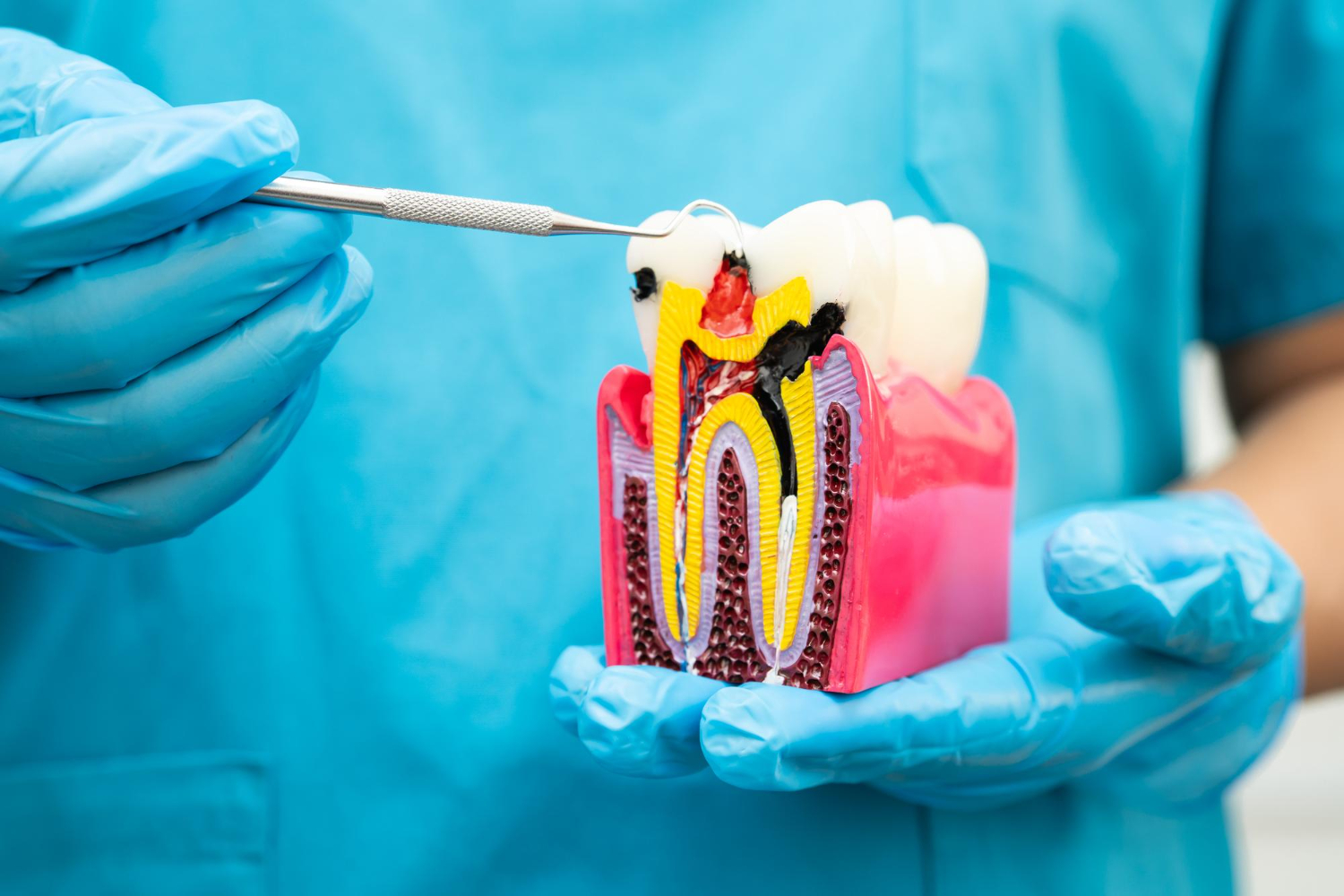
Does the phrase "root canal treatment" make you shudder? You're not alone. In Turkey, a large portion of people who avoid going to the dentist constantly postpone their appointments out of fear that "what if I need a root canal?" This fear runs deep: stories we've heard from our mothers, fathers, and neighbors about how "it really hurts" have been passed down from generation to generation.
But how true are these stories? With today's technology, is root canal treatment still that dreaded procedure? Or does the reality fall far short of your expectations? Let's examine this treatment in all its truth and put those unfounded fears to rest together.
Why Is Root Canal Treatment Necessary?
Inside every tooth is a tissue called the pulp. This tissue consists of nerve fibers, blood vessels, and connective tissue. This tissue, which provides the tooth's vitality, nutrition, and sensation, is normally protected from external influences by layers of enamel and dentin. However, when this protective shield is breached, problems begin.
When deep decay reaches the pulp, bacterial infection becomes inevitable. Bacteria settle in the tissue, cause inflammation, and this inflammation eventually progresses to the root tip of the tooth. The result? Sometimes unbearable pain, sometimes an abscess that forms next to the tooth, sometimes a silent infection that progresses without any symptoms.
Trauma can also require root canal treatment. A front tooth that was hit during a childhood fall may not break at the time but can change color years later and lose its vitality. Similarly, teeth constantly subjected to pressure due to teeth grinding habits can also suffer pulp damage over time.
But what if there's no pain, is root canal treatment still necessary? Yes, it can be. Because pulp necrosis (death of the nerve) doesn't always manifest with pain. A lesion seen at the root tip on an X-ray, a fistula opening detected during clinical examination, or a tooth that doesn't respond to vitality tests indicates the need for root canal treatment even without pain.
Where Does the "It Really Hurts" Myth Come From?
The perception that root canal treatment is painful is largely based on the pre-anesthesia era. Decades ago, local anesthesia techniques weren't as advanced as they are today, and it was genuinely difficult to numb a tooth with an inflamed nerve. The experiences from that period were passed down from generation to generation, and root canal treatment became dentistry's most feared procedure.
Today's reality is very different. Modern local anesthesia techniques ensure that you don't feel pain throughout the treatment. Even in acute inflammatory cases, complete numbness can be achieved with supplementary anesthesia methods. The only thing you'll feel during treatment is the pressure and vibration from the dentist's work.
Moreover, post-treatment pain is also minimal in most cases. Mild sensitivity may last a few days, but this condition can be easily controlled with simple pain relievers.
How Is the Treatment Done? Step-by-Step Process
Understanding the root canal treatment process is the most effective way to break down the wall of fear. You fear what you don't know, but as you become familiar with the process, you approach treatment much more comfortably.
Treatment begins with an X-ray and clinical examination. Your dentist evaluates the condition of the tooth and examines the number and structure of the root canals. While some teeth have a single root canal, especially back teeth can have three, four, or sometimes even five canals. Each one needs to be cleaned and shaped separately.
After anesthesia is applied, the tooth is isolated. A rubber sheet called a rubber dam is used to separate the tooth being treated from the oral environment. This application is of great importance for both infection control and patient safety. It prevents the irrigation solutions used during treatment from being swallowed and keeps the working area dry.
Then an access opening is made from the top of the tooth to reach the pulp chamber. The infected or necrotic pulp tissue is cleaned with special instruments. Root canals are widened and shaped with the help of nickel-titanium files that are very fine at the tip. At this stage, the canals are also irrigated with antiseptic solutions. Solutions such as sodium hypochlorite and EDTA remove bacteria and organic debris from the canal walls.
After the canals are cleaned and shaped, intracanal medication may be applied. Especially in cases where the infection is advanced, the dentist places a medication such as calcium hydroxide in the canal and closes the tooth with a temporary filling. At the second appointment, the medication is removed and the canals are permanently filled.
Canal filling is usually done with a material called gutta-percha and canal sealer. These materials fill the root canal three-dimensionally, preventing bacteria from re-establishing.
What Happens to the Tooth After Root Canal Treatment?
A tooth that has undergone root canal treatment loses its vitality but continues to remain in the mouth. Its attachment to the jawbone, chewing function, and relationship with neighboring teeth continue exactly the same. However, a tooth that has lost its vitality becomes brittle over time.
This is where post-treatment restoration becomes critically important. If the tooth has suffered significant tissue loss, a crown must be placed on it. Especially in back teeth, patients who do not have a crown placed after root canal treatment have a high risk of tooth fracture. For the tooth to withstand chewing forces, it needs to be supported with zirconia crown or porcelain crown.
In front teeth, when tissue loss is less, restoration with composite filling instead of a crown may be sufficient. However, this decision must be made entirely by the dentist based on the tooth's current condition.
Is It Done in a Single Visit or Multiple Visits?
There is no definitive answer to this question because it varies depending on the case. In cases where the pulp is alive but irreversibly inflamed (irreversible pulpitis), treatment can be completed in a single visit. In cases where the infection has progressed to the root tip, an abscess has formed, or the canal cannot be dried, two or more visits may be required.
Some dentists prefer two visits in all cases to ensure the infection is fully under control. The scientific basis of this approach is that the medication placed in the canal significantly reduces the bacterial count.
Regardless of the number of visits, what matters is that the treatment is done completely and in accordance with protocols. Accurate measurement of canal length, adequate widening of canals, adherence to irrigation protocols, and homogeneous canal filling are factors that determine treatment success.
Root Canal Treatment Failure and Retreatment
Like any medical procedure, root canal treatment also has a possibility of failure. According to research, the success rate varies between 85 and 97 percent. While this is a very high rate, it means that treatment may fail in some cases.
The most common causes of failure include missed root canals, inadequate cleaning, insufficient canal filling, and failure to perform proper restoration after treatment. Anatomical variations also make treatment difficult. In some teeth, canals can be very narrow, very curved, or calcified.
What is done when treatment fails? The first option is retreatment. The old canal filling is removed, the canals are cleaned again, disinfected, and refilled. This procedure is usually performed by an endodontic specialist.
The second option is a surgical procedure called apical resection. The infected tissue at the root tip is surgically cleaned and the root tip is filled retrograde. This method is preferred in situations where conventional retreatment is not possible or not sufficient.
If the tooth cannot be saved by any means, extraction comes up as a last option. The gap after extraction must be closed with an implant or bridge. Because every missing tooth causes neighboring teeth to shift and the opposing tooth to elongate.
Is Root Canal Treatment Different in Children?
Root canal treatment performed on baby teeth is different from that on permanent teeth. The root structure of baby teeth resorbs (dissolves) over time to allow the permanent tooth underneath to erupt. For this reason, the materials used in baby tooth root canal treatment are different and the treatment protocol is shaped accordingly.
A specialist in pediatric dentistry makes a decision by evaluating whether root canal treatment of the baby tooth is necessary, how long until the tooth's natural shedding time, and the condition of the permanent tooth bud underneath. In some cases, space maintainer application may be more appropriate than root canal treatment.
The Cost of Avoiding Root Canal Treatment
Is your dentist recommending root canal treatment but you're considering postponing it? It's important to know the consequences of this decision.
An untreated tooth infection doesn't remain limited to just that tooth. The infection can spread to the jawbone, form abscesses in soft tissues, and in rare but serious cases, lead to life-threatening infections in the facial region. Deep neck infections such as Ludwig's angina can originate from untreated dental infections and require emergency intervention in a hospital setting.
Additionally, it's possible for the infection to spread from an infected tooth to neighboring teeth. Postponing the root canal treatment that will save one tooth can eventually result in the loss of multiple teeth. This situation creates a much heavier picture both in terms of health and cost.
Root Canal Treatment or Extraction?
It's very easy to say "just extract it and be done with it." But one of the fundamental principles of dentistry is to preserve the natural tooth as much as possible. No implant or prosthesis can fully replace your natural tooth.
The periodontal ligament around the natural tooth acts as a natural shock absorber that absorbs chewing forces. Implants do not have this ligament. A natural tooth senses pressure changes and allows you to adjust your chewing force accordingly. An implant cannot provide this feedback.
Of course, not every tooth can be saved. In cases such as vertical root fracture, advanced periodontal destruction, or remaining tooth structure being too little to allow restoration, extraction is inevitable. But the decision should be made after a comprehensive evaluation.
Post-Treatment Care Recommendations
After root canal treatment is completed, you can speed up your healing process by following a few simple rules.
Avoid chewing hard foods on the treated side for a few days. Don't eat anything until the anesthesia wears off, you risk biting your numb lip and cheek. Use the pain reliever recommended by your dentist regularly. Taking medication before pain starts is much more effective than taking it after pain begins.
If a temporary filling has been placed, be careful not to chew on that side. Loss or breakage of the temporary filling can cause the canal to become reinfected. And most importantly: don't postpone the appointment given for permanent restoration (filling or crown). A tooth that has had root canal treatment but hasn't been restored is at risk of fracture.
Final Word
Root canal treatment is a treatment done to save your tooth. It's not a procedure to be feared, on the contrary, it's a solution that relieves your pain and keeps your tooth in your mouth. Thanks to the technologies and anesthesia methods offered by modern dentistry, this treatment is performed at a comfort level far below most patients' expectations.
If you have a tooth that has had prolonged sensitivity to cold, heat, or pressure, or if a tooth that was previously painful suddenly becomes painless, don't ignore this situation. Early intervention reduces both treatment time and cost.
