
If your tooth is cracked, don't panic, but don't delay
You bit down on something hard and heard a "crack" from your tooth. Or maybe you looked in the mirror one day and noticed a fine line on your front tooth. Perhaps you feel a sharp twinge when you drink cold water but can't pinpoint which tooth it's coming from. All of these situations can point to a cracked tooth.

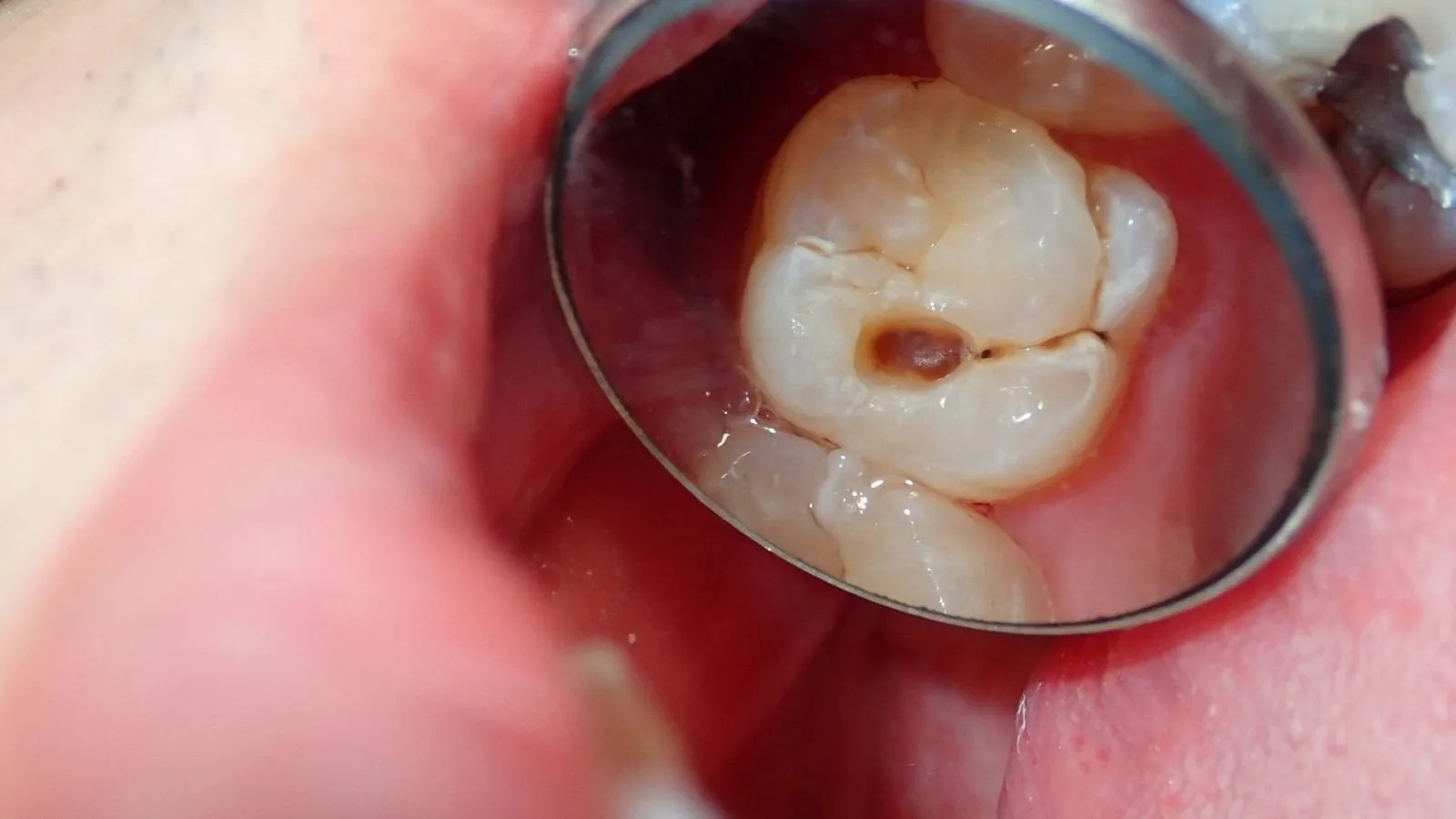
You bit down on something hard and heard a "crack" from your tooth. Or maybe you looked in the mirror one day and noticed a fine line on your front tooth. Perhaps you feel a sharp twinge when you drink cold water but can't pinpoint which tooth it's coming from. All of these situations can point to a cracked tooth.
Cracked teeth are among the most underestimated problems in dentistry. As long as there's no pain, most people shrug it off with "it's nothing." But a cracked tooth tells a much bigger story than what you see. Sometimes it really is harmless, but sometimes, if left untreated, it can lead to losing that tooth.
Not All Cracks Are the Same
When we talk about cracked teeth, we're not describing a single scenario. Cracks create very different outcomes depending on their depth, direction, and which part of the tooth they affect.
Superficial enamel cracks (craze lines) are the most common. Nearly everyone has them, especially visible as fine vertical lines on the surface of front teeth. These don't pose a structural threat, cause no pain, and require no treatment. But if they bother you cosmetically, the tooth surface can be improved with a thin layer of composite or polishing.
Things get serious when the crack passes through the enamel layer and reaches the dentin layer. Dentin is the sensitive layer beneath the enamel, containing thousands of tiny channels that connect to nerve endings. When a crack reaches this layer, you'll experience sharp sensitivity to cold, heat, and especially when biting.
Going even deeper, the crack can reach the pulp (the living tissue of the tooth). At this stage, you're dealing not just with sensitivity but with serious pain and infection. Tooth pain can become unbearable at this point, and urgent treatment is necessary.
The final stage is tooth fracture. When a broken tooth extends down to the root, the chances of saving it are very low, and extraction is often unavoidable.
Why Do Teeth Crack?
Teeth are hard structures, but they're not unbreakable. Many factors set the stage for crack formation.
Hard food habits top the list. Chewing ice, cracking nuts with your teeth, biting on pens, these habits create repeated micro-traumas to your teeth. These traumas accumulate over time, and one day a crack appears unexpectedly.
Bruxism, the habit of grinding and clenching teeth at night, is one of the most common causes of cracked teeth. The clenching force applied during sleep can be several times greater than normal chewing force. This chronic pressure creates invisible cracks in teeth.
Large, old fillings are also a risk factor. Amalgam or composite fillings that cover a large portion of the tooth weaken the remaining tooth structure. The tooth no longer functions as a whole unit, stress concentrates at the boundary between filling and tooth, and cracks can form.
Sudden temperature changes also create thermal shock in teeth. Drinking ice water immediately after very hot tea causes differences in expansion and contraction in the enamel layer, increasing crack risk.
How Do You Recognize the Symptoms?
The most frustrating feature of a cracked tooth is that symptoms are inconsistent. Sometimes there's pain, sometimes there isn't. Sometimes it hurts when you bite a certain food, sometimes cold water triggers it, and sometimes there are no symptoms at all.
A typical symptom is "bite pain." While chewing food, you feel a sharp twinge the moment you release the bite. This sensation comes from the crack line opening and closing during biting. When you release, the crack closes and creates the twinge.
Cold sensitivity is also a common sign. Cold drinks and foods especially trigger sudden pain by reaching the dentin layer through the crack line. This pain is brief but sharp.
If the crack has reached the pulp, spontaneous pain (pain that comes on its own without any trigger), nighttime pain, and pain from heat may appear. These symptoms indicate the need for root canal treatment.
Treatment Options
Treatment for a crack is determined by its depth and extent. Early intervention always means simpler and less expensive treatment.
Superficial cracks and enamel-level damage generally require no treatment. However, if you have cosmetic concerns or want to prevent the crack from progressing, composite filling or bonding can be applied. You can find current information on our dental filling cost calculator page.
If the crack has reached the dentin layer and the tooth is still vital, a crown needs to be placed over the tooth. A crown wraps around the tooth from the outside, stops the crack line from progressing, and restores functional integrity to the tooth. At this stage, zirconia crown is the most commonly preferred option. For detailed cost information, you can review our zirconia crown cost calculator page.
If the crack has reached the pulp, root canal treatment is performed first, then the tooth is restored with a crown. This combination allows the tooth to remain in the mouth. You can learn about costs on our root canal cost calculator page.
For vertical fractures extending along the root, unfortunately the chances of saving the tooth are very low. Extraction followed by dental implant treatment or bridge work is planned.
Can You Prevent a Cracked Tooth?
While complete prevention isn't possible, you can significantly reduce the risk. Don't crack hard-shelled foods with your teeth. Don't chew ice. If you clench your teeth at night, ask your dentist for a night guard (bruxism splint). This simple appliance protects your teeth throughout the night.
Monitor teeth with large fillings. Old, large amalgam fillings can expand over time and stress the tooth. Your dentist can see the risk and replace the filling with a crown in time.
Attend regular dental checkups. Cracks aren't always visible to the eye, but an experienced dentist can detect them early through X-rays and clinical examination.
Why Is Diagnosing a Cracked Tooth So Difficult?
A cracked tooth is one of the most difficult diagnoses in dentistry. Cracks often don't show up on regular X-rays. Because the crack line is usually vertical, it doesn't reflect on X-rays taken at horizontal angles.
Dentists use several different methods for diagnosis. Transillumination (light transmission) involves shining a strong light from behind the tooth to detect the crack line. While healthy enamel transmits light evenly, the crack line interrupts the light and appears as a dark line.
The bite test is also commonly used. The patient bites down on a special object and the point at which pain is triggered is identified. CBCT (cone beam computed tomography) is much more successful than standard X-rays, especially in detecting root fractures.
Sometimes a definitive diagnosis cannot be made and the dentist decides to monitor. In this case, symptoms are closely followed and the treatment plan is shaped according to how the symptoms progress. What matters is taking the suspicion seriously and not interrupting the monitoring process.
Bruxism and Cracked Teeth: A Vicious Cycle
The likelihood of finding a cracked tooth in patients with teeth-grinding habits is significantly higher. But the bad news is that most bruxism patients aren't aware of their habit. People who wake up with jaw pain, headaches, or tension around the ears attribute these symptoms to stress or wrong sleeping positions.
When your dentist detects signs of wear or cracks on your teeth, they will definitely question you about bruxism. Using a night guard is the most effective way to prevent both the progression of existing cracks and the formation of new ones. You can find more detailed information on this topic on our tooth wear page.
What Does Delaying Mean?
With a cracked tooth, you're racing against time. A crack that could be solved with a simple filling today might require root canal treatment and a crown six months from now. A year later, that tooth might need extraction. This means treatment costs multiply, but what really matters is the risk of losing your natural tooth.
If you think you have a crack in your tooth, make an appointment. Maybe it really is just a harmless enamel line and you'll have peace of mind. Or maybe early intervention will save your tooth. Either way, you win.
This content is prepared for informational purposes. It absolutely does not replace a dentist's examination and personal evaluation.
