
What is biofilm and how is it different from tartar?
What is biofilm, and how does it differ from plaque and tartar? Why brushing alone isn't enough and how the GBT protocol controls biofilm in the clinic.

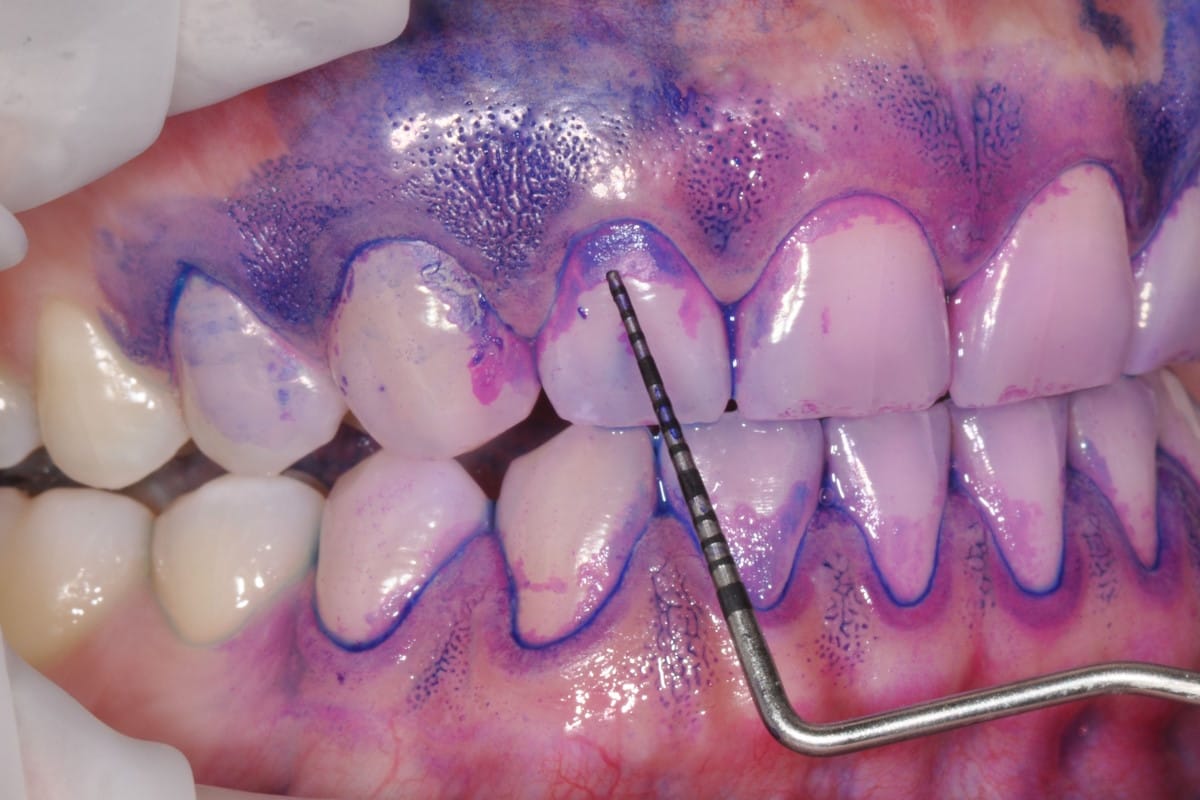
You brush your teeth regularly, maybe even floss. Yet your dentist tells you there's inflammation in your gums, or you discover during a checkup that surfaces aren't as clean as you thought. Behind this contradiction often lies a single concept: biofilm.
Biofilm is the starting point of nearly every oral health problem, but most patients first hear the term sitting in a dental chair. In this article, we explain what biofilm is, how it differs from plaque and tartar, why brushing alone isn't enough, and how it's controlled in a clinical setting.
What is biofilm?
Biofilm is a living community formed when bacteria attach to a surface and settle into a gel-like layer they produce themselves. This layer protects bacteria from external threats, allows them to communicate with each other, and makes the community far more resilient than individual bacteria.
Biofilm isn't unique to the mouth. The slippery layer on rocks in a stream bed, the feeling on the inside of a pitcher that hasn't been cleaned in a while, even buildup inside water pipes are all biofilms. The difference in the mouth is that temperature, moisture, and nutrient flow create a nearly perfect environment for bacteria.
Oral biofilm harbors hundreds of different bacterial species. Most are harmless. Problems begin when the balance shifts and disease-causing species become dominant.
How does it form in the mouth?
The process begins within minutes, without you noticing. Immediately after you brush your teeth, proteins in saliva form a thin film on tooth surfaces, called the pellicle. This layer is harmless on its own, but it provides an ideal surface for bacterial attachment.
Once the first bacteria settle onto this surface, they begin to multiply, then produce their own protective layers. Within hours, different species join the community and the structure matures. By the end of one day, there's an organized bacterial community on tooth surfaces, invisible to the naked eye.
This cycle restarts every day. That's why oral care isn't a one-time fix.
Plaque, biofilm, and tartar: which is which?
These three terms are often used interchangeably in everyday conversation, yet they describe different stages of the same process.
| What does it mean? | Visible? | Removed by brushing? | |
|---|---|---|---|
| Biofilm | A living community of bacteria within a protective layer | No | Partially |
| Plaque | Biofilm that has thickened into a soft layer | Barely | Partially |
| Tartar | Plaque hardened by minerals from saliva | Yes | No |
In short, biofilm is living and soft. Tartar is dead, hardened residue. Once tartar forms, it cannot be removed by any home method, it can only be cleaned in a clinic. More importantly, its hard, porous surface creates an ideal attachment site for new biofilm. So tartar is both a result and a reason for the problem to accelerate.
Why isn't brushing alone enough?
Brushing removes a significant portion of biofilm, but not all of it. There are several concrete reasons for this.
The brush can't reach everywhere. A toothbrush doesn't touch about one-third of tooth surfaces. Spaces between teeth, the gum line, grooves in back teeth, and around brackets if you have them are these dead zones.
The protective layer resists mouthwash. The matrix produced by biofilm largely prevents antibacterial mouthwashes from penetrating inside. That's why mouthwash alone isn't a solution, it's a support tool.
Below the gum line is an invisible zone. The few millimeters below the gum margin are an area no home care tool can safely reach, yet this is exactly where gum disease begins.
What problems does biofilm cause?
Uncontrolled biofilm eventually turns into several different problems:
- Decay: Acid produced when bacteria break down sugar dissolves enamel.
- Gum inflammation: The first sign is usually bleeding when brushing.
- Periodontitis: When inflammation advances below the gum line, the bone supporting the tooth begins to erode. This loss is irreversible.
- Bad breath: Sulfur compounds produced by bacteria are the most common cause of chronic odor.
- Peri-implantitis: Tissues around implants are more vulnerable to inflammation than natural teeth. A significant portion of implant loss occurs for this reason.
What's invisible can't be fully cleaned
The most insidious aspect of biofilm is its invisibility. Neither the patient nor the clinician can say with certainty where it accumulates just by looking with the naked eye. In the traditional approach, cleaning relies largely on experience and estimation.
Modern preventive dentistry reverses the logic at this point: first make it visible, then clean. A special dye applied to tooth surfaces colors the areas where biofilm accumulates. The resulting picture is both a roadmap for the clinician and highly instructive for the patient, because the areas where the dye is darkest are the areas where home brushing has fallen short.
This logic forms the foundation of an eight-step protocol called Guided Biofilm Therapy (GBT). After assessment and staining in the protocol, biofilm is cleaned with fine erythritol powder without touching the tooth. If hardened tartar remains, it's removed in a separate step, and the process ends with a protective fluoride application.
Biofilm control with GBT Machine at Doredent
At our clinic, we apply this protocol using the Swiss-made EMS GBT Machine. The device combines biofilm cleaning, deep pocket application, and tartar removal in a single system. Thanks to its technology that maintains consistent powder flow, the procedure is both more predictable and noticeably more comfortable for patients.
It should be noted that the system is currently found in only a limited number of clinics in our country. The reason isn't just the device itself: GBT is a protocol with defined steps, established by the manufacturer's training institution, Swiss Dental Academy, and proper application requires the team to work according to this protocol. Acquiring the device alone isn't enough, the workflow must change.
As Doredent, we view this investment as a natural extension of our approach to preventive dentistry. Our goal is for our patients to visit the dentist not only when a problem arises, but before problems occur. On our Airflow teeth cleaning page, you can find detailed information about the steps of the application, who it's suitable for, and what to watch for afterward.
Biofilm control at home
No clinical procedure replaces daily care. Biofilm begins to reform within hours after cleaning. What matters is how slowly this cycle progresses.
- Brush twice a day, two minutes each time, with a soft-bristled brush.
- Don't skip interdental cleaning. This is the one-third of the area the brush can't reach.
- If you use interdental brushes, determine the size with your dentist.
- If you have orthodontic appliances or implants, plan cleaning frequency accordingly.
- Don't postpone regular professional cleaning. Your dentist will determine the interval based on your risk level.
Completely eliminating biofilm isn't possible. The goal is to manage it. With the right habits and regular checkups, this balance becomes a balance that can be maintained for life.
