
Smoking and oral health: How tobacco affects your teeth and gums
Smoking harms not only your overall health but also your oral health in multiple ways. The nicotine in cigarettes causes tooth discoloration and staining, contributes to bad breath, and damages the soft tissues in your mouth.

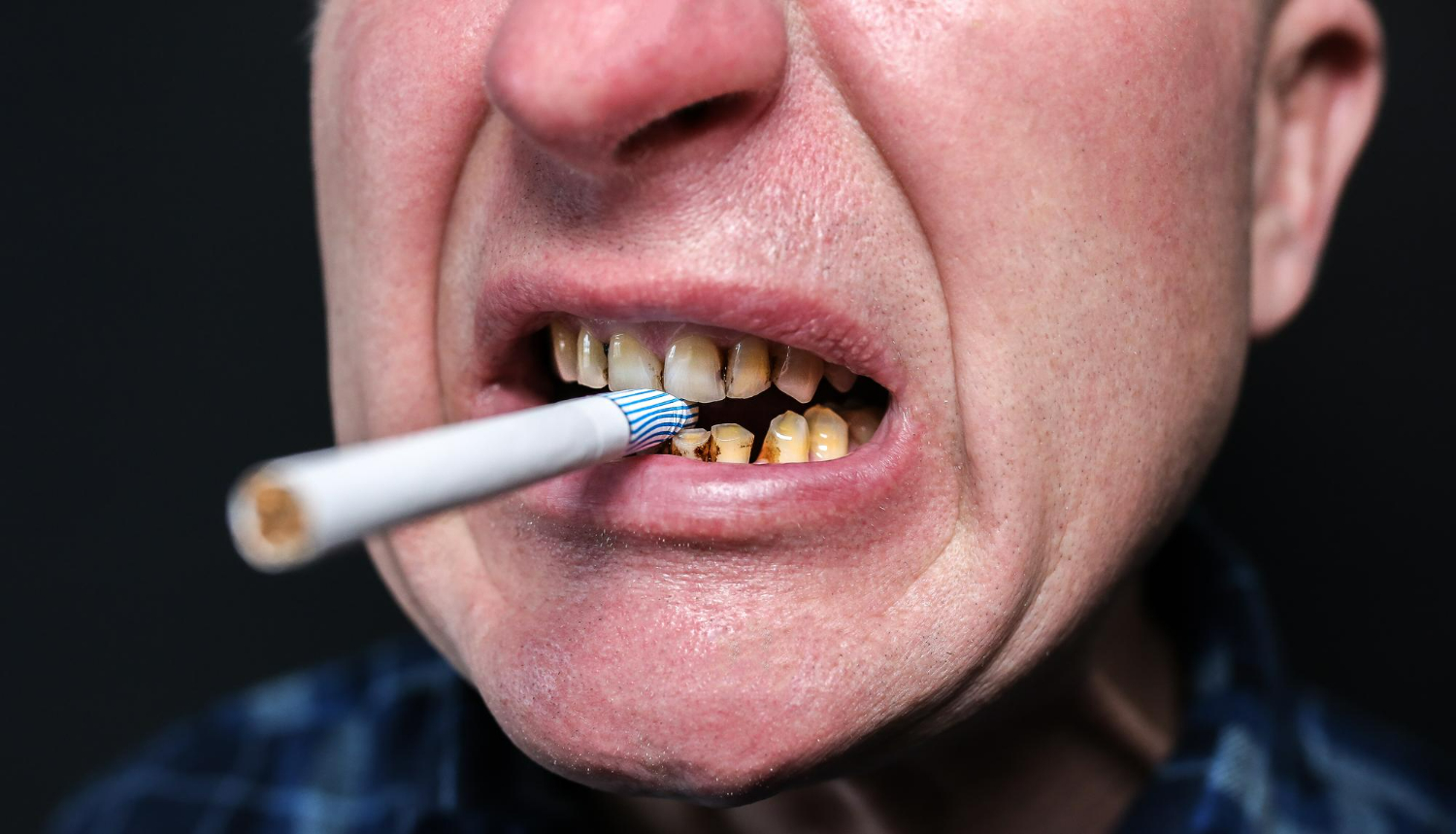
Smoking harms not only your overall health but also your oral health in multiple ways. The nicotine in cigarettes causes tooth discoloration and staining, contributes to bad breath, and damages the soft tissues in your mouth.
The negative effects of smoking on oral and dental health include:
- Tooth staining
- Tartar buildup and gum problems
- Bone loss
- Bad breath
- Increased risk of oral cancer
- Higher failure rates with dental implants and prosthetic treatments
Smokers are more likely to develop tartar buildup compared to non-smokers. When tartar accumulates on teeth and is not removed, it continues to build up over time and causes loss of the bone tissue surrounding the tooth. This bone loss can lead to aesthetic problems, tooth mobility, and eventually tooth loss. Additionally, the chemical substances in cigarettes cause gum irritation, reduced blood circulation, and gum recession.
In smokers, cigarette smoke settles into the oral tissues and causes bad breath. This can create problems in their social lives and professional careers. Bad breath prevents people from communicating comfortably with others and reduces their quality of life.
Smokers tend to experience reduced saliva flow rate. This results in dry mouth. When teeth are not adequately washed by saliva, oral health problems increase and multiply.
Smokers have a higher likelihood of developing oral cancer compared to non-smokers. The carcinogenic substances in cigarettes can lay the groundwork for cancer formation in the mouth, tongue, lips, and throat. Beyond this, quitting smoking is the right choice to protect against respiratory diseases, reduce the risk of heart attack, or increase treatment success for ongoing health conditions.
The success rate of implant and prosthetic treatments is also lower in smokers. This is because smoking reduces blood flow, which slows the healing rate in the area. This negatively affects bone healing and causes general damage to surrounding tissues. If you care about your overall health in addition to your oral and dental health, you should definitely quit smoking. Protecting your dental health through regular tooth brushing and dental checkups is in your hands.
