
Your family elder's "I've never been to the dentist" story is actually a tragedy
When elderly relatives proudly claim they've never visited a dentist, they're not sharing a success story. Behind that statement lies a hidden reality of tooth loss, gum disease, and missed opportunities for prevention.

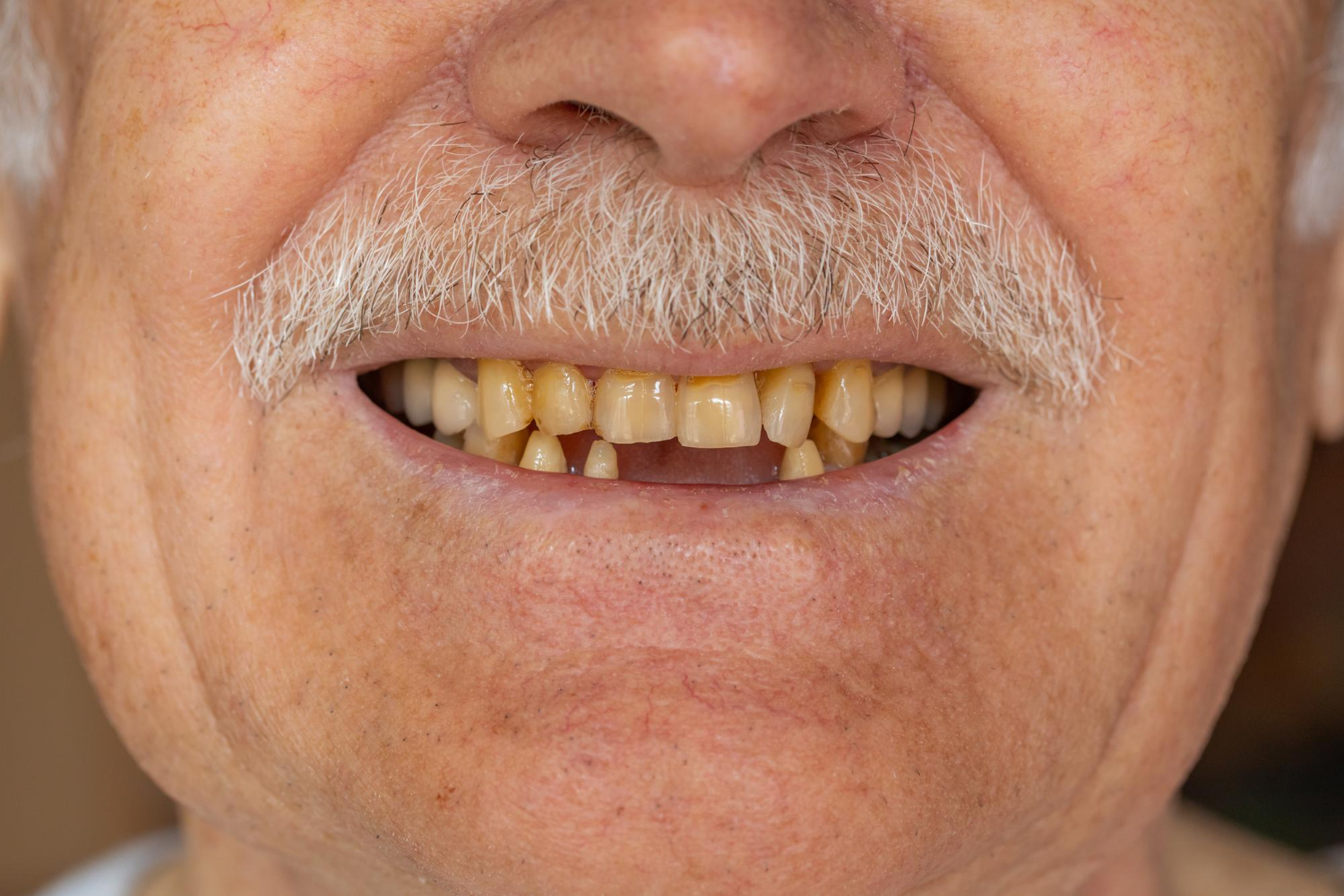
Every family has one. A grandfather, uncle, aunt, or father. When conversation turns to oral health, they puff out their chest and deliver that line. "I haven't been to the dentist in 60 years." They tell it as an achievement. The younger people around them listen with respect, saying "good for you, uncle." As if never sitting in a dental chair is proof of living longer or healthier.
But this story hides a much darker reality than it appears. If you're a dentist with the chance to look in that uncle's mouth, you encounter a very different truth behind the statement. Lost teeth, extracted molars, loose lower incisors, bleeding gums, a mouth that's smelled bad for years. The pride in "I never went" is actually a cover thrown over this picture.
What "I Never Went" Really Means
This statement needs analysis. What is the family elder really saying? There are several possibilities.
First, they might mean "I never had serious problems." But this option is unlikely, because many teeth are missing from their mouth. Tooth extraction is a serious procedure, extracted teeth show that person experienced severe pain at some point. Most elders who use the phrase "I never went to the dentist" have teeth extracted in the past by village doctors, barbers, or even relatives. For these people, "dentist" only refers to the modern clinician in polyclinics, they don't count past interventions.
Second, they might think they never experienced pain. Some elders live through toothaches as "temporary things" and leave them behind. The pain may have actually passed, but the reason isn't dental health, it's nerve death. A dead nerve doesn't hurt, because it's dead. The chronic infection inside that tooth may continue, bone loss may progress. No pain, but the picture isn't good at all.
Third, they're not going because of fear, but won't admit it. Dental fear is an emotion embedded in many generations. In the old days, treatment was painful, equipment was noisy, sessions were long. This fear is so strong in that generation that the statement "I'm not going" becomes a defense mechanism. By saying "I don't need it," they avoid facing their fear.
Fourth, it's about money. Some elders didn't go to the dentist for economic reasons. But stating this reason openly wounds their pride, the phrase "I didn't need it" comes easier.
Components of the Real Picture
Classic findings you might encounter in the mouth of an elder who hasn't seen a dentist in 60 years look like this.
First, tooth loss. Usually the first lost teeth are the lower and upper back molars. Because decay starts most often there, and pain is most unbearable there. They remove the pain using a method the public knows, a gap remains. Over time, the teeth next to that gap tilt, the opposing tooth extrudes, load accumulates on that side of the jaw. Over years, the chewing system has concentrated on one side. The molars on that side wear out early too.
Then comes periodontitis. Because tartar isn't cleaned, gums live under chronic inflammation. Bone gradually erodes, teeth start to loosen. Lower incisors are usually the first group to loosen. The elder's statement "teeth loosen with age anyway" kicks in here. But age itself doesn't loosen teeth, loose teeth are the result of bone loss under the gums.
There's also gum recession. Years of wrong brushing, hard toothbrush use, skipped cleaning, exposing root surfaces. Hot-cold sensitivity begins. Elders describe this as "tooth numbed" or "blood withdrawn." Actually, the dentin tissue beyond the enamel is exposed, nerves are directly stimulated.
In remaining teeth, tooth wear is prominent. Loaded with hard foods for years, some teeth overworked due to opposing tooth loss, chewing force distributed incorrectly. Front teeth shortened, lower incisors nearly down to gum level.
The Bad Breath Issue
In a mouth that hasn't seen a dentist for 60 years, there's usually a noticeable odor. But the elder no longer detects this odor. Because the smell has been the same for so long, smell receptors have adapted. People around them detect the odor but hesitate to mention it. It's a topic respectfully silenced within the family.
The source of this odor is often chronic gum disease and bacterial plaque accumulated on the back of the tongue. Bad breath isn't just a symptom, it's an indicator of a serious underlying process. Chronic inflammation is also connected to systemic health. It's been linked for years to heart disease, worsening diabetes, even some lung problems.
So the statement "I never went to the dentist but I'm healthy" contains a contradiction. Assuming the rest of the body isn't affected when oral health is poor is scientifically unfounded.
Story of Residual Teeth
Another classic picture seen in these elders' mouths is residual roots. The tooth broke, decayed, only the root part remains in the mouth. But the root still sits inside the jawbone. There for years, quietly, sometimes as a source of chronic inflammation, sometimes preparing ground for cyst formation.
Elders see these residuals as "these are teeth, not important." Small black pieces visible in the mouth can actually be chronic infection centers. Sometimes when a simple X-ray is taken, large bone lesions are seen around these roots. They've grown silently for years, but may be increasing the body's overall inflammatory burden.
In these cases, the contradiction between the statement "I never needed it" and X-ray findings can be hard for the dentist to accept during examination. Explaining this picture to the elder means breaking their 60-year defense mechanism. It's a difficult conversation.
Why Have They Come Now?
When elders who say "I never went" finally come for examination, the reason for coming is usually a very specific problem. Difficulty swallowing, an extremely loose tooth, unbearable pain, or an abscess appearing with facial swelling. The problem has grown, passed the point of postponement, they had to come now.
At this stage, treatment options have narrowed. Savable teeth are saved, unsavable ones are extracted. In some patients, the option "let's extract everything, renew it all" comes to the table. This decision is emotionally difficult. Losing your own teeth isn't easy for anyone.
But if they had come 20 years ago, we could have preserved much of that mouth. If they'd come ten years ago, we could have kept most teeth with a few root canal treatments and dental fillings. Even five years ago, options were broader than today. Now looking at the picture, most cases squeeze into the triangle of missing tooth restoration, dentures, implants.
The "I Don't Feel Pain" Fallacy
The most common defense these elders use is this: "I have no pain, so there's no problem." This logic unfortunately doesn't apply to oral health.
The most dangerous problems in the mouth are those that progress painlessly. Gum diseases are the classic example. Periodontitis can give no symptoms until advanced stages. The patient feels no pain, teeth aren't loose yet, they think "nothing's wrong." But bone is slowly eroding, two or three years later teeth start falling out.
The same applies to cavities. Decay doesn't hurt until it reaches the nerve. When it reaches, the problem has grown. Root canal treatment or tooth extraction is needed. Cavities caught early are handled with simple fillings. The "no pain" approach causes exactly this early period to be missed.
The value of oral examination is also great for cancer screening. Oral cancers are painless in early stages. A white or red spot on the tongue, a small hardness on the palate, a non-healing sore. Early detection saves lives. An elderly patient never seeing a dentist is connected not only to tooth loss, but also to missed screening opportunities.
Effect on Younger Generation
There's a less discussed aspect of this story. The family elder's "I never went to the dentist" defense also becomes a model for the young generation. The grandchild takes the grandparent as an example. "My grandfather never went, he's fine." But grandfather isn't fine, the grandchild just can't see it.
The grandchild is 15, has a problem with their teeth, doesn't want to go. "Look at my grandfather, he never goes" becomes an excuse. Parents also become indecisive facing this model. As a result, the young person's treatment is also postponed. A "not going to the dentist culture" passed down through generations forms in the family.
But a mouth well cared for at a young age can be largely preserved even at 60. To see this difference, you'd need to go back 40 years, which isn't possible. So the young generation makes decisions based on the wrong model their elders give.
So What Should Be Done?
If an elder in the family is living this picture, what's the right approach?
Forcing doesn't work. The statement "You must go to the dentist" hardens the elder's defense. Instead, indirect approaches are more effective. Like "I'm going for a checkup this month, come with me, let them look at you too." Families who go as a group are more successful.
Another method is to start with a specific finding. If the elder's mouth odor is noticeable, presenting a concrete frame like "the source of the smell might be the mouth, not the stomach, let them check." Emphasizing daily quality of life, not health concern, touches some elders more.
It's also important to emphasize that the checkup examination is painless, treatment won't start immediately, only the condition will be evaluated. Most elders carry the fear "if I go they'll start extracting right away." But modern dentistry doesn't work that way. First examination, then plan, then treatment with the patient's approval.
At our clinic, Dt. Buse Esen shows special sensitivity in communication with elderly patients. In the first visit, without any procedure, only the situation is discussed. What can be done is explained, options are presented, the decision is left to the patient. This approach is the most effective way to break the "I never went" defense.
Treatment Options
Even in a late case, treatment isn't impossible. Protecting remaining healthy teeth, filling the place of lost ones, rebuilding the chewing system, all possible. Dental implant treatment can be successfully applied to elderly patients, of course if bone condition and systemic health allow.
For patients with bone insufficiency, there are denture options. Fixed bridge, removable denture, implant-supported denture. A different combination is planned according to each patient's condition. The goal is to eat again, speak, smile. In other words, to restore quality of life.
These treatments take time and require investment. You can get general information about different treatments from our dental treatment prices page. But what I want to emphasize is this: I wish this investment had been made differently 30 years ago. With small interventions, regular checkups, preventive approach. Now comprehensive restoration is needed, back then one filling was enough.
Conclusion
The statement "I never went to the dentist in my lifetime" isn't a success story, it's a loss story. Lost teeth, lost opportunities, lost quality of life. Elders who pass this statement to grandchildren are unknowingly passing a wrong model to the next generations.
If there's an elderly person in the family living this picture, guiding them with compassion, respect, without forcing is the right way. A checkup examination is a painless beginning, the treatment decision is always the patient's. When they pass through this door, the elder usually says "I wish I'd come earlier." But they've accumulated such solid reasons not to come earlier that even entering the door becomes an act of courage.
Maybe at the next family gathering, when you hear that statement as an achievement, listen respectfully but don't accept it. You'll be the one to present a different model to grandchildren. Paying attention to your own oral health, following your children's oral health, going to regular checkups. These behaviors slowly change family culture. A generation later, there's no one saying "in our family no one goes to the dentist," there's someone saying "in our family everyone goes for regular checkups."
This content is prepared for informational purposes. It absolutely does not replace a dental examination and personal evaluation.
