


Pulpotomy
A treatment for primary teeth in which decay has reached the pulp, aiming to preserve the tooth without extraction. The affected tissue in the crown portion is removed, while the healthy tissue in the roots is maintained.
Aim to Preserve Primary Teeth Without Extraction with Pulpotomy Treatment
In some primary teeth, when decay progresses deeply, filling alone may not be sufficient; however, immediately extracting the tooth is not always the right option either. In such cases, pulpotomy treatment can be considered. In this procedure, the affected pulp tissue in the crown portion of the tooth is removed, the healthy tissue in the roots is preserved, and the tooth is kept in the mouth to continue its function. This way, the child’s chewing function, space-maintaining role, and the balance needed for permanent teeth can be supported.
The depth of decay, the extent of pulp involvement, and the condition of the roots are evaluated with clinical examination and X-rays to determine if pulpotomy is the right approach.
The infected pulp tissue in the crown portion is carefully removed while the healthy root pulp is preserved. A biocompatible medicament is placed to promote healing.
A stainless steel crown or aesthetic crown is placed over the treated tooth to protect it from fracture and ensure it functions until the permanent tooth erupts.
The treated tooth is monitored at regular check-ups to ensure it remains healthy until it is naturally replaced by the permanent tooth.
What Is Pulpotomy?
Pulpotomy is a treatment applied when the pulp tissue in the crown portion of the tooth is affected by deep decay but the tissues in the root area can be preserved. It is especially preferred for primary teeth. Through this procedure, the root portion of the tooth is preserved, and the tooth is kept in the mouth to continue its function. For which teeth it is suitable is determined after examination and radiological evaluation.
It can be considered for some primary teeth with deep decay where filling would not be sufficient but complete extraction is also not necessary.
No. In pulpotomy, generally the affected pulp tissue in the crown portion is removed; in root canal treatment, the root canals are also evaluated more comprehensively.
No. Suitability is determined based on the depth of decay, root condition, infection findings, and the overall structure of the tooth.
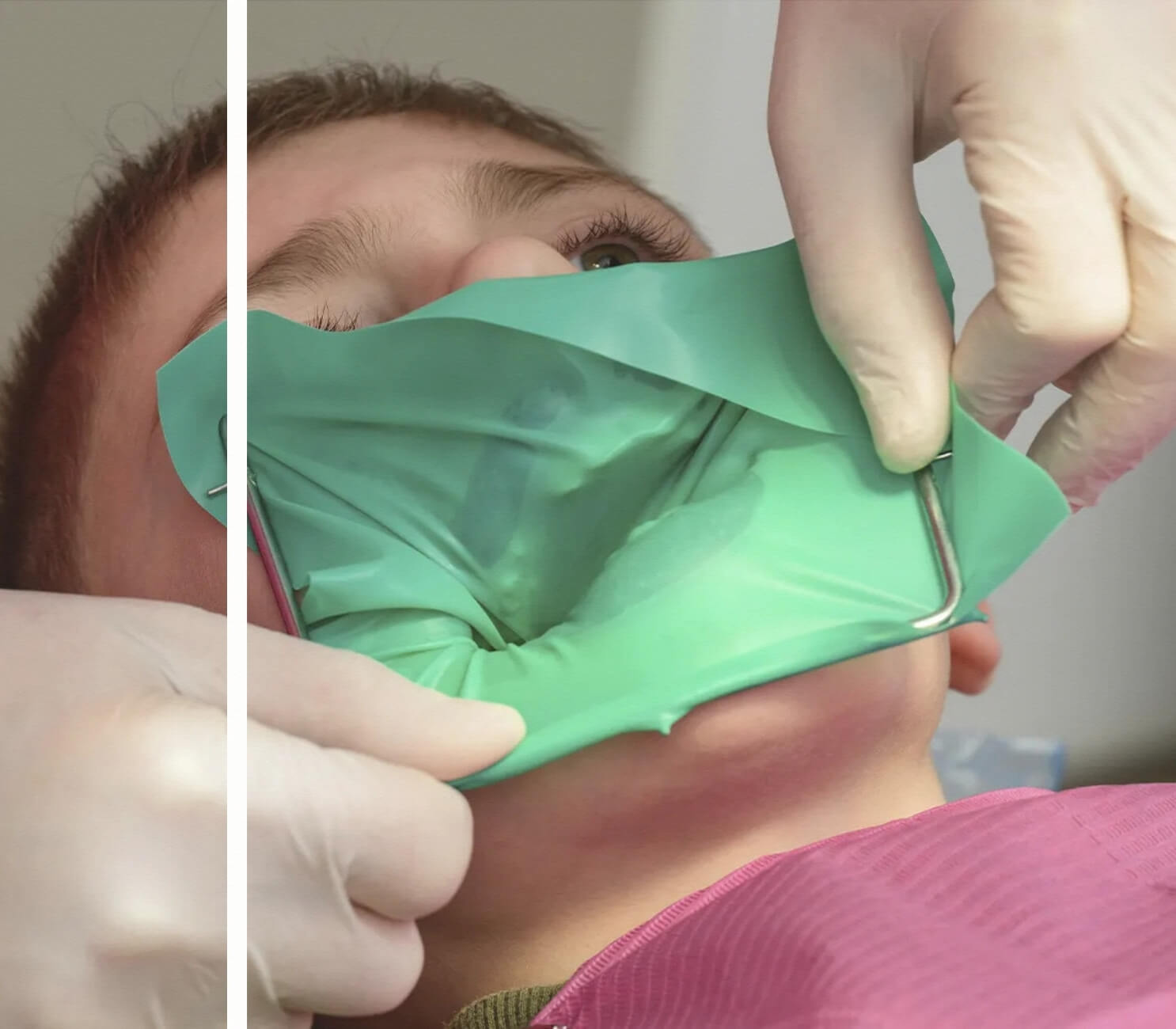
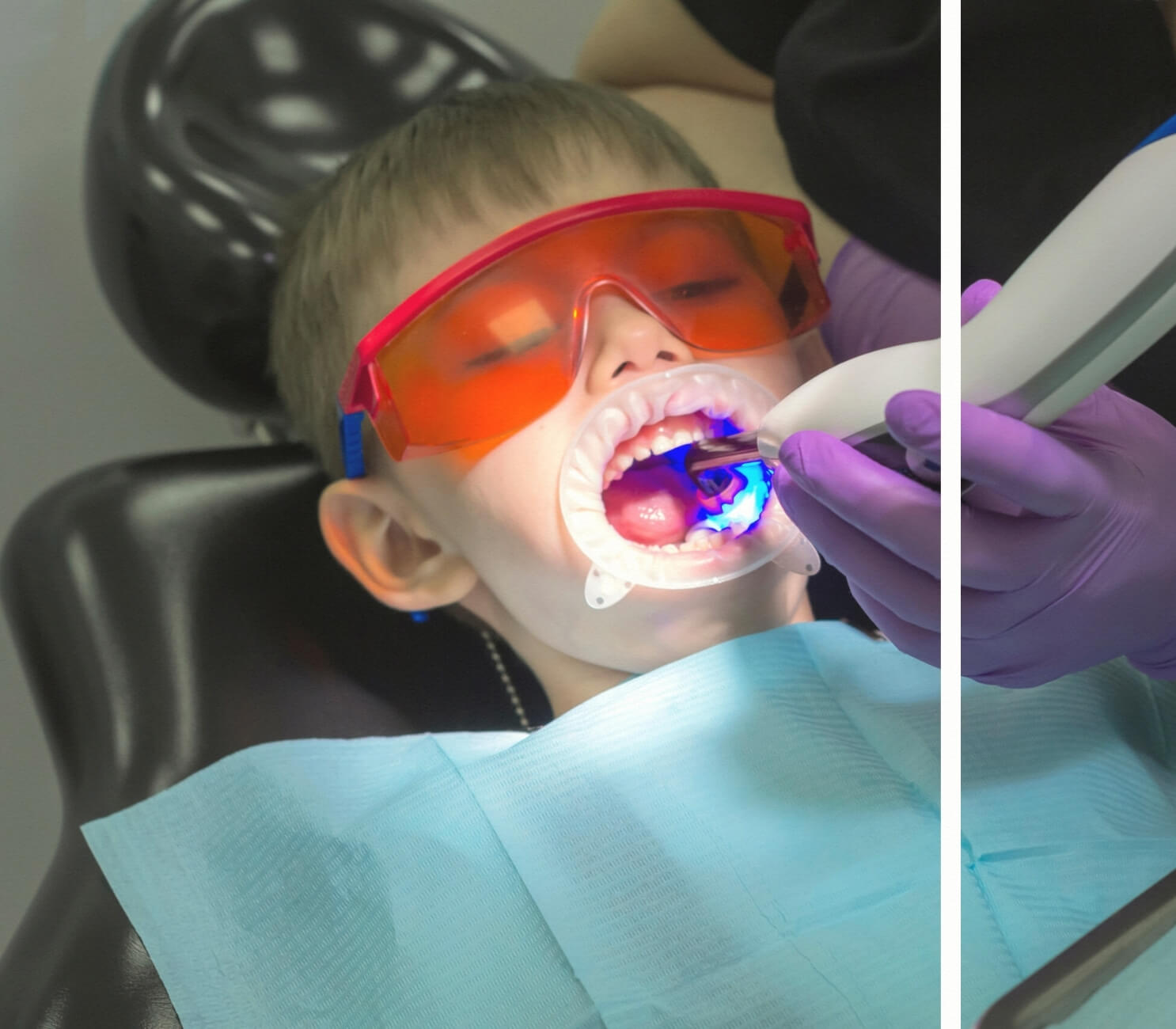
Determine the Right Treatment to Preserve the Tooth with a Detailed Evaluation
The most important aspect of pulpotomy treatment is correctly understanding whether the tooth is truly suitable for preservation. Because while filling may be sufficient for some primary teeth, pulpotomy may be needed in other cases; in some advanced situations, extraction may be the more appropriate option. For this reason, clinical examination and radiological evaluation before treatment are of great importance.
- The depth of decay and intra-tooth involvement are evaluated.
- Root condition and surrounding tissues are examined.
- Infection findings and the prognosis of the tooth are analyzed.
- A protective treatment plan appropriate for the child and tooth is created.
When Is Pulpotomy Treatment Necessary?
When primary tooth decay is detected at an early stage, filling treatment is sufficient. However, when decay progresses and reaches the nerve tissue (pulp) of the tooth, a simple filling is no longer a solution. At this point, there are two options: extracting the tooth or trying to keep it in the mouth with pulpotomy treatment.
Pulpotomy treatment is based on cleaning the infected pulp tissue in the crown portion and preserving the healthy tissue in the root canals. A special medicament is placed in the cleaned area and a protective crown is placed on the tooth. This way, the tooth continues to function in the mouth until the permanent tooth erupts.
The Difference Between Pulpotomy and Root Canal Treatment
In adults, when decay reaches the pulp, root canal treatment is applied. In root canal treatment, all pulp tissue (both crown and root portions) is completely removed and the root canals are filled. Pulpotomy, on the other hand, involves removing only the pulp in the crown portion; the healthy tissue in the roots is left in place.
The reason pulpotomy is preferred over full root canal treatment in primary teeth is that primary tooth roots naturally dissolve (resorption) over time and make room for the permanent tooth. Completely filling the root canals can negatively affect this natural process.
Why Is Pulpotomy Better Than Extraction?
The most important reason for keeping the primary tooth in the mouth is its space-maintaining role. Neighboring teeth drift into the gap left by a prematurely lost primary tooth, and the space for the permanent tooth to erupt narrows. This can cause crowding and tooth alignment problems in the future.
When the tooth remains in the mouth through pulpotomy treatment, it serves as a natural space maintainer, continues chewing function, and supports the child’s speech development. If pulpotomy fails and the tooth must be extracted, an artificial space maintainer appliance is applied to preserve the area after extraction.
Factors Affecting the Success of Pulpotomy Treatment
The success of treatment is largely related to timing. When intervention is made before the infection spreads to the root canals, the success rate is high. If infection has reached the roots, pulpotomy is insufficient and extraction is needed. For this reason, early detection of cavities through regular pediatric dentistry check-ups is critical.
After pulpotomy, a stainless steel crown or aesthetic crown is placed on the tooth. This crown protects the tooth from fracture and supports the tooth’s health until the permanent tooth erupts. The condition of the tooth is monitored through regular post-treatment check-ups.
Frequently Asked Questions
We have compiled the questions we receive about this treatment and answered them as openly and transparently as possible.
It can be considered to preserve a primary tooth affected by deep decay without extraction and to allow the tooth to continue its function in the mouth.
During the procedure, appropriate anesthesia and planning are done with the comfort of the child patient in mind. There may be short-term sensitivity afterward.
That is the goal of the treatment. In suitable cases, the primary tooth is intended to remain in the mouth until its natural replacement time.
This depends entirely on the clinical condition of the tooth. If the tooth is in a condition to be preserved, pulpotomy can be considered; in advanced cases, extraction may be needed.
In some primary teeth, especially when there is significant structural loss, additional restorative planning may be needed to protect the tooth.
No. In some teeth, infection may be too advanced or the tooth structure may not be suitable for preservation. The final decision is made after examination.
Our Dentists
Meet our expert dentists.



Content Information
This page was prepared by the Dore Medical Editorial Board and medically reviewed by Dr. Merve Özkan Akagündüz, DDS, MSc.