


Fissure Sealant
A protective coating applied to the grooves and pits of permanent molars in children. One of the most effective and painless ways to protect the tooth before decay develops.
Take a Preventive Step Before Cavities Form
Some teeth naturally have deeper grooves and pits on their chewing surfaces. These areas may not be fully cleaned with a brush and can become suitable for cavity formation over time. Fissure sealant application seals these grooved surfaces with a special protective material. It thus offers an effective preventive approach that helps protect newly erupted permanent molars, especially in children.
The chewing surfaces of newly erupted permanent molars are examined. Teeth with deep, narrow fissures that are difficult to clean are identified as candidates for sealant application.
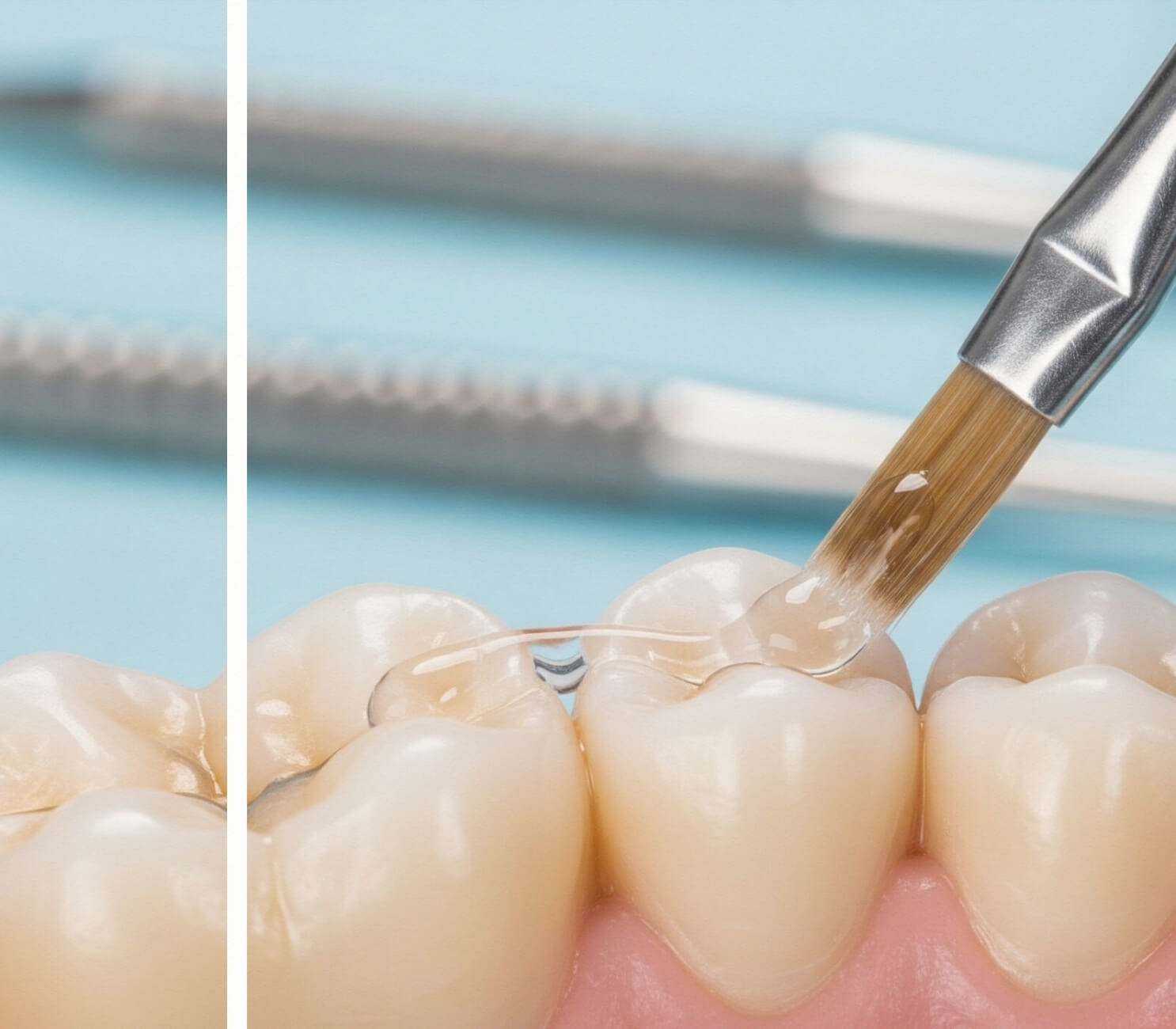
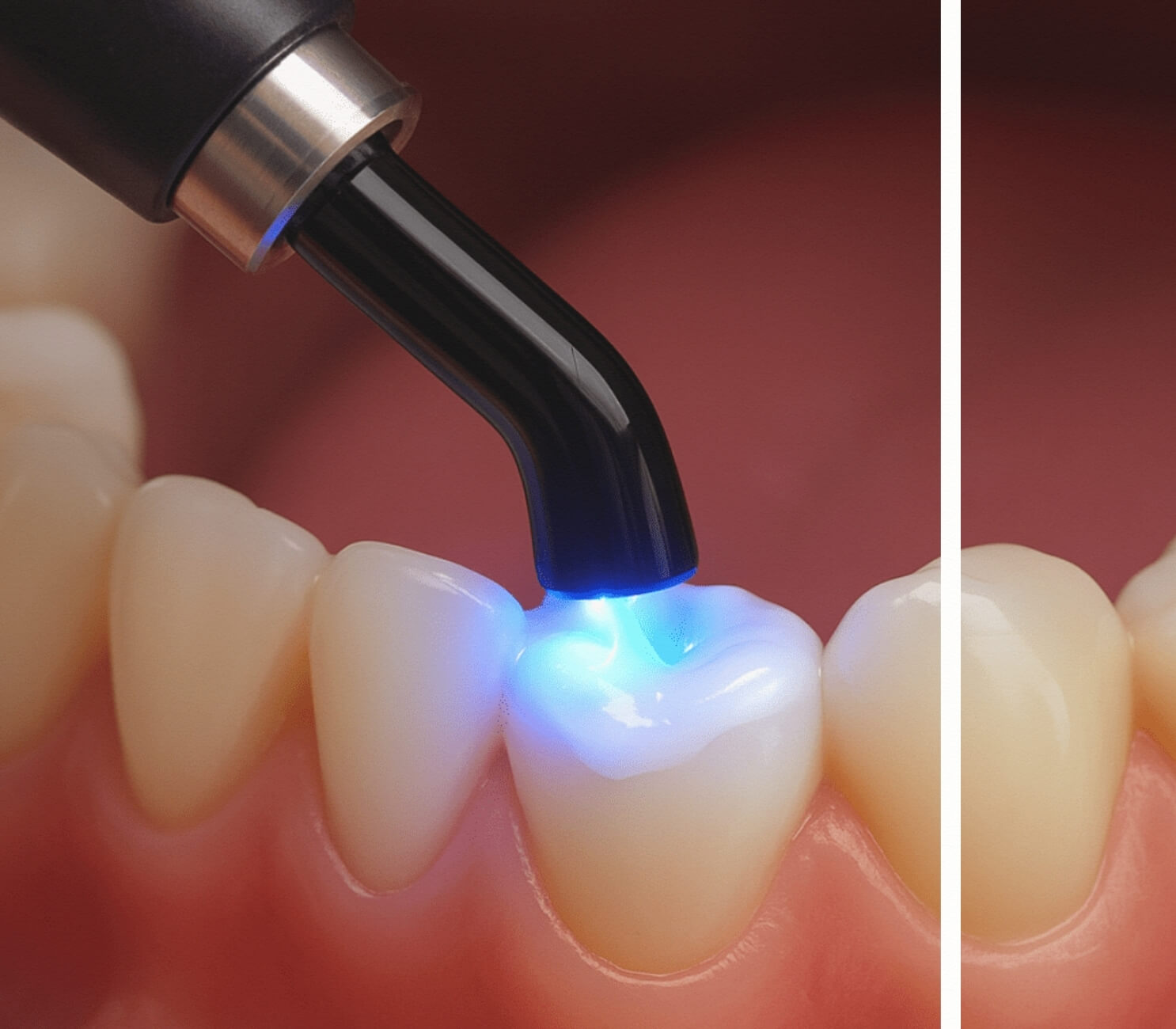
The tooth surface is etched, the sealant material is applied, and it is hardened with light. The entire process takes just minutes with no discomfort for the child.
Sealants are most effective when applied as soon as the permanent molar erupts, before cavities have a chance to develop in the vulnerable grooves.
The condition of the sealant is checked at each dental visit. If wear or partial loss is detected, the sealant can be easily reapplied.
What Is a Fissure Sealant?
A fissure sealant is the process of sealing the deep grooves and pits on the chewing surfaces of teeth with a special protective material. This application helps reduce food and bacteria buildup on surfaces prone to cavities. It is most commonly applied to newly erupted permanent molars in children; however, it can also be considered in other suitable situations.
It is applied to help reduce the risk of cavity formation on tooth surfaces with deep grooves.
No. A fissure sealant is a preventive application done to help prevent cavities from forming, not to treat a tooth that already has a cavity.
The necessity is not the same for every child. The decision is made by evaluating the tooth structure, cavity risk, and oral hygiene together.
Plan Preventive Treatment Correctly with a Detailed Evaluation
The most important aspect of fissure sealant application is correctly determining which teeth actually need protection. Because while some tooth surfaces are flatter and easily cleaned, others have a deeper structure prone to cavities. For this reason, the evaluation performed before application is important for the success of preventive treatment.
- The groove structure on the chewing surface of the tooth is examined.
- Cavity risk and oral hygiene are evaluated.
- Newly erupted permanent teeth are specifically checked.
- A post-application follow-up plan is established.
Why Is a Fissure Sealant Necessary?
The chewing surfaces of permanent molars have deep grooves and pits (fissures). These fissures are narrower than the bristles of a toothbrush, so they cannot be fully cleaned by brushing. Bacteria and food debris accumulate in these grooves and cavities begin. A fissure sealant covers these grooves with a thin protective layer, preventing bacteria from settling.
The procedure is completely painless, requires no anesthesia, and is completed in a few minutes. An etching agent is applied to the tooth surface, the sealant material is applied, and it is hardened with light. The child feels no discomfort.
Which Teeth and When Should It Be Applied?
A fissure sealant is a preventive procedure that should be applied before cavities form. It is not applied to teeth that have already decayed; in that case, baby tooth filling or permanent tooth filling is needed.
Ideal application times: when the first permanent molars erupt (ages 6-7), when the second permanent molars erupt (ages 11-13), and when there is risk in premolars or primary molars with deep fissures. Applying it as soon as possible after the tooth erupts increases the effectiveness of protection.
Is a Fissure Sealant a Filling?
No. A filling is the process of filling a cavity after decayed tissue is cleaned. A fissure sealant is a protective coating applied to a healthy tooth surface. No intervention is made to the tooth structure; tissue is not cut or ground. The goal is not to treat a cavity but to prevent it from ever forming.
Lifespan and Check-Up of Fissure Sealants
Fissure sealants can last for years when properly applied. However, wear or partial loss can occur over time. The condition of the sealant is checked during regular pediatric dentistry check-ups and renewed if necessary.
A fissure sealant alone is not sufficient; it provides the most effective protection together with daily toothbrushing, dental floss use, and regular fluoride application. For children at high cavity risk, the combination of fissure sealant and fluoride is recommended.
Preventive Approach: Prevention Before Treatment
Fissure sealant is one of the cornerstones of Doredent’s preventive dentistry approach. A simple and painless application performed before cavities form can eliminate the future need for more complex treatments such as root canal treatment, pulpotomy, or baby tooth extraction.
Frequently Asked Questions
We have compiled the questions we receive about this treatment and answered them as openly and transparently as possible.
It helps reduce the risk of cavity formation in those areas by protecting the deep grooves on the chewing surfaces of teeth.
It is generally an extremely comfortable and painless preventive procedure.
It is most commonly applied to newly erupted permanent molars. The necessity is determined based on the tooth structure.
The condition of the application in the mouth can change over time. For this reason, it is important to monitor it through regular check-ups.
Absolutely yes. A fissure sealant does not replace regular oral care; it enhances preventive support.
No. The goal is to help reduce the risk of cavities. Regular check-ups and oral care are still necessary.
Our Dentists
Meet our expert dentists.



Content Information
This page was prepared by the Dore Medical Editorial Board and medically reviewed by Dr. Merve Özkan Akagündüz, DDS, MSc.