


Wisdom Tooth Extraction
The safe surgical removal of wisdom teeth that are impacted, partially erupted, or positioned at an unfavorable angle. It helps eliminate pain, infection, and pressure on adjacent teeth.
Bring Pain, Pressure, and Recurring Problems Under Control
While wisdom teeth can erupt without issues in some individuals, in many patients they can cause problems due to space deficiency in the jaw or the tooth’s position. Partially erupted, impacted, or incorrectly angled wisdom teeth can lead to problems such as pain, gum inflammation, difficulty opening the mouth, pressure on neighboring teeth, and cleaning difficulties. In such situations, the need for extraction is evaluated through detailed examination.
The wisdom tooth's eruption status, angle, depth, and relationship with neighboring teeth are evaluated with panoramic X-ray to determine the extraction approach.
The proximity of the wisdom tooth roots to critical structures such as the inferior alveolar nerve (lower jaw) or maxillary sinus (upper jaw) is carefully assessed.
Based on the assessment, either a simple extraction or a surgical approach (with gum opening, bone removal, and tooth sectioning) is planned.
Detailed aftercare instructions are provided. Suture removal and healing assessment follow at scheduled appointments, with guidance on managing swelling and pain.
What Is Wisdom Tooth Extraction?
Wisdom tooth extraction is the controlled removal of wisdom teeth that cannot complete their eruption, remain in an incorrect position, create pressure on surrounding teeth and tissues, or cause infection. Not every wisdom tooth requires extraction; the decision is made by evaluating the tooth's position, complaint status, and its effects in the mouth.
No. Wisdom teeth that have erupted in a healthy position without causing problems and that can be kept clean can be monitored. The need for extraction is determined through examination.
They can cause problems due to space deficiency, erupting at the wrong angle, remaining impacted, inflammation beneath the gum, and pressure on neighboring teeth.
Extraction can be considered if there is pain, infection, swelling, recurring gum problems, cleaning difficulty, or risk of damage to the neighboring tooth.
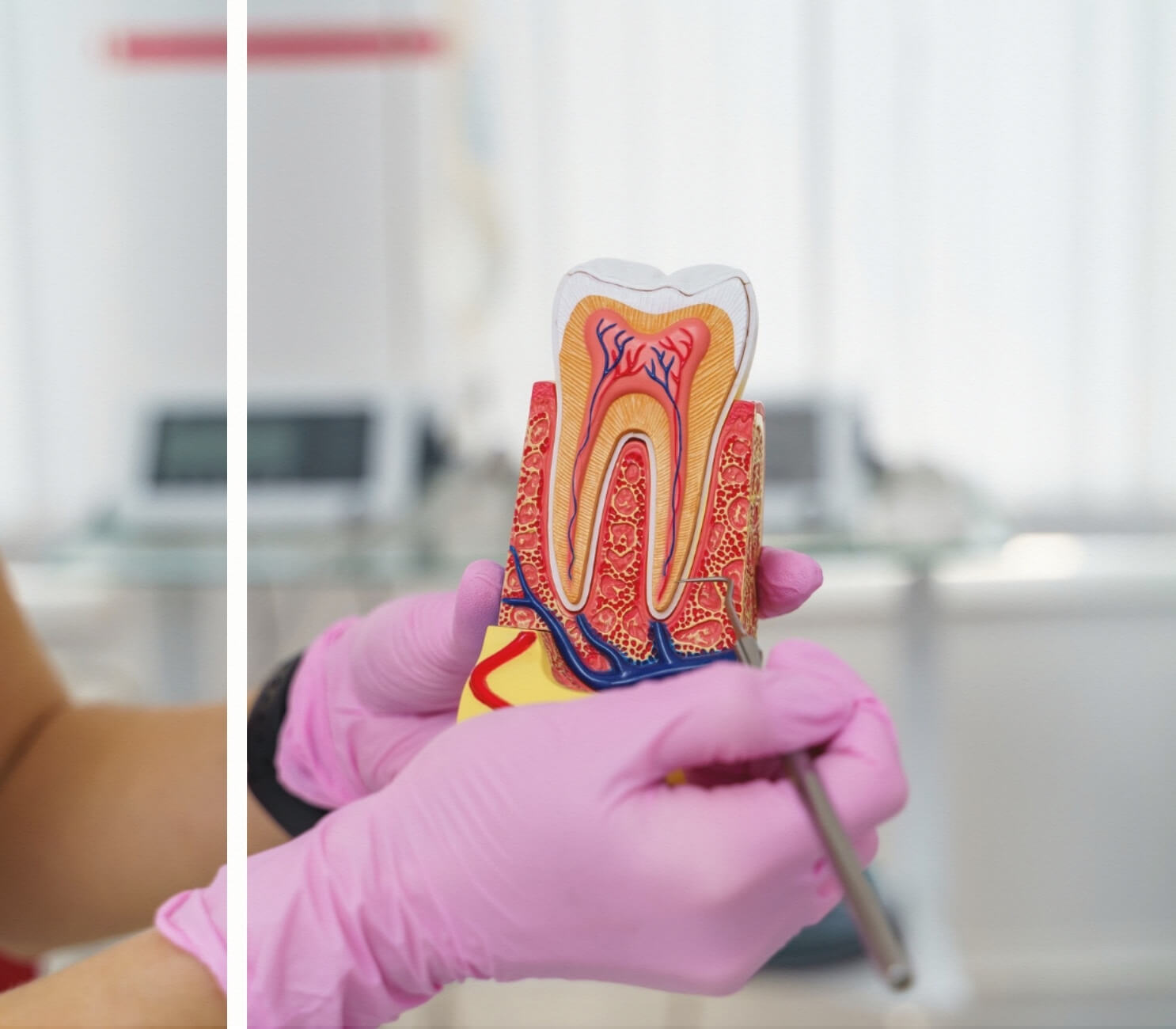
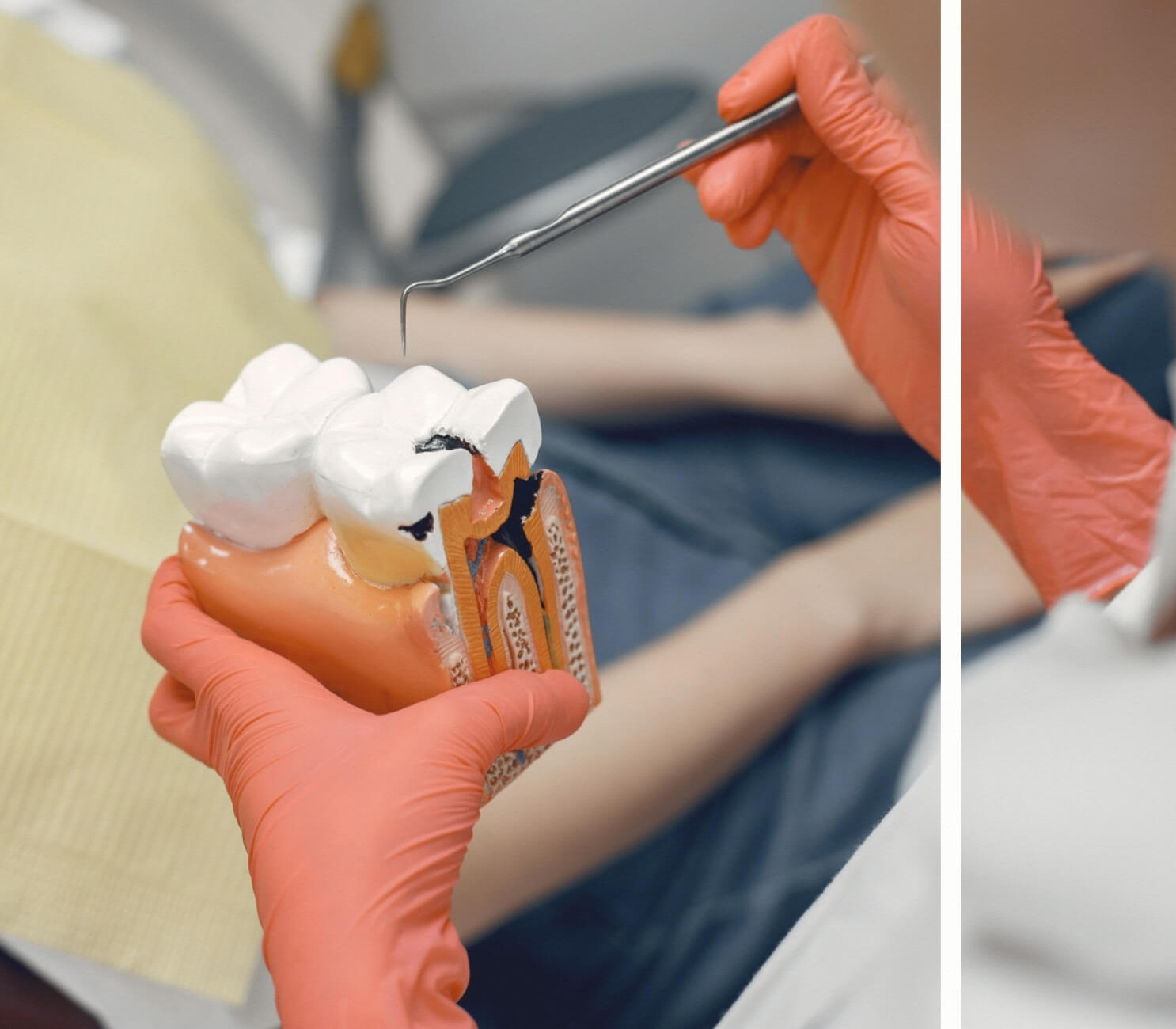
Make the Right Extraction Plan with a Detailed Evaluation
Proper planning is of great importance in wisdom tooth extraction. Because while some teeth are easily accessible in the mouth, others may be embedded in bone or positioned close to the nerve line. For this reason, the detailed examination and imaging done before the procedure are decisive for a safer and more controlled process.
- The eruption status and angle of the wisdom tooth are evaluated.
- Root structure and surrounding anatomical structures are examined.
- The relationship with neighboring teeth is analyzed.
- Whether simple extraction or surgical extraction is needed is planned.
Why Do Wisdom Teeth Cause Problems?
Wisdom teeth (third molars) generally try to erupt between ages 17-25. Because the human jaw has evolutionarily shrunk, most people do not have enough space for these teeth. As a result, wisdom teeth cannot fully erupt, remain impacted, tilt sideways, or apply pressure toward the neighboring tooth.
Around impacted or partially erupted wisdom teeth, gum pockets form that are nearly impossible to clean. Bacterial buildup increases in these pockets, and recurring gum infections (pericoronitis) develop. The infection can spread to the face, create difficulty opening the mouth, and affect general health.
Wisdom Teeth and Damage to Neighboring Teeth
One of the most insidious effects of wisdom teeth is the damage they cause to the neighboring second molar. A sideways-lying wisdom tooth can create cavity formation on the root surface of the tooth in front of it by applying pressure to that area. This cavity is usually discovered late because it develops in an area trapped between the teeth. If detected in time, it can be resolved with filling treatment, but if it progresses, root canal treatment or even extraction of the second molar may be needed.
Additionally, the pressure from wisdom teeth can cause crowding in the front teeth. Especially in people who have previously undergone orthodontic treatment, the eruption of wisdom teeth can contribute to teeth shifting back, meaning orthodontic relapse.
Wisdom Tooth Extraction and the Orthodontics Connection
In patients where orthodontic treatment is planned, the status of wisdom teeth is always evaluated. Wisdom teeth that have not yet erupted but have the potential to cause problems in the future can be extracted before or during treatment. This approach supports the permanence of results achieved with Invisalign or braces.
In advanced crowding cases, extraction of wisdom teeth can provide additional space in the jaw for proper tooth alignment. This decision is made in coordination between the orthodontic specialist and surgeon.
Impacted Tooth Extraction: The Surgical Process
Extraction of fully impacted wisdom teeth requires surgical intervention unlike a standard tooth extraction. The procedure is performed under local anesthesia; the gum is opened, surrounding bone is partially removed if necessary, the tooth is divided and removed in pieces, and the area is closed with sutures.
The first 48-72 hours after surgical extraction are the most critical period. During this time, swelling, mild bleeding, and jaw muscle stiffness are normal. Ice compress application, soft food consumption, and regular use of prescribed medications speed up healing. Sutures are generally removed within 7-10 days.
When Should You Get an Evaluation?
Even if your wisdom teeth are not yet causing problems, it is recommended to get an evaluation around age 18-20. With a panoramic X-ray, the position of the teeth, eruption direction, and relationship with neighboring teeth are evaluated. Wisdom teeth extracted at an early stage have not yet completed their root development, so extraction is easier and healing is faster.
In young people, the development of wisdom teeth is monitored through regular dental check-ups, and the correct timing is determined.
Frequently Asked Questions
We have compiled the questions we receive about this treatment and answered them as openly and transparently as possible.
Planning is done with appropriate anesthesia with patient comfort in mind during the procedure. There may be sensitivity afterward depending on the tooth's condition.
The tooth being impacted, positioned at the wrong angle, having a complex root structure, or being closely related to surrounding anatomical structures can make the procedure more difficult.
Some wisdom teeth can be monitored without causing problems; however, in some cases, infection, pain, pressure on neighboring teeth, and cleaning problems can develop.
Especially in surgical extractions, some swelling or sensitivity may be seen. The level varies depending on the tooth's position and the scope of the procedure.
In some cases they are not needed; in other cases, especially after surgical procedures, sutures may be applied. This is determined based on the condition of the tooth.
No. The tooth's position, type of extraction, the individual's healing speed, and post-procedure care can affect healing.
Our Dentists
Meet our expert dentists.



Content Information
This page was prepared by the Dore Medical Editorial Board and medically reviewed by Dr. Merve Özkan Akagündüz, DDS, MSc.