


Impacted Tooth Extraction
The surgical removal of teeth that remain trapped beneath the gum tissue or within the jawbone. From wisdom teeth to impacted canines, the procedure is performed with careful planning for safe and effective treatment.
Bring Pain, Pressure, and Potential Problems Under Control with Impacted Tooth Extraction
Impacted teeth are teeth that have remained partially or completely trapped beneath the jawbone or gum tissue. They are most commonly seen in wisdom teeth. While these teeth can sometimes be monitored without any symptoms, in other cases they can cause complaints such as pain, swelling, infection, pressure on neighboring teeth, a feeling of crowding, or difficulty opening the mouth. With proper evaluation, the need for extraction is determined and the procedure is planned on a custom basis.
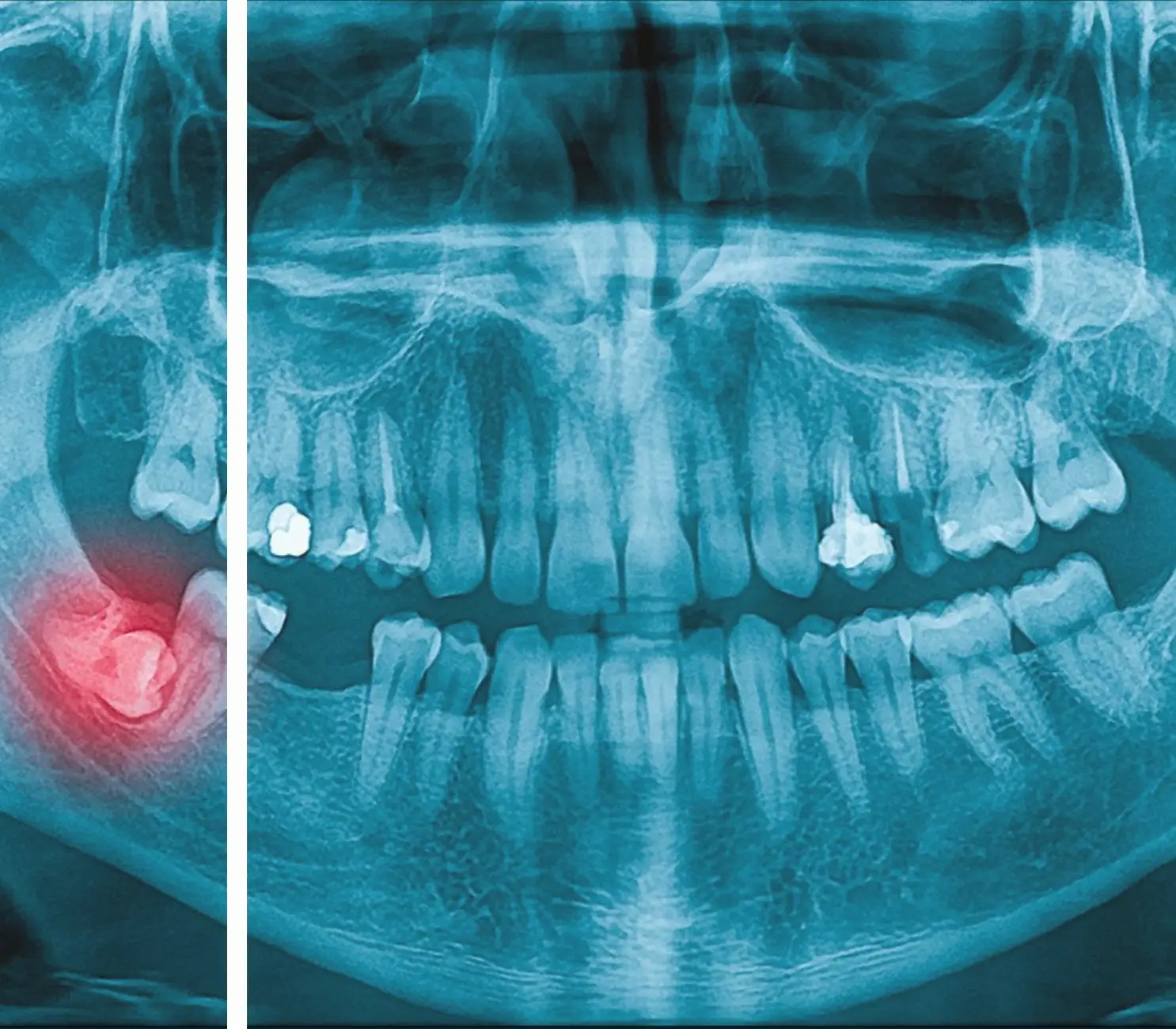
Panoramic X-ray or 3D imaging is used to determine the exact position, depth, angulation, and root morphology of the impacted tooth before planning the procedure.
The relationship between the impacted tooth and critical structures such as the inferior alveolar nerve or maxillary sinus is carefully assessed to minimize surgical risks.
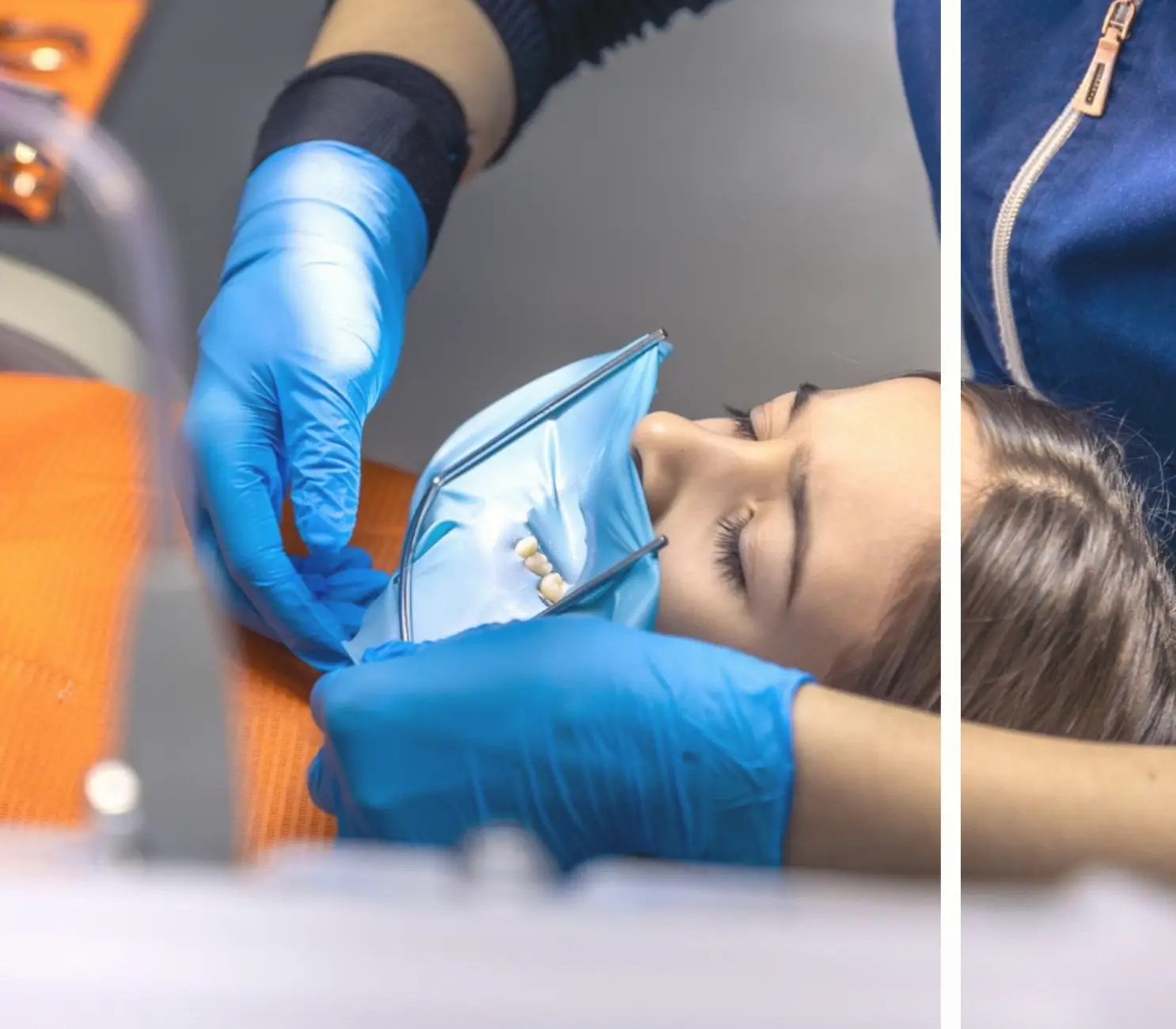
The procedure is performed under local anesthesia. Bone removal and tooth sectioning techniques are used as needed for safe and controlled extraction.
Detailed aftercare instructions are provided. Suture removal, healing assessment, and any complications are managed through scheduled follow-up appointments.
What Is Impacted Tooth Extraction?
Impacted tooth extraction is the surgical removal of teeth that cannot erupt normally because they remain beneath the gum tissue or within the jawbone. It is most commonly performed on wisdom teeth. The goal is to prevent or reduce pain, infection, damage to neighboring teeth, gum problems, and similar risks.
No. Not every impacted tooth is necessarily extracted. Whether it causes complaints, its effect on surrounding teeth, infection risk, orthodontic obstruction, and radiological findings are all evaluated together.
Lower and upper wisdom teeth most commonly remain impacted. Beyond these, some canine teeth and other teeth can also be impacted.
Extraction may be necessary due to pain, infection, swelling, pressure on neighboring teeth, cavity risk, gum problems, or orthodontic reasons.
Plan the Treatment Process in Advance with a Detailed Evaluation
Proper planning is of great importance in impacted tooth extraction. The procedure should not be planned without carefully examining the tooth’s position in the jawbone, the shape of the roots, its proximity to the nerve line, and its relationship with neighboring teeth. This allows for a more controlled and predictable surgical process.
- The position of the impacted tooth is examined in detail.
- When necessary, panoramic X-ray or advanced imaging is evaluated.
- Surrounding anatomical structures and the nerve line are taken into consideration.
- The post-procedure healing process is explained to the patient in advance.
Which Teeth Can Remain Impacted?
Although impaction is most commonly seen in wisdom teeth, it is not limited to them. Upper jaw canine teeth rank second in frequency of impaction. More rarely, premolars, front incisors, and even permanent teeth beneath primary teeth can also remain impacted.
The treatment approach for each impacted tooth is different. While extraction is generally planned for wisdom teeth, the goal for impacted canine teeth is often not to extract the tooth but to bring it into the mouth through orthodontic treatment, because the canine tooth is a very critical tooth for both function and aesthetics.
Impacted Canine Teeth and Orthodontic Treatment
Impacted canine teeth in the upper jaw are a frequently encountered condition during childhood and adolescence. When detected early, the tooth is surgically exposed and gradually pulled into arch alignment through a bracket attached to the tooth using braces or Invisalign. This procedure is called “surgical exposure and orthodontic traction.”
Timely detection of the impacted canine tooth directly affects treatment success. Impacted teeth are noticed at an early age through regular pediatric dentistry check-ups and panoramic X-rays. When detection is delayed, a cyst may develop around the tooth or the tooth may fuse with the bone (ankylosis) and become impossible to move. In such cases, extraction and subsequently implant treatment may be necessary.
The Effect of Impacted Teeth on Neighboring Teeth
Impacted teeth can damage their surrounding teeth in various ways. A sideways-lying impacted tooth can cause a cavity on the root surface of the neighboring tooth. This cavity is usually invisible from the outside and can only be detected with X-rays. If caught in time, it can be treated with a filling, but if it progresses, root canal treatment is needed.
The pressure from impacted teeth can also disrupt tooth alignment. Impacted wisdom teeth in particular can contribute to crowding in the front teeth. In patients who have undergone orthodontic treatment, this pressure can lead to relapse.
Healing Process After Surgical Extraction
Because impacted tooth extraction involves working beneath the gum or within bone, it requires a more comprehensive healing process than a standard extraction. Swelling, mild bleeding, and jaw muscle stiffness in the first 24-48 hours are expected symptoms. Ice compress application keeps swelling under control, and soft food consumption supports healing.
Sutures are generally removed after 7-10 days. Full healing takes 2-3 weeks for soft tissue and can take several months for bone tissue. During this process, regularly taking the prescribed medications and attending follow-up appointments is important.
Smoking use significantly slows healing and increases the risk of “dry socket” (alveolar osteitis). It is recommended not to smoke for at least 72 hours after extraction, ideally until healing is complete.
Frequently Asked Questions
We have compiled the questions we receive about this treatment and answered them as openly and transparently as possible.
Since the procedure is performed under local anesthesia, the goal is to avoid pain during extraction. There may be some sensitivity and swelling afterward.
The difficulty level varies depending on the tooth's position, depth, root structure, and relationship with surrounding anatomical structures. For this reason, each case is different.
In some patients, swelling may be seen especially in the first few days. This may vary depending on the scope of the procedure and is generally temporary.
Initial healing begins within a few days; the full healing period may vary depending on the scope of the procedure and the individual's healing speed.
No. Not every impacted tooth causes infection. However, infection, pressure, or surrounding tissue problems may develop in some teeth.
In some cases, yes. Sutures may be applied depending on the type of procedure. The necessity is determined during the procedure.
Our Dentists
Meet our expert dentists.



Content Information
This page was prepared by the Dore Medical Editorial Board and medically reviewed by Dr. Merve Özkan Akagündüz, DDS, MSc.