


Frenectomy
A simple and quick surgical procedure to correct the labial or lingual frenum (a band of connective tissue). It is commonly performed in the treatment of diastema (a gap between the front teeth), breastfeeding difficulties, and certain speech problems.
Make the Soft Tissue Balance in the Mouth Healthier with Frenectomy
In some individuals, the connective tissue bands located between the lip and gum or under the tongue may be more prominent, tense, or positioned at a lower level than normal. This condition can contribute to gaps forming between teeth, cause pulling on the gum area, or in some cases affect tongue movements. Frenectomy is a controlled procedure aimed at modifying these tissues when deemed necessary after evaluating their effect in the mouth.
The position, tension, and attachment point of the frenum are examined to determine whether it is causing functional or aesthetic issues that warrant treatment.
If the frenum is contributing to a diastema or gum recession, the frenectomy is timed and planned alongside orthodontic closure or periodontal treatment.
The procedure is completed in just a few minutes under local anesthesia. It is a simple surgical step with minimal discomfort.
Full healing typically occurs within 1-2 weeks. Post-procedure pain is minimal and managed with standard pain relief.
What Is a Frenectomy?
A frenectomy is the surgical modification or removal of the lip frenum or tongue frenum tissue in the mouth when deemed necessary. This procedure can be considered when the connective tissue creates pulling on the gums, is associated with gaps between teeth, or restricts tongue movements. Suitability is determined after examining the structure of the connective tissue and the effect it creates.
It can be considered in some cases where the lip frenum is associated with gaps between teeth, creates pulling on the gums, or the tongue frenum restricts movement.
No. Not every prominent lip frenum requires treatment. The necessity is determined based on the position of the connective tissue and the effect it creates.
Yes. In some cases, it can be evaluated alongside orthodontic treatment, gap closure, or gum planning.
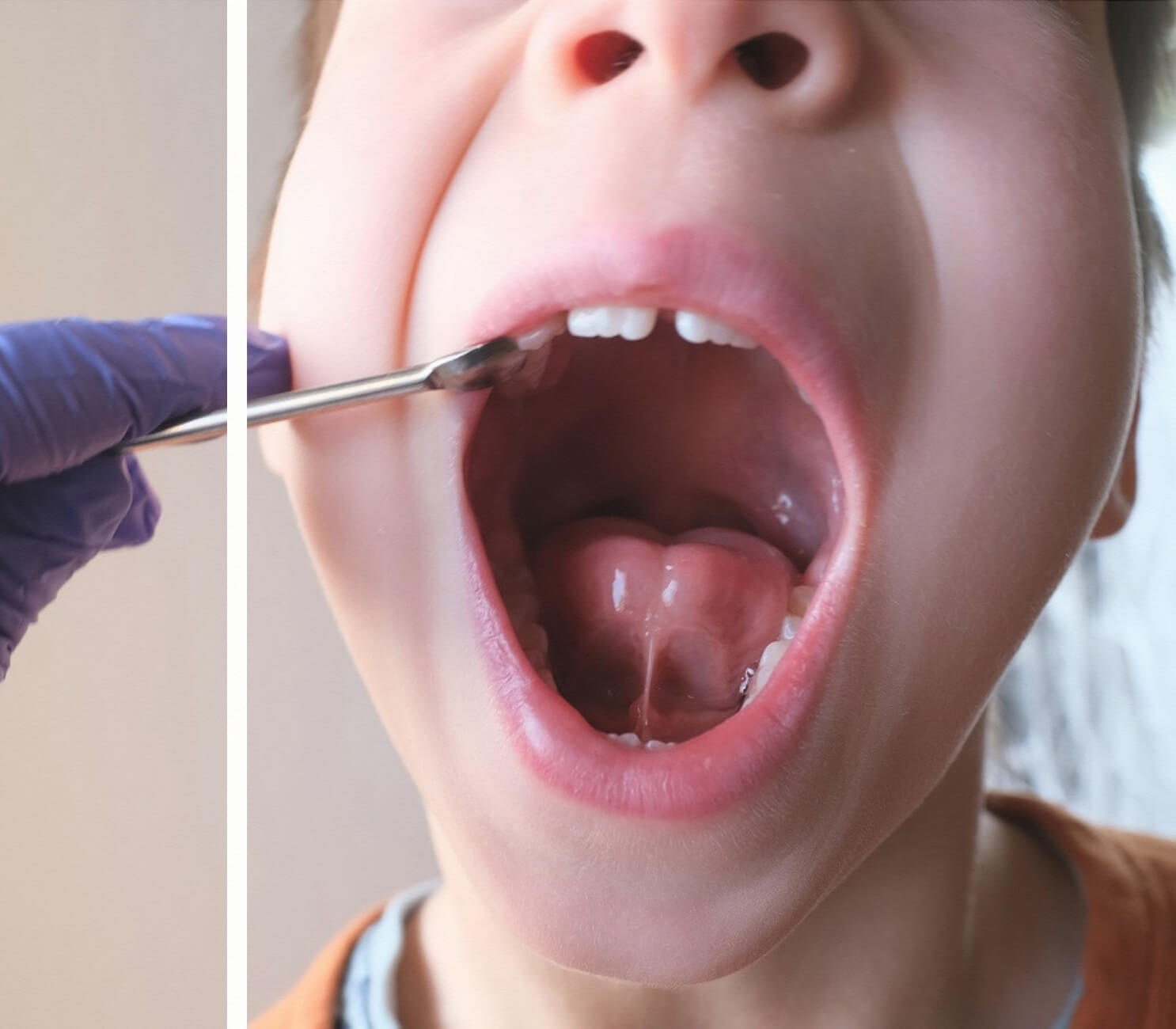
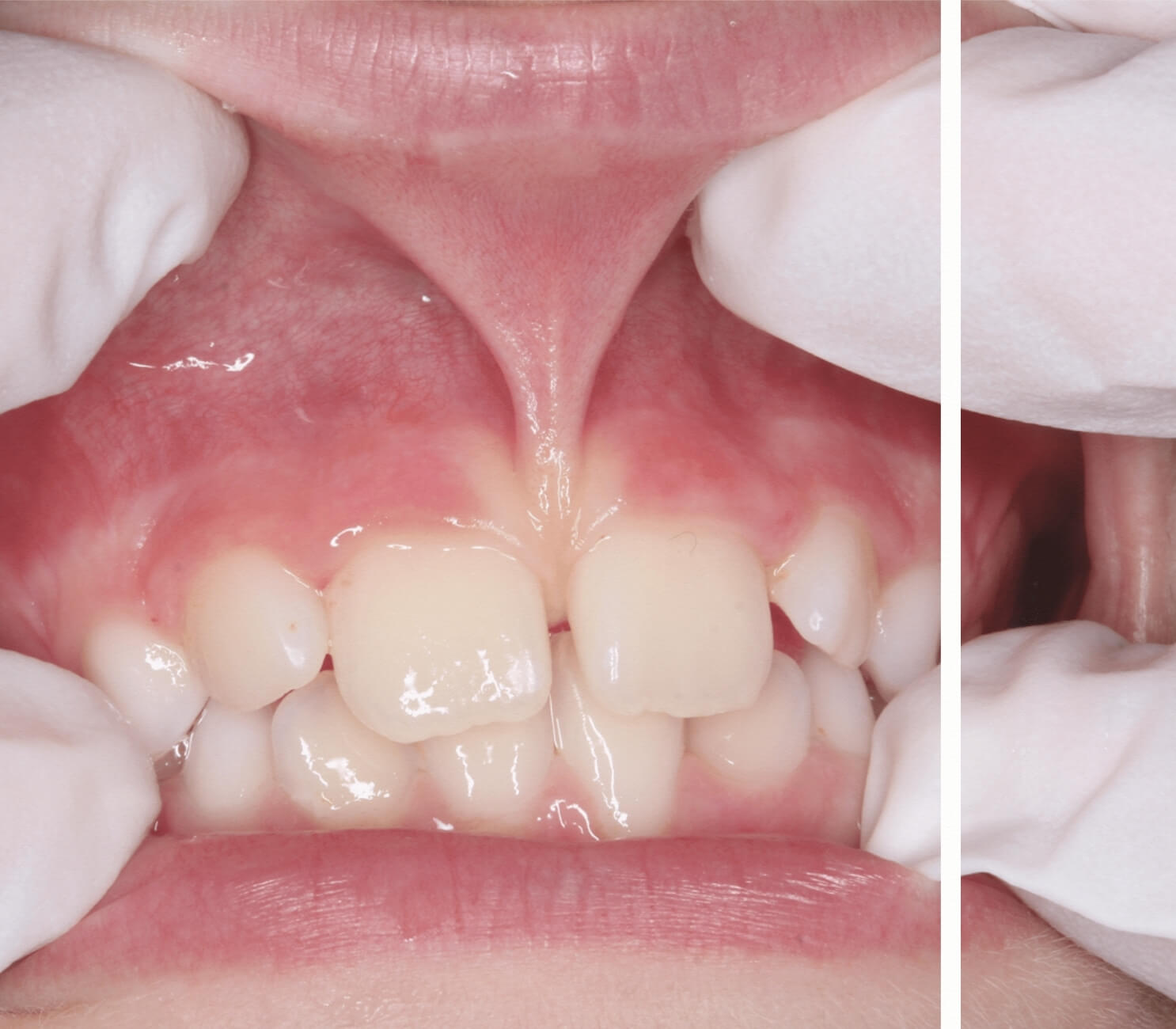
Plan the Right Intervention Timing with a Detailed Evaluation
The most important aspect of frenectomy is correctly determining whether the connective tissue actually requires treatment. Because while some frenum structures remain merely an anatomical variation, in other cases they can be associated with gum recession, gaps between teeth, or functional limitation. For this reason, the careful examination performed before treatment is of great importance.
- The position and tension of the frenum are evaluated.
- The pulling effect on the gums is examined.
- Its relationship with gaps between teeth is analyzed.
- When necessary, it is addressed alongside orthodontic or periodontal planning.
When Is a Frenectomy Necessary?
The frenum is a thin tissue band that connects the lip to the gums or the tongue to the floor of the mouth. In some individuals, this band may be thicker, shorter, or positioned too close to the teeth than normal. In this case, three main problems arise:
Upper lip frenum and diastema: When the upper lip frenum extends between the two front teeth, it creates a gap that does not close. Even if diastema is closed with orthodontic treatment, if the frenum is not corrected, the gap may reopen. For this reason, frenectomy is planned alongside Invisalign or braces.
Tongue frenum (tongue tie): When the frenum under the tongue is too short, tongue movement is restricted. It can cause breastfeeding difficulties in infants and speech problems in children. Early frenectomy releases the tongue.
Gum recession: When the lower lip frenum attaches too close to the tooth, it can cause gum recession in that area by pulling the gum during lip movement.
Frenectomy and Orthodontics
Frenectomy is complementary to orthodontic treatment in diastema treatment. Generally, the frenectomy is performed after or during orthodontic closure of the gap. Gaps closed without correcting the frenum carry a risk of reopening during the retention period. Frenectomy together with a retainer wire supports the permanence of the result.
When a thick upper frenum is detected early in children, it is evaluated during pediatric dentistry check-ups. Tongue tie is usually noticed during infancy and can be simply corrected with early intervention.
After Frenectomy
Frenectomy is a simple surgical procedure. It is completed in a few minutes under local anesthesia. Healing is rapid, with full recovery generally within 1-2 weeks. Post-procedure pain is minimal and standard pain relievers are sufficient. For frenectomies performed as part of diastema treatment, orthodontic treatment can be resumed shortly after.
Frequently Asked Questions
We have compiled the questions we receive about this treatment and answered them as openly and transparently as possible.
It can be considered when the connective tissue creates pulling on the gums, is associated with gaps between teeth, or causes functional restriction.
This varies by case. In some patients, the connective tissue can be an important part of the treatment plan; the final decision is made after examination.
Yes. In some cases where tongue movement is significantly affected, a frenectomy can be considered.
Appropriate planning is done with patient comfort in mind during the procedure. There may be short-term sensitivity afterward.
The healing process and tissue structure can vary from person to person. The process is monitored with necessary check-ups.
In some patients, yes; in other cases, it needs to be evaluated together with orthodontic treatment, gum treatment, or other planning.
Our Dentists
Meet our expert dentists.



Content Information
This page was prepared by the Dore Medical Editorial Board and medically reviewed by Dr. Merve Özkan Akagündüz, DDS, MSc.