


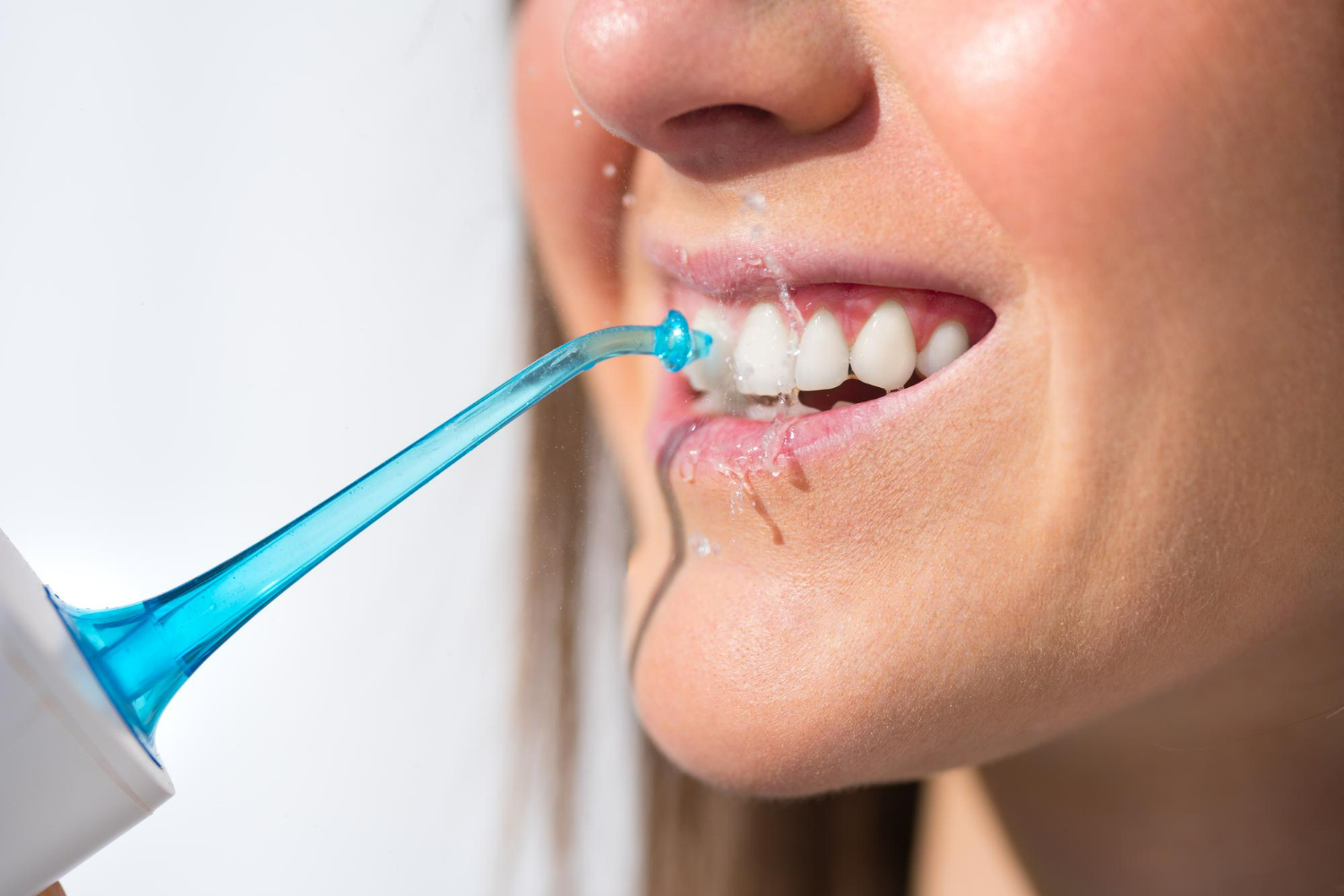

How to Use a Water Flosser
A water flosser is an oral hygiene device that uses a pressurized stream of water (or mouthwash) to clean food debris and plaque from tight spaces your toothbrush and dental floss can’t reach. It’s also commonly used to help prevent periodontal problems such as gingivitis and tartar buildup.
How to Use a Water Flosser, Step by Step
A water flosser is one of the most effective tools for clearing plaque and food particles from between your teeth. Before you start, fill the reservoir with clean, lukewarm water. If your device comes with multiple tips, choose the one that fits what you’re trying to do. Most water flossers also let you adjust the water pressure, so dial it in based on your own preference and how sensitive your gums are.
Place the tip in your mouth, lean over the sink, and press the power button to start the flow. Begin on the lowest setting and work your way up if you need more pressure. Hold the tip at roughly a 90-degree angle to your gumline so the stream can reach the spaces between your teeth and along the edge of the gums.
Move the tip slowly along your gumline for about a minute, pausing briefly between each tooth. You’ll often see plaque and food debris being flushed out as you go. Take your time and make sure you give every section equal attention — back teeth included.
When you’re finished, empty any remaining water from the reservoir before switching the device off. Rinse the tip under clean water, dry it, and store the unit somewhere clean and dry. Used consistently, a water flosser can make a real difference in keeping your teeth and gums healthy. Most dentists recommend using one once a day.
If you ever feel pain or discomfort while using your water flosser, lower the pressure or switch to a softer tip designed for sensitive gums.
Pros and Cons of Water Flossers
Like any oral care tool, water flossers come with trade-offs. Here’s an honest look at what they’re good at and where they fall short.
Pros:
- Effective cleaning: Water flossers do a great job of dislodging plaque and food particles from between the teeth. They’re a solid option for anyone who struggles with traditional string floss or simply doesn’t enjoy using it.
- Healthier gums: The pulsing water gently massages the gum tissue, which improves circulation and supports overall gum health. That can help reduce your risk of gum disease over time.
- Easy to use: Water flossers are noticeably easier to handle than string floss. They’re especially useful for people with limited hand or wrist mobility, or anyone who finds it hard to maneuver floss into the back of the mouth.
- Interchangeable tips: Most models come with a range of swappable tips for different needs — including softer tips designed specifically for sensitive gums or orthodontic appliances.
Cons:
- Cost: A good-quality water flosser isn’t cheap, and replacement tips add to the long-term cost.
- Water use: They naturally use more water than traditional flossing, which can be a small concern if you’re conscious of your water consumption.
- Bulk: Countertop models can be large and aren’t easy to pack for travel. The good news is that compact, rechargeable versions are widely available if portability matters to you.
- Sensitivity: High water pressure can feel uncomfortable for people with sensitive gums. Sticking to a lower setting usually solves this.
Whether a water flosser is right for you really comes down to your personal needs and how it fits into your routine.
Are Water Flossers Safe for Your Teeth?
Water flossers are generally safe — but as with most things in dental care, the key is using them correctly and at the right pressure. Here’s what to keep in mind:
- Pressure setting: Most water flossers offer multiple pressure levels. Cranking it up too high can irritate sensitive gums, so it’s important to find a setting that feels comfortable for you.
- Proper technique: Hold the tip at the correct angle to your gumline and avoid jerky, aggressive movements. A slow, gentle pass along each tooth is far more effective — and safer — than blasting through it.
- Your gum health: Some people have naturally more sensitive gums or existing gum disease. If that sounds like you, talk to your dentist before adding a water flosser to your routine. They can assess your situation and tell you whether it’s a good fit. If you think you may have signs of gum problems, it’s worth reading more about gum recession and how it’s treated.
- Consistent use: Regular use is what makes a water flosser worthwhile, but overdoing it can also irritate the gums. Stick to the frequency your dentist recommends.
- Tip selection: Different tips are designed for different needs. If your gums are on the sensitive side, look for a softer option.
The bottom line: water flossers are a safe and effective way to clean between your teeth, as long as you use the right technique and pressure for your situation.
Can You Use a Water Flosser Every Day? How Often Should You Use One?
Whether you should use a water flosser daily depends on your own oral health needs and what your dentist recommends. As a general rule, regular use is a good thing — it helps keep your gums healthy and your teeth cleaner between brushings.
Water flossers are particularly helpful at removing plaque and food trapped between teeth. If you frequently get food stuck between your teeth, or you’re at higher risk for gum disease, you may benefit from using one more often.
For most people, once a day is plenty. That’s usually enough to keep plaque buildup in check and support healthy gums. Your dentist may suggest something different depending on your situation — for example, people dealing with active gum issues or wearing fixed braces often need to floss more frequently to keep food and plaque from accumulating around the brackets and wires.
Water flossing works best as part of a complete routine — alongside brushing twice a day and traditional flossing, not as a replacement for them.
The Best Water Flosser Brands
There are plenty of water flosser brands on the market, which can make picking one feel overwhelming. Here are a few that consistently stand out:
- Waterpik: Waterpik basically pioneered the category and still offers the widest range of models — countertop units for home use, cordless versions for travel, and options across just about every price point.
- Philips Sonicare: Best known for its sonic toothbrushes, Philips also makes high-quality water flossers with features like specialized cleaning modes and adjustable pressure.
- Oral-B: Another well-known name in oral care, Oral-B offers water flossers that are straightforward to use and reasonably priced.
- Panasonic: A Japanese brand that produces a range of personal care devices, including water flossers known for thoughtful design and solid build quality.
When choosing a water flosser, think about your budget and what features actually matter for your routine. Your dentist can also point you toward a brand and model that suits your needs.
Water Flosser vs. Dental Floss: Which Is Better?
Water flossers and traditional dental floss are two different tools designed to do the same basic job: clean between your teeth. Which one works better for you depends on your habits, your dexterity, and the condition of your teeth and gums.
Where water flossers shine:
- Sensitive gums: The gentle massaging action stimulates blood flow and cleans without the friction of pulling string between your teeth — usually a more comfortable experience for people with sensitive gums.
- Convenience: Spraying water between your teeth is just faster and easier than wrapping floss around your fingers and working it through every gap.
- Plaque removal: They’re highly effective at flushing out plaque and food debris, especially for people with wider gaps between their teeth or those wearing braces.
Where traditional floss still wins:
- Precision: Floss makes direct contact with the surfaces of adjacent teeth, scraping away plaque in a way water pressure can’t quite match.
- Portability: A pack of floss fits in a pocket or purse — perfect for travel or quick cleanups on the go.
- Cost: Floss is much cheaper than a water flosser, and there’s no charging or maintenance involved.
Both have their strengths. To figure out what works best for you, talk it over with your dentist — and honestly, using both together gives you the most thorough clean.
What Happens When You Use a Water Flosser Regularly
Used consistently and correctly, a water flosser can make a noticeable difference in your oral health. Here’s what most people experience over time:
- Less plaque: Water flossers do a great job of dislodging plaque and food particles from between teeth. Regular use keeps buildup from accumulating in the first place.
- Healthier gums: The gentle massage stimulates blood flow to the gum tissue, supporting overall gum health and helping prevent inflammation.
- Less sensitivity: Many people find that consistent use reduces gum sensitivity over time as their gum tissue becomes healthier and stronger.
- Cleaner, brighter teeth: Regular plaque and surface stain removal helps your natural tooth color show through more clearly.
- Lower risk of gum disease: Removing plaque and bacteria along the gumline is one of the best things you can do to reduce your risk of gingivitis and other gum problems.
- Fewer cavities: By keeping the spaces between your teeth clean, water flossers help prevent the kind of decay that loves to start in those hard-to-reach spots.
Used the right way and on a consistent basis, a water flosser is a simple addition to your routine that can pay off in healthier teeth and gums over the long run. If you’re visiting Istanbul and would like a professional check-up alongside personalized oral hygiene advice, the team at Doredent is happy to help — feel free to get in touch.